
Last updated September 10, 2026
Level 1 sweep and inspection to the NFPA 211 annual standard - flue, crown, cap, and flashing checked and photographed
Chimney sweep logs do not sweep chimneys. They loosen some creosote - which then falls where a brush and vacuum still have to collect it.
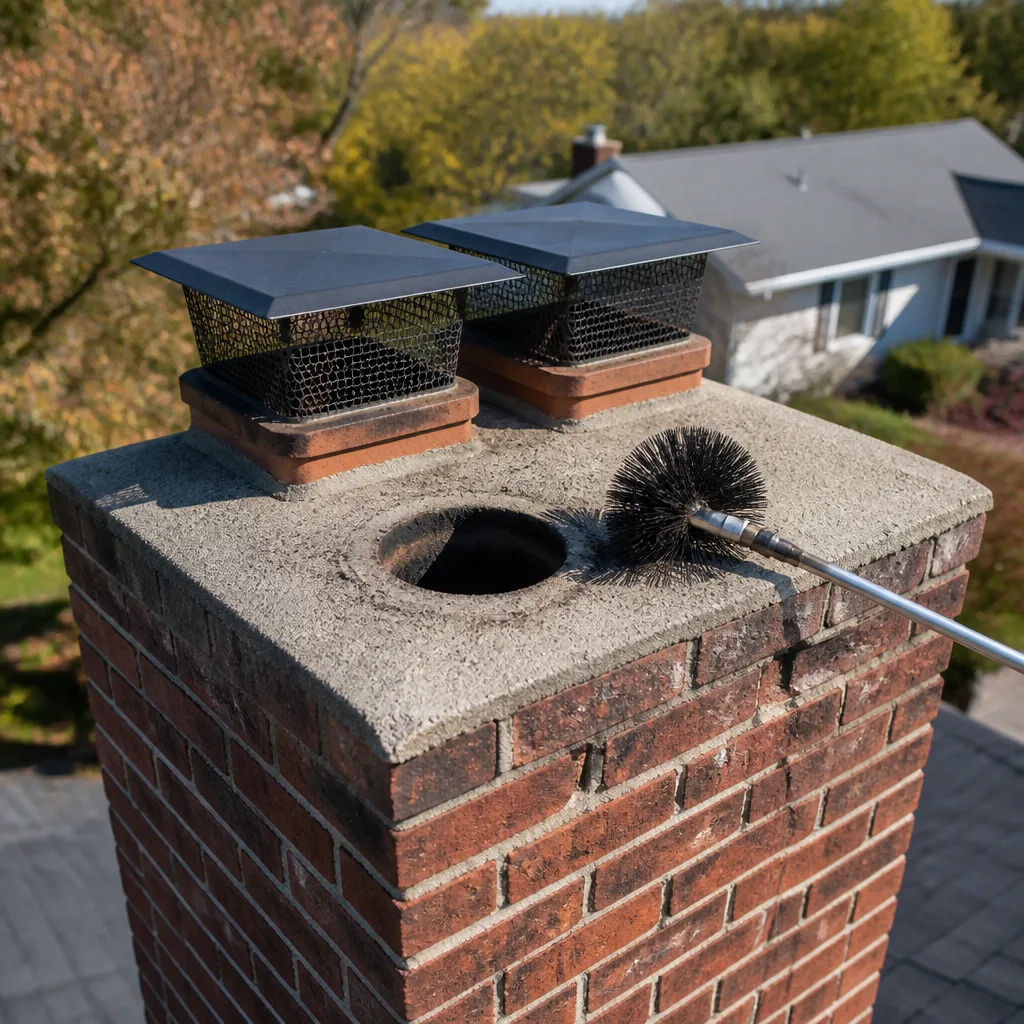
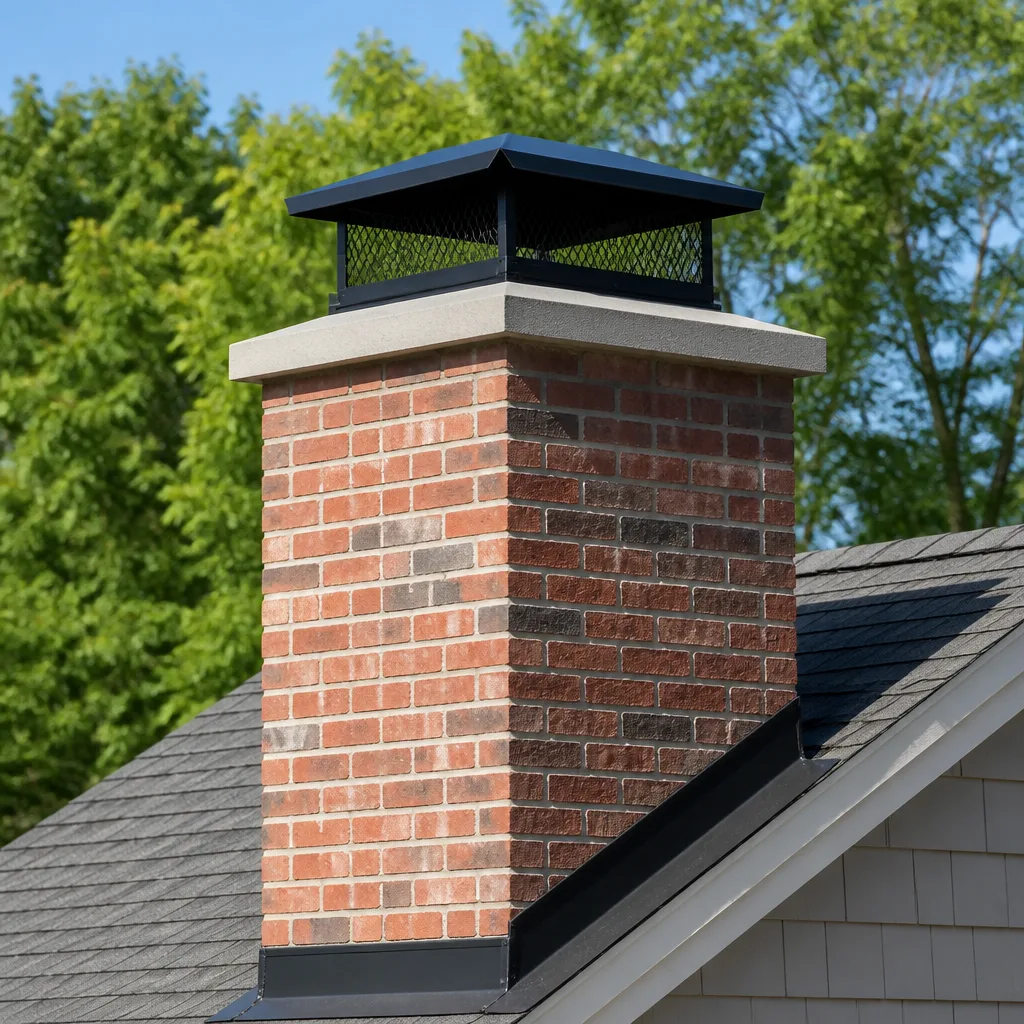
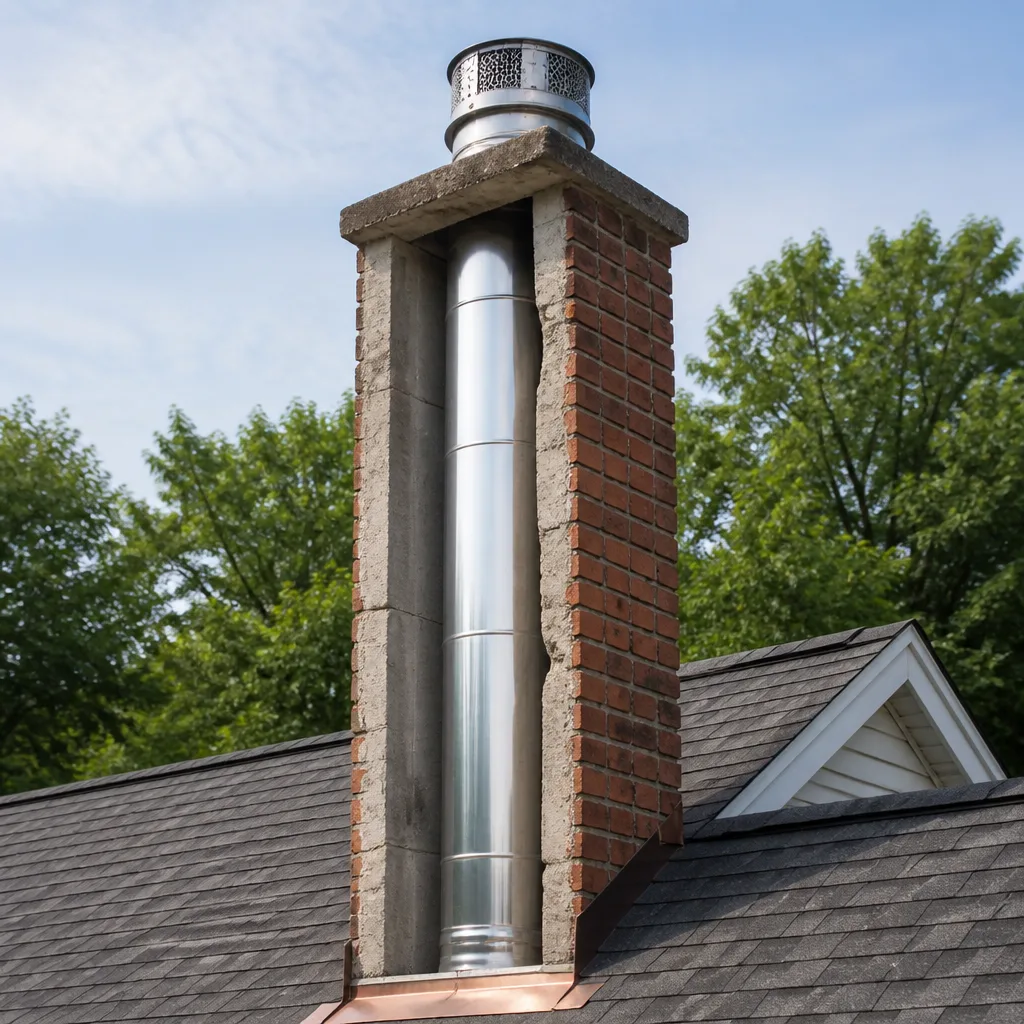
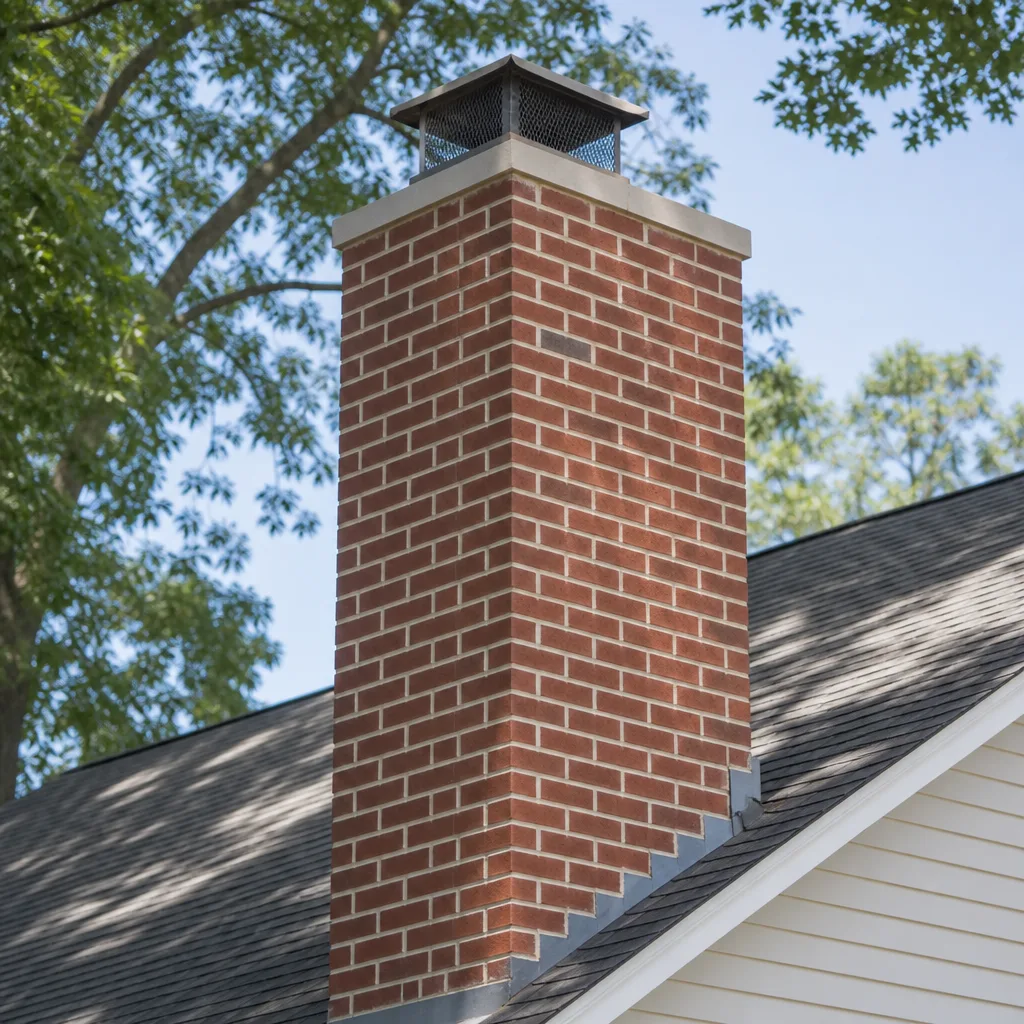
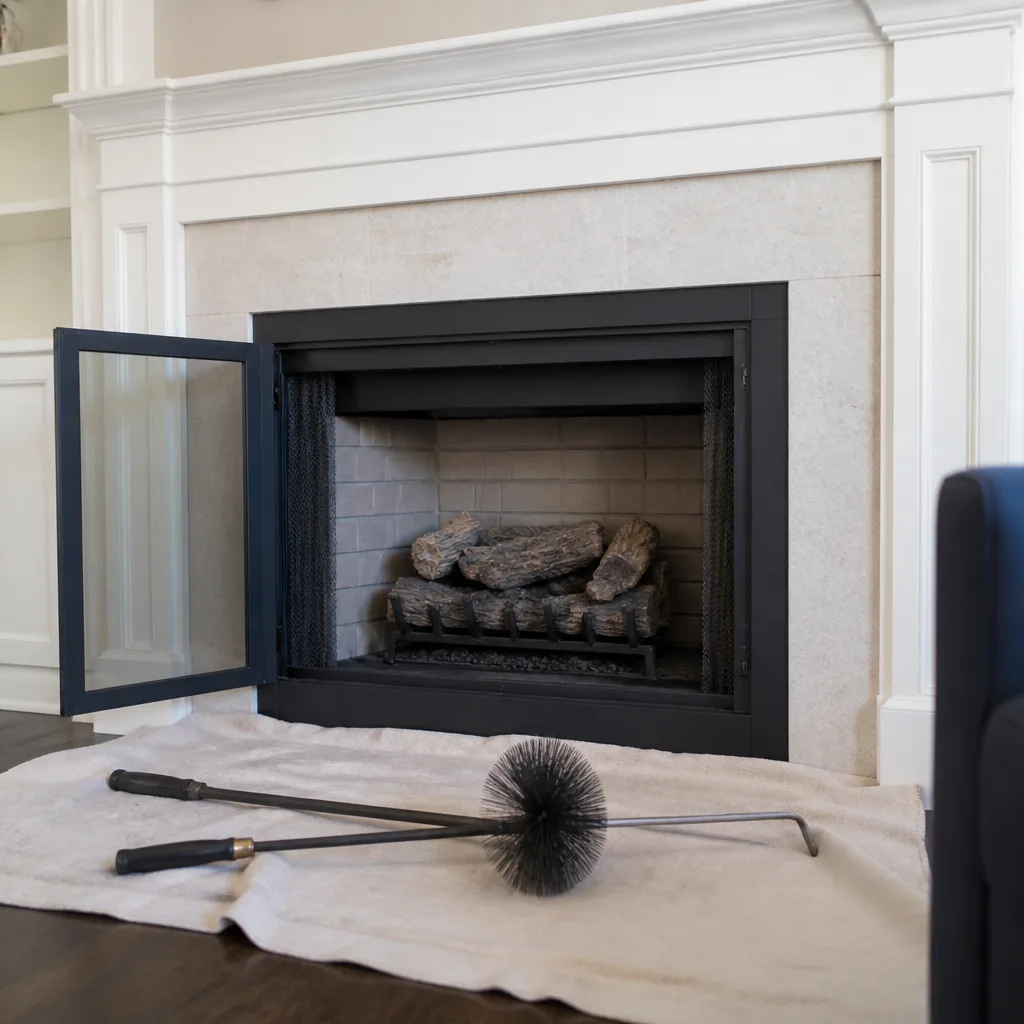
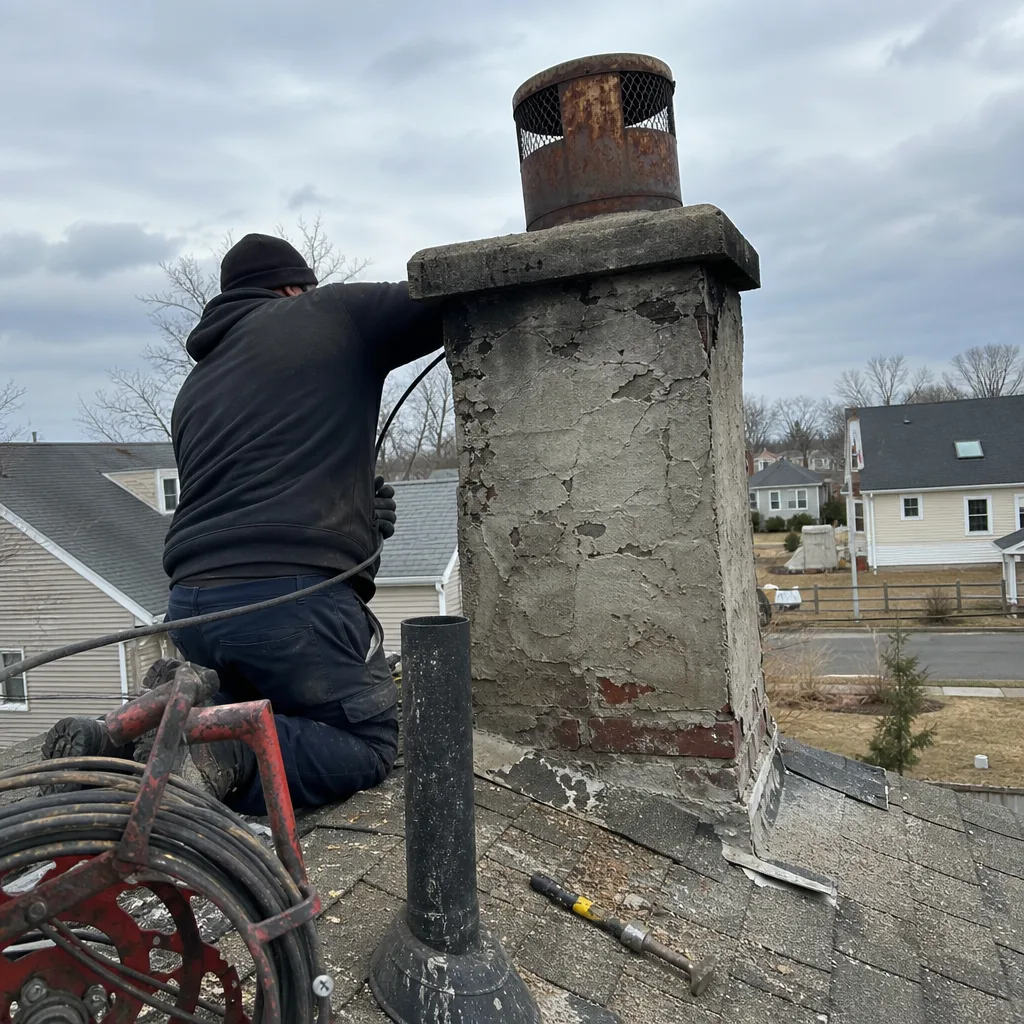 Before
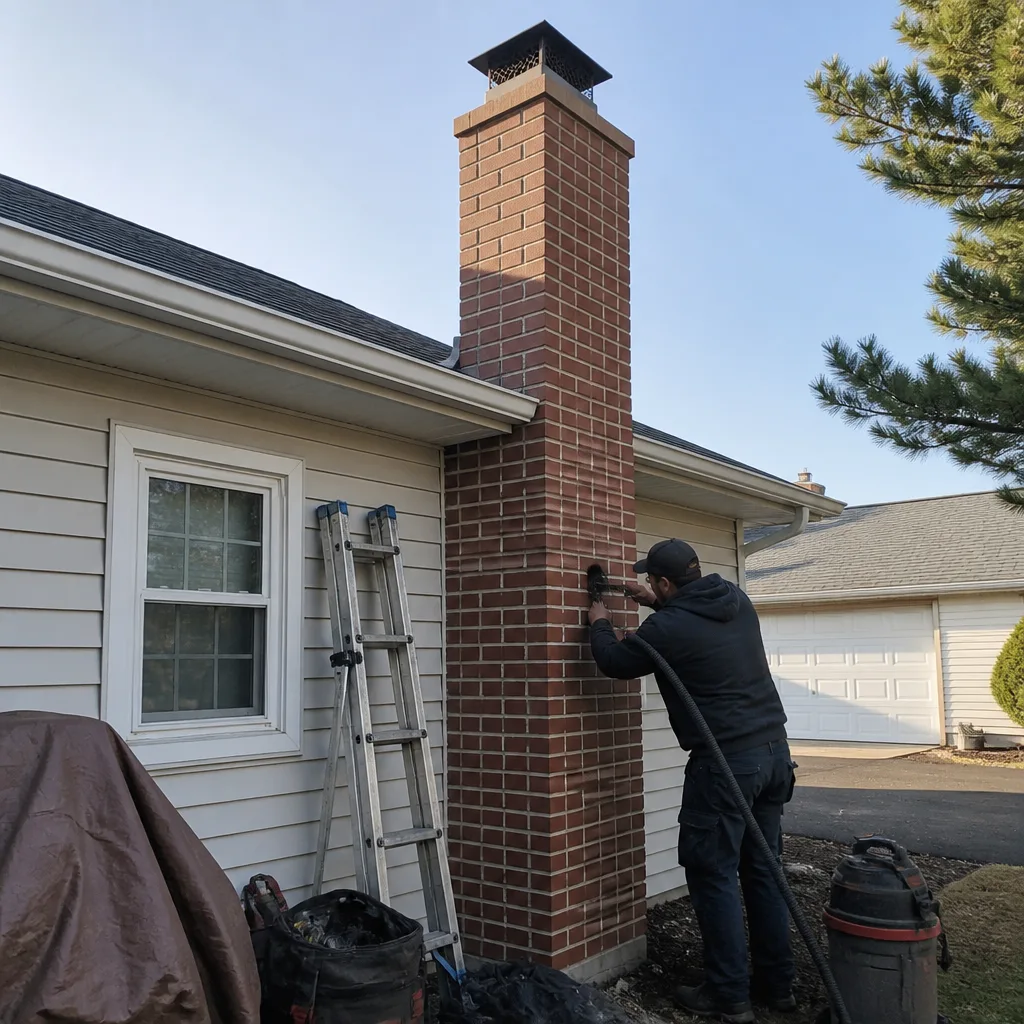 After
After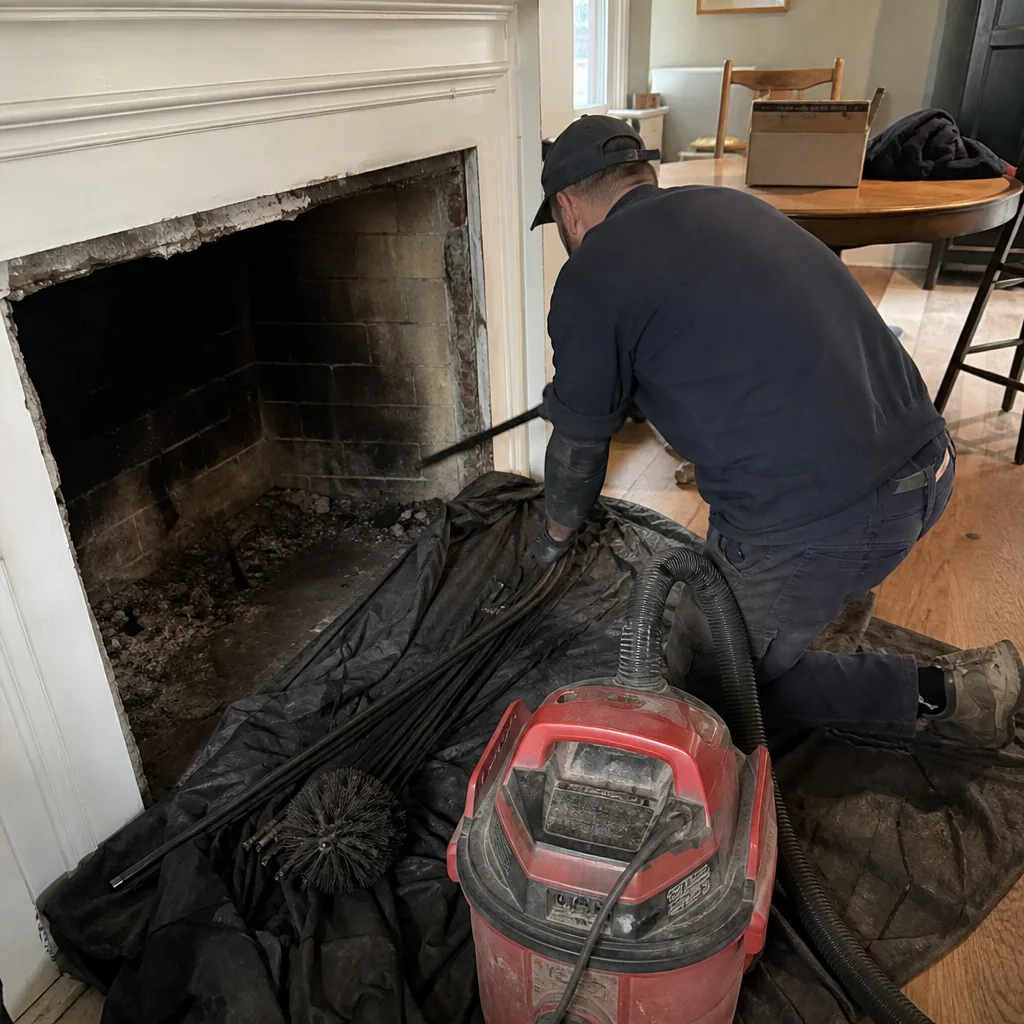 Before
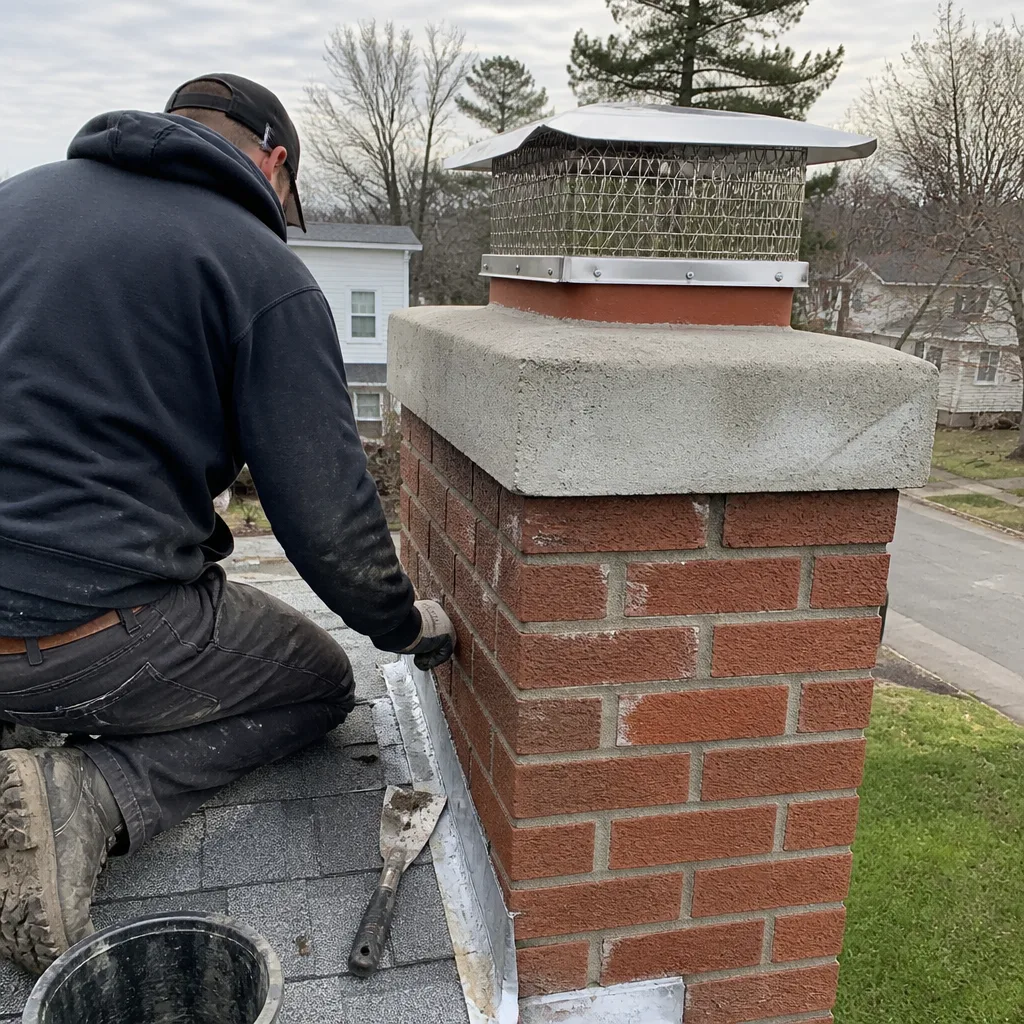 After
After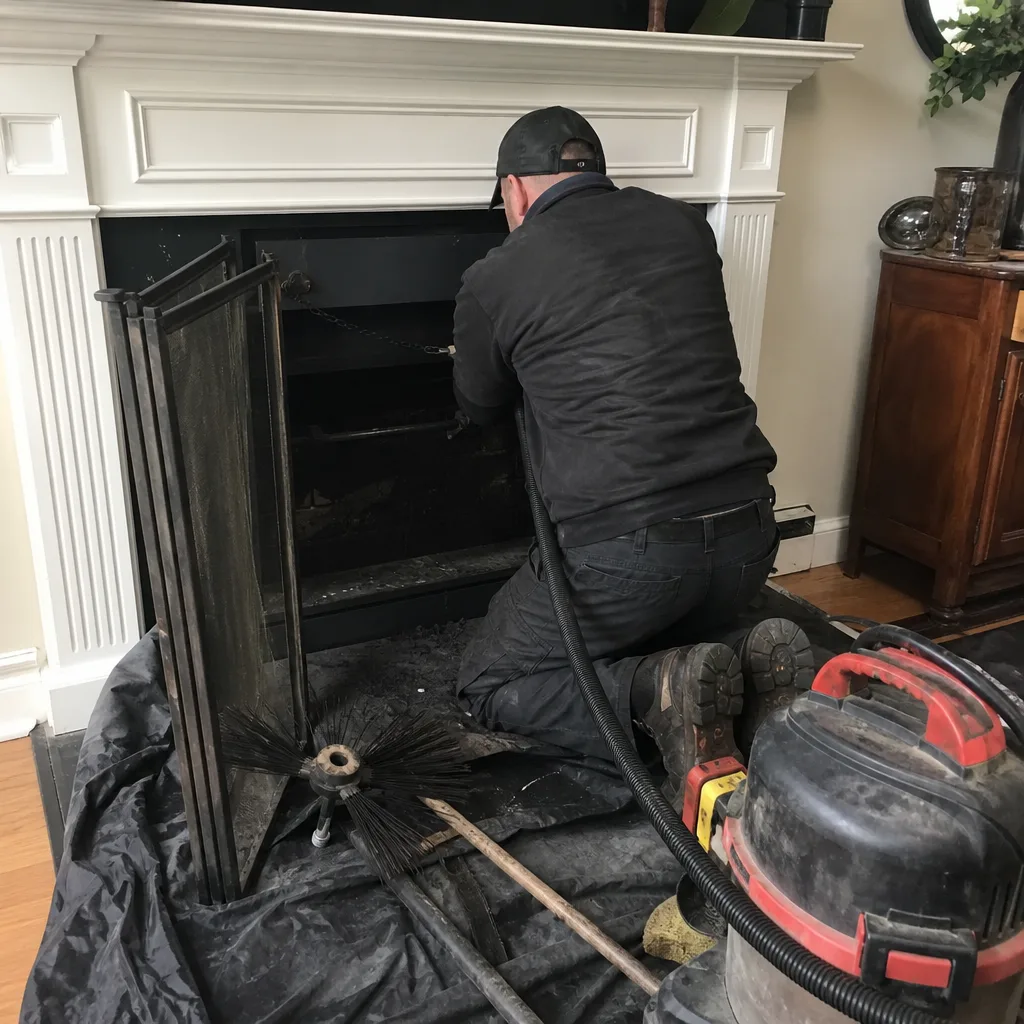 Before
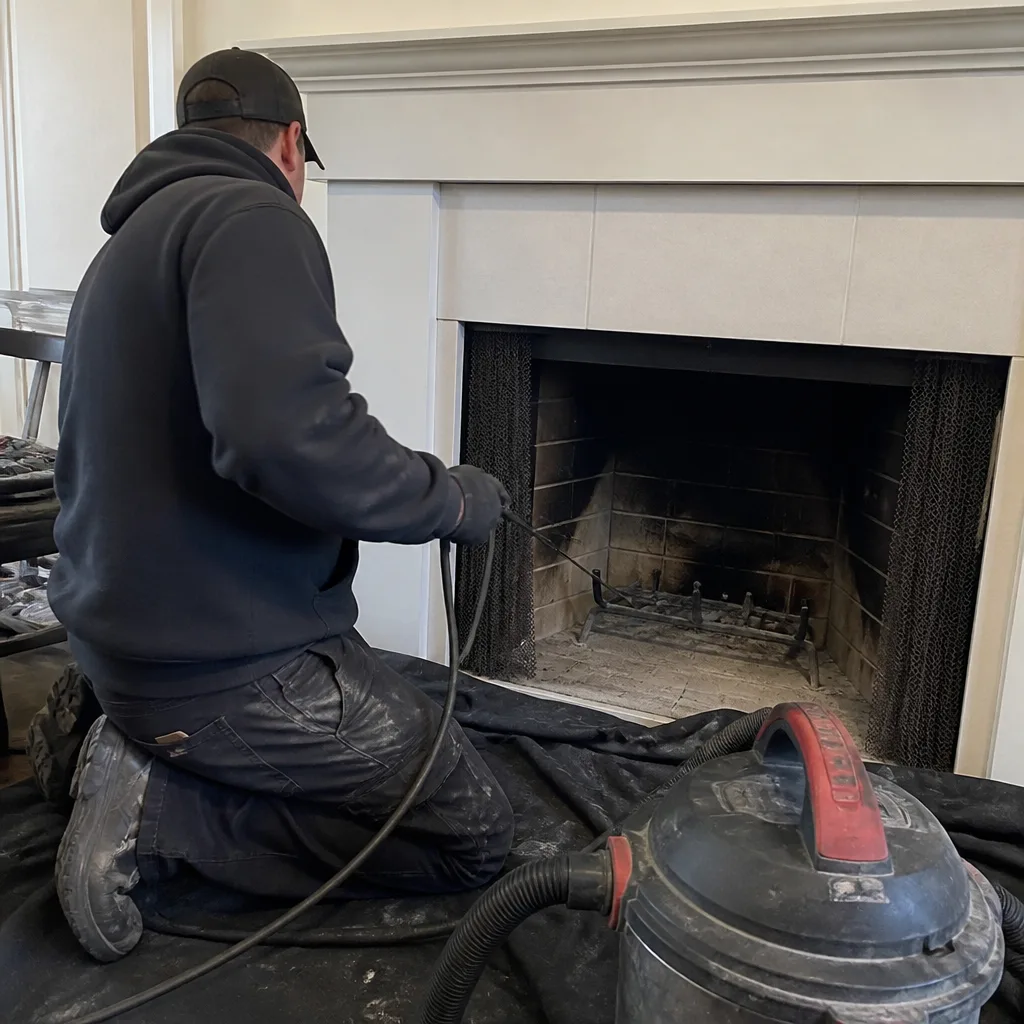 After
AfterChimney Cleaning & Sweep Maintenance Checklist for Long Beach Homeowners
Most homeowners assume the dangerous stuff in a chimney is the thick black creosote. In Long Beach, after nearly three decades of first visits, Wendell finds something else more often: a damper that hasn’t opened fully in years. The homeowner has been building fires, paying heating bills, and breathing whatever didn’t vent properly, all because a metal plate above the firebox seized up sometime during the Obama administration. This guide - along with our Complete Guide to Chimney Cleaning in Long Beach - walks you through what to check, where to check it, and when to leave it alone, so you’re not blindsided by a five-thousand-dollar repair that could have been a two-hundred-dollar fix.
Quick Answer
A chimney maintenance checklist for Long Beach homeowners comes down to five inspection points: the firebox floor, the damper plate, the smoke shelf, the exterior crown, and the flashing. Check those spots twice a year with a flashlight and your phone camera, and you’ll catch most problems before they become structural. If the damper moves freely, the flue tiles aren’t shedding, and there’s no water staining on the ceiling near the chimney, you’re likely in good shape.
Table of Contents
- Checking the Firebox Floor
- The Damper Plate: The Most Overlooked Part
- The Smoke Shelf and Where Creosote Actually Collects
- The Exterior Crown and Long Beach Weather
- Flashing: What Freeze-Thaw Cycles Do to Your Roof Joint
- The Seasonal Maintenance Sequence
- How to Document Your Chimney with a Phone Camera
- When the Checklist Tells You to Skip the Sweep
Checking the Firebox Floor
Start where the fire actually happens. The firebox floor is the flat surface at the bottom of your fireplace. You’re looking for three things: cracked firebrick, gaps in the mortar joints, and debris that shouldn’t be there.
Good firebox brick is smooth, intact, and light tan or cream colored. Cracks hairline or wider mean the brick has been through enough heat cycles to start failing. A single hairline crack isn’t an emergency, but two or more crossing each other means the firebox floor is working its way toward replacement. In Long Beach homes near the water, we see accelerated brick spalling because salt air and moisture get into tiny surface pores and expand during freeze-thaw cycles. The brick face literally pops off in thin flakes.
What you can do yourself: sweep out fine ash with a brush, not a vacuum. Ash contains embers that can smolder for days. Use a metal ash bucket and carry it outside immediately. Check for small animal debris, which happens more than you’d think in Long Beach neighborhoods with older trees and mature landscaping. Squirrels and birds find their way in through damaged caps.
What you shouldn’t do: chip out cracked brick or repoint mortar yourself. Firebox repair requires refractory cement rated for direct flame contact. Regular mortar breaks down under firebox temperatures. If you see cracks wider than a dime or bricks that move when you press them, that’s a call to Chimney Repair in Long Beach.
The Damper Plate: The Most Overlooked Part
The damper is the metal plate above the firebox that opens to let smoke out and closes to keep cold air from dropping down the flue when there’s no fire. It’s the single most common failure point Wendell sees on first visits to Long Beach homes, and it’s almost never mentioned on generic maintenance checklists.
Here’s what to check. Reach up with a flashlight and look at the damper plate. Soot on the underside is normal. Rust is not. A damper that’s rusted through will eventually break off its hinge, and then it either falls into the firebox or jams permanently in whatever position it last held. If the handle turns but the plate doesn’t move, the linkage has come loose from years of heat expansion and contraction.
The test: open and close the damper fully three times. It should move with consistent resistance, no grinding, no catching. If it moves freely but you hear metal-on-metal scraping, the linkage is loose. If it won’t move at all, it’s seized or already broken. A partially open damper is worse than a closed one in some ways. The fire draws fine when the flue is hot, then smolders and backdrafts when it cools down. We’ve seen carbon monoxide readings in living rooms trace straight back to a damper that was stuck 40% open.
You can test damper function yourself. You cannot replace a damper yourself, not on most Long Beach fireplaces from the 1950s through the 1990s. It’s tight work inside the smoke chamber, and a dropped damper plate can crack the firebox floor below. Leave that one to a sweep who’s done it a hundred times.
The Smoke Shelf and Where Creosote Actually Collects
Your flue doesn’t care how the fire looks. It cares how it breathes. Creosote builds up everywhere smoke touches, but it collects heaviest in two specific places: the smoke shelf, which is the flat ledge right above the damper, and the first few feet of flue tile above it.
The smoke shelf catches creosote because smoke cools as it enters the wider chamber, and the particles drop out of the air and settle. First-degree creosote is a brush job. Flaky, dusty, loose. A standard sweep takes care of it. Second-degree is harder, shiny in spots, the texture of stale brown sugar. It takes more work but still comes off with hand tools or rotary equipment. Third-degree is a glaze: hard, glossy, dark as road tar. That’s the stuff that burns at over 2,000 degrees and can’t be brushed out. If you have third-degree creosote, you need chemical treatment or professional removal, and sometimes both.
You can’t see the smoke shelf from the firebox without a mirror and good light. What you can do is look for the warning sign: more smoke coming into the room than usual when you start a fire, especially during the first few minutes. That means the smoke shelf is loaded up and disrupting airflow. It’s also a sign the flue needs cleaning, not just the firebox.
Wendell and his crew run a camera up the flue on every sweep, and you see the footage. The camera footage and a plain-English verdict, every time, no exceptions. That’s the difference between trusting someone who says the shelf is clean and knowing it because you watched the screen with them.
The Exterior Crown and Long Beach Weather
The crown is the concrete slab that sits on top of the chimney and sheds water away from the flue tiles. It’s the most weather-exposed part of your entire chimney, and in Long Beach, it’s fighting salt air, freeze-thaw cycles, and hurricane-season wind-driven rain all at once.
From the ground, you’re checking for two things: visible cracks in the crown surface and missing chunks at the edges. Use binoculars if you have them. A crown that’s working is smooth, slightly sloped away from the flue, and has no cracks wider than a pencil line. Hairline cracks from the freeze-thaw cycles of a Long Beach winter are common, and by themselves they’re not urgent. But cracks that run edge to edge or have vegetation sprouting from them mean water is getting down into the chimney structure.
Water is the enemy, not fire. A cracked crown lets rain and snowmelt into the brickwork, and every freeze-thaw cycle pushes the bricks a little further apart. After five or ten years of that, you’re looking at spalled bricks, rotted flashing, and ceiling stains inside the house. The crown is a few hundred dollars to repair or replace. The chimney rebuild it prevents is thousands.
For a closer look, you need a ladder and the confidence to use it safely. If you’re comfortable with heights, climb up and run your hand along the crown edge. Loose chunks of concrete that wiggle mean the crown is actively failing. If you’re not comfortable on a ladder next to your roofline, don’t do it. A fall from that height is worse than any chimney problem. Call us instead; no trip charge inside the county.
Flashing: What Freeze-Thaw Cycles Do to Your Roof Joint
Flashing is the metal strip where the chimney meets the roofline. It’s meant to seal that joint so water runs around the chimney instead of into the house. In Long Beach, flashing takes a beating every winter as the roof and chimney expand and contract at different rates.
What good flashing looks like: metal that sits flush against the chimney, no gaps, no rust streaks staining the brick below, and caulk that’s intact where the flashing meets the masonry. What failing flashing looks like: pulled-away metal, rusted-through sections, old caulk that’s cracked and peeling, or water stains on the ceiling near the chimney inside the house.
Check your flashing from inside first. Go up to the attic and look at the chimney chase with a flashlight. Water intrusion shows up as dark staining on the wood framing around the chimney, or small rust spots on nails. Then check from outside if you can do it safely from ground level with binoculars. Flashing failure is the most common cause of chimney-related ceiling stains in Long Beach homes built before 1980, because the original flashing was often thin galvanized steel that’s now forty-plus years old.
You can recaulk flashing yourself if the metal is intact and you’re handy with a caulking gun. Use a high-temperature silicone rated for exterior masonry. If the metal itself is rusted through or pulling away from the brick, that’s a replacement job. The flashing needs to be cut out and re-laid, and doing it wrong invites more water than you started with.
The Seasonal Maintenance Sequence
Once a year, burn or no burn. Chimneys break in the off-season too. In Long Beach, the practical approach is two inspections per year: one in early fall before burning season starts, and one in late spring after it ends. Each inspection takes fifteen minutes and covers the same five points.
Here is the fall sequence, in order:
- Check the firebox floor. Clear any ash from last season, look for cracks, check for animal debris.
- Test the damper. Open and close it three times. It should move smoothly. If it’s stiff or stuck, that’s the call.
- Look up the flue with a flashlight. From the firebox, you can usually see the first few feet. You’re looking for thick deposits or anything that doesn’t look like brick.
- Check the exterior crown from the ground. Binoculars help. Cracks, missing pieces, vegetation, anything that looks off.
- Inspect the flashing. From inside the attic and from outside at ground level. Water stains, rust, pulled metal.
- Document everything with your phone. Photos of the same five spots, same angles, every season.
The spring sequence is the same list in reverse, with one addition: check for any new water staining since winter ended. Freeze-thaw cycles in February and March are when Long Beach chimneys show their damage. What was a hairline crack in October can be a gap by April.
How to Document Your Chimney with a Phone Camera
Your phone is the best chimney maintenance tool you own, because it gives you a baseline for comparison year over year. Here’s the method we recommend to Long Beach homeowners who want to track their chimney without hiring someone every six months.
Take six photos, twice a year, from the same angles every time. Photo one: the full fireplace from standing height. Photo two: the firebox floor, close up. Photo three: the damper plate, flash on, from directly below. Photo four: the flue from the firebox looking straight up. Photo five: the exterior chimney from the ground. Photo six: the flashing at the roofline, if you can get a clear shot. Label them with the date and keep them in a dedicated album on your phone.
Why this matters: hairline cracks are hard to remember. You’ll look in October and think, “Was that crack there last year?” With the photo album, you know. If a crack is growing, you see it. If water staining is spreading in the attic, you see it. If the cap screen is getting salt corrosion, you see it. You’re building a record that tells you when to act and when to wait.
This is also the smart way to deal with any contractor who quotes you a repair. You have proof of what the chimney looked like before. If someone says a crack appeared recently and you have three years of photos showing that crack unchanged, you know the truth. We tell Long Beach homeowners to bring out their phone photos during estimates, and we’ll walk through what actually changed and what didn’t.
When the Checklist Tells You to Skip the Sweep
A sweep who tells you honestly when the job doesn’t need doing is worth keeping. Here’s the plain truth: not every chimney needs a sweep every year. If you burn seasoned hardwood, if your fires burn hot and clean, if you use your fireplace occasionally rather than as a primary heat source, you might go two years between professional sweeps without any problem.
The checklist tells you when it’s time. Thick, shiny deposits on the flue walls when you look up with a flashlight, that’s a sweep. Smoke coming into the room when you start a fire, that’s a sweep. A damper that’s stiff or stuck, that’s a sweep with a repair likely. Water stains anywhere near the chimney, that’s an inspection to find the source. But if your checklist turns up clean, your damper moves freely, and your fires have been drawing well all season, you don’t need someone showing up to clean a flue that isn’t dirty.
We’ve told Long Beach homeowners exactly that on more occasions than we can count. It doesn’t make us money in the short term. It does mean that when the chimney does need work, we’re the ones they call, because they know we won’t invent a problem to bill for. Ask anyone on your street.
Common Mistakes to Avoid
- Skipping the damper check. Most checklists skip this entirely, and it’s the most common expensive failure we find in Long Beach homes. A stuck damper either costs you heat all winter or backdrafts smoke into the house.
- Burning unseasoned wood. Wet or green wood doesn’t burn hot enough to prevent creosote buildup. It’s the single fastest way to turn a first-degree creosote problem into a third-degree glaze in one season.
- Using the wrong cleaner on the firebox. Standard household cleaners leave residues that burn off as fumes on the next fire. Use plain water and a stiff brush, or products made specifically for masonry fireplaces.
- Ignoring the cap screen. In Long Beach, salt corrosion eats cap screens faster than they age out. A corroded screen comes apart and lets birds and squirrels into the flue, which can create a blockage overnight.
- Waiting for smoke to be a problem before cleaning. Creosote doesn’t always signal itself with visible smoke. It builds up silently, and you only find out it’s there when a chimney fire starts or a sweep runs a camera up the flue.
- Trusting a quote over the phone from a company that hasn’t seen the chimney. If someone quotes you a sweeping price before looking at the chimney, that’s not a quote. That’s a starting bid. The number you hear on the phone should be the number on the invoice, and if it isn’t, the company wasn’t straight with you from the start.
When to Call a Professional
Call when the damper is stuck or the linkage is loose. Call when you see third-degree creosote, the shiny glaze that doesn’t brush off. Call when water staining appears on the ceiling near the chimney or on the attic framing around it. Call when the crown has cracks wider than a pencil or pieces missing from the edge. Call when the flashing is rusted through or pulling away from the brick. These aren’t weekend projects for the average homeowner, and trying them without training turns a five-hundred-dollar job into a five-thousand-dollar one. For the jobs that do need doing, our Chimney Cleaning & Sweep services cover everything from routine maintenance to glaze removal. Top Hat Chimney offers free estimates in Long Beach, and we bring the camera footage and a plain-English verdict every time. Reach Wendell at (631) 378-3317.
Frequently Asked Questions
Once a year if you burn regularly, every two years if you burn occasionally and your checklist comes back clean. Homes near the water that see heavy salt exposure may need cap and crown inspection more frequently, but the sweeping schedule depends on how much you burn and what you burn. Call (631) 378-3317 and we’ll give you a straight answer for your fireplace.
A standard sweeping in Long Beach typically runs $180 to $320 depending on the level of creosote and whether it’s a standard or glaze removal. That’s the honest range, not a teaser price that changes when the sweep shows up. We give upfront pricing before a single tool comes off the truck, and the number you hear is the number on the invoice.
Not necessarily, and don’t accept a liner replacement quote without camera evidence. Cracked flue tiles can sometimes be repaired with HeatShield, which we install, or with a liner system if the damage is extensive. You should see the footage yourself before you agree to anything. Free second opinion on any written estimate, always.
Creosote builds up in layers, and what starts as brushable first-degree creosote hardens into a glaze that can’t be swept out. Eventually the flue narrows, airflow drops, and you get smoke in the house or a chimney fire. The damage compounds over time: water goes where the glaze holds it, and brick starts to break down. The longer you wait, the more expensive it gets.
You can clear debris from the firebox and test the damper yourself. You cannot safely clean the flue without the right brushes, rods, ladder setup, and experience. The risk isn’t just a mess; it’s falling from the roof or dropping a brush assembly down the flue and cracking the smoke shelf. That’s not a job to learn from a video.
Yes, and no trip charge inside the county. We’ll come out, run a camera up the flue, and show you exactly what we’re seeing. If the chimney doesn’t need work, we’ll tell you that too. Call (631) 378-3317 to schedule.
The Bottom Line
Your chimney is a system, and the parts that fail first are the ones nobody looks at: the damper, the crown, the flashing. Check those five points twice a year, document what you see with your phone, and you’ll catch most problems early. When the checklist tells you something’s wrong, Chimney Cleaning & Sweep in Long Beach is a phone call away, and when it tells you everything’s fine, skip the sweep without guilt. For more on keeping the whole fireplace working right, see our Fireplace Services in Long Beach page. Wendell and his crew have been at this since 1999, and the 90-Day Done Right Promise means if it’s not done right, one call brings us back at no charge. Reach us at (631) 378-3317. If you’re new here, start at the Top Hat Chimney home page to see the full scope of what we do.
Written by Wendell Pike, Owner at Top Hat Chimney, serving Long Beach since 1999.