
Last updated September 10, 2026
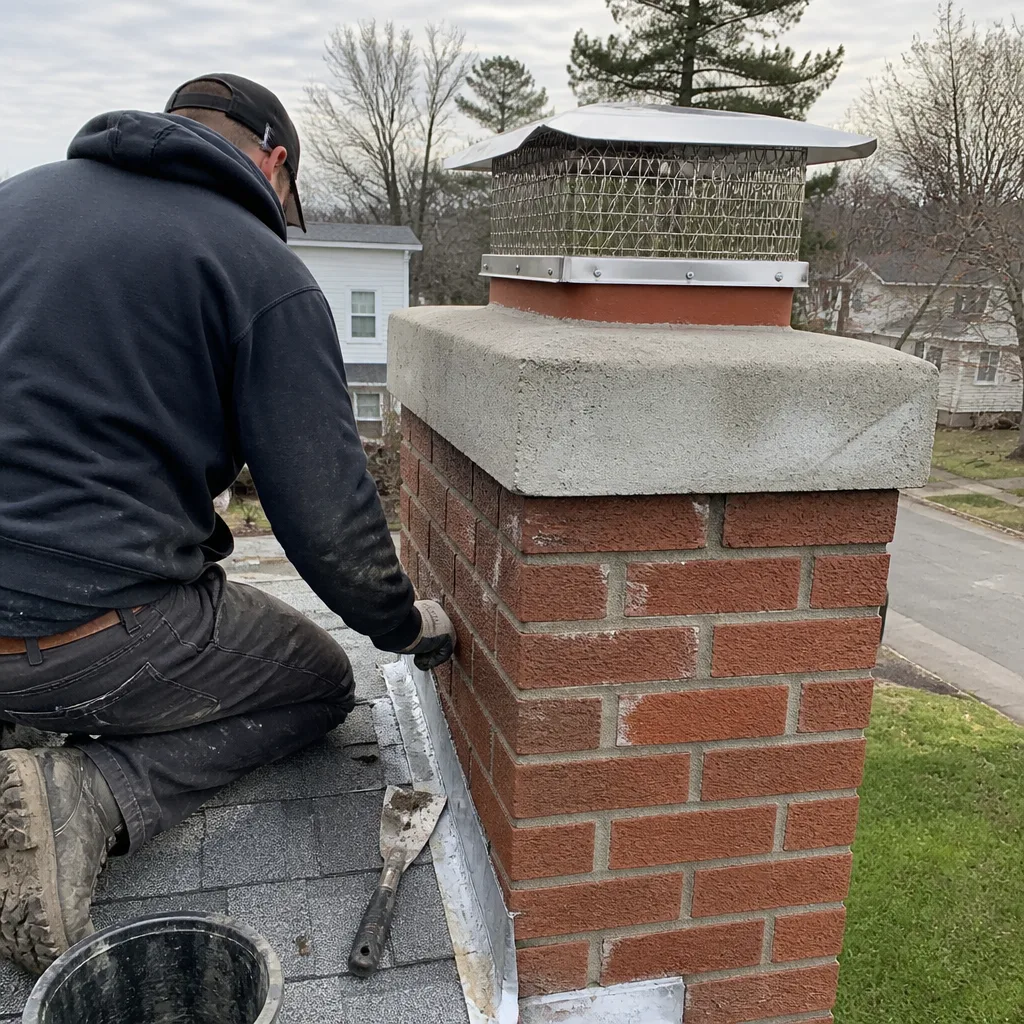
Level 1 sweep and inspection to the NFPA 211 annual standard - flue, crown, cap, and flashing checked and photographed
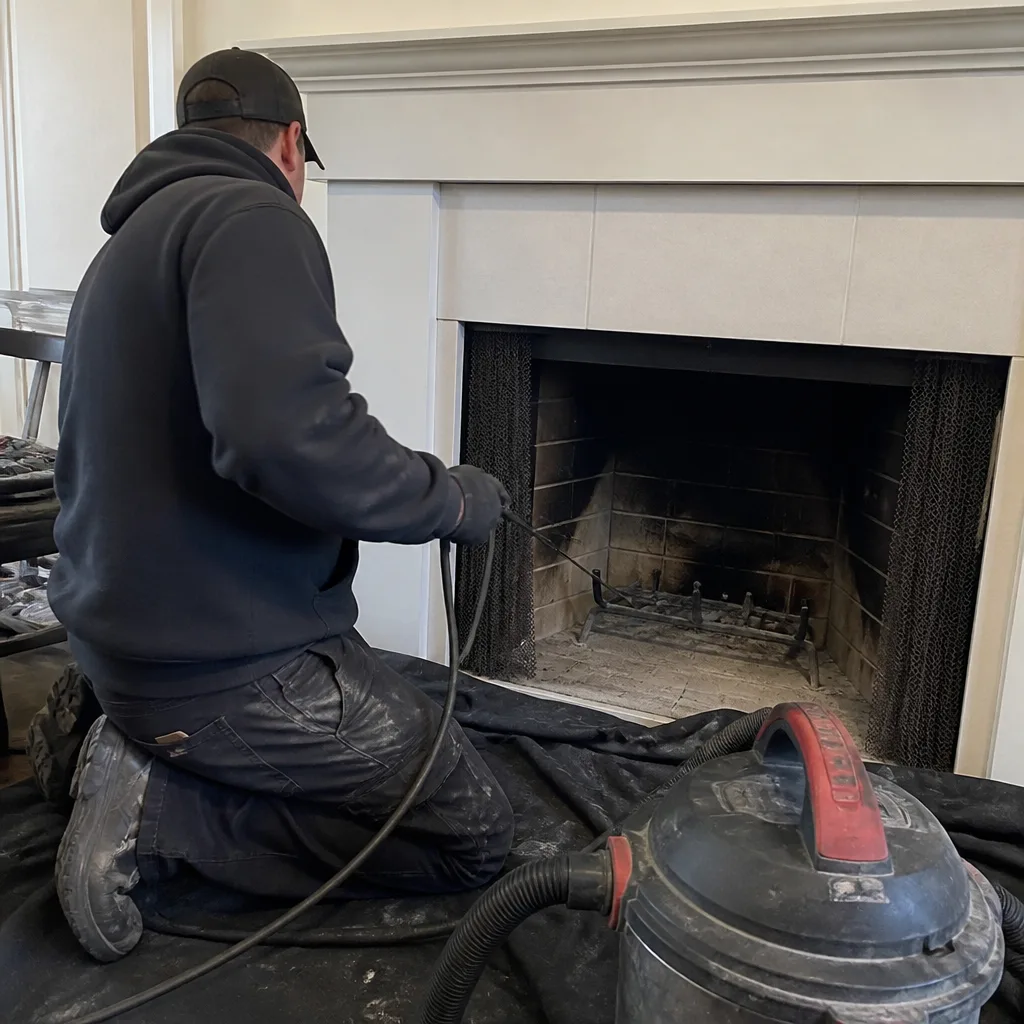
Chimney sweep logs do not sweep chimneys. They loosen some creosote - which then falls where a brush and vacuum still have to collect it.
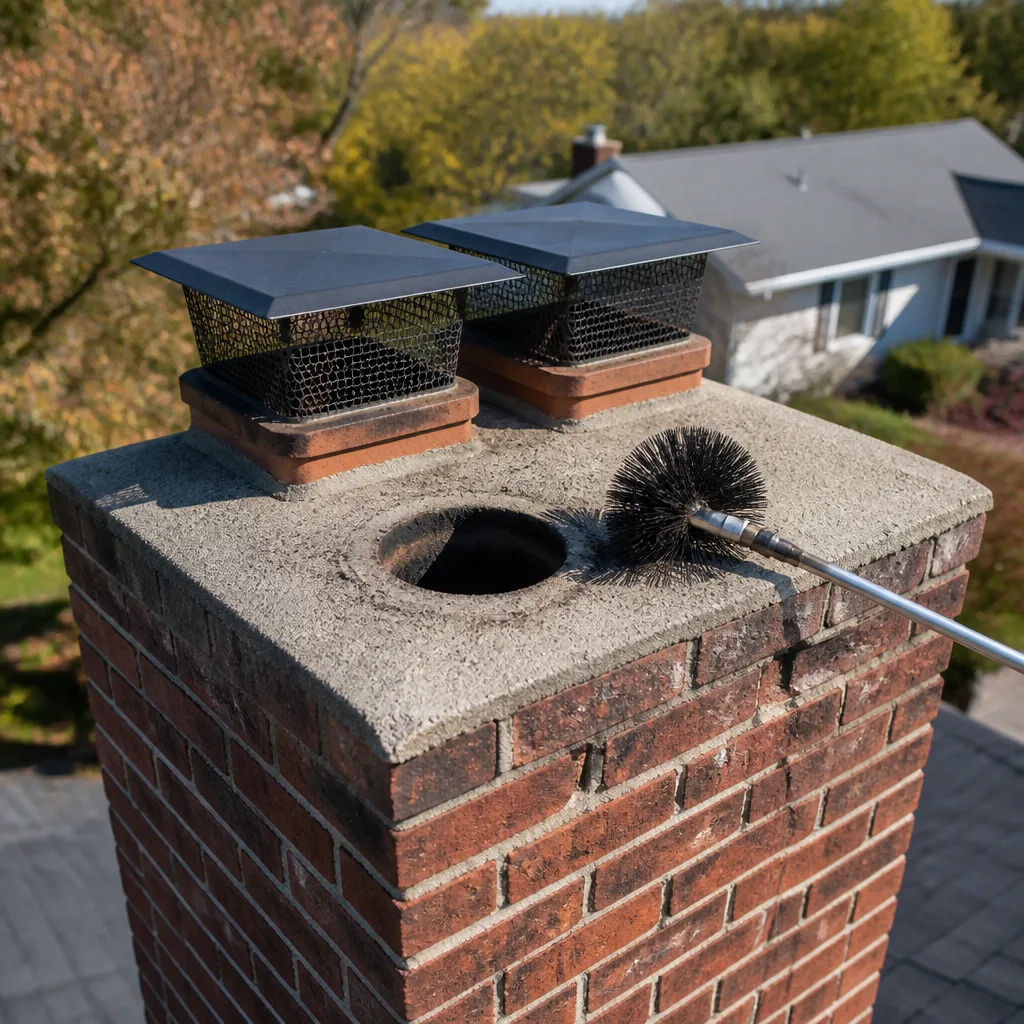
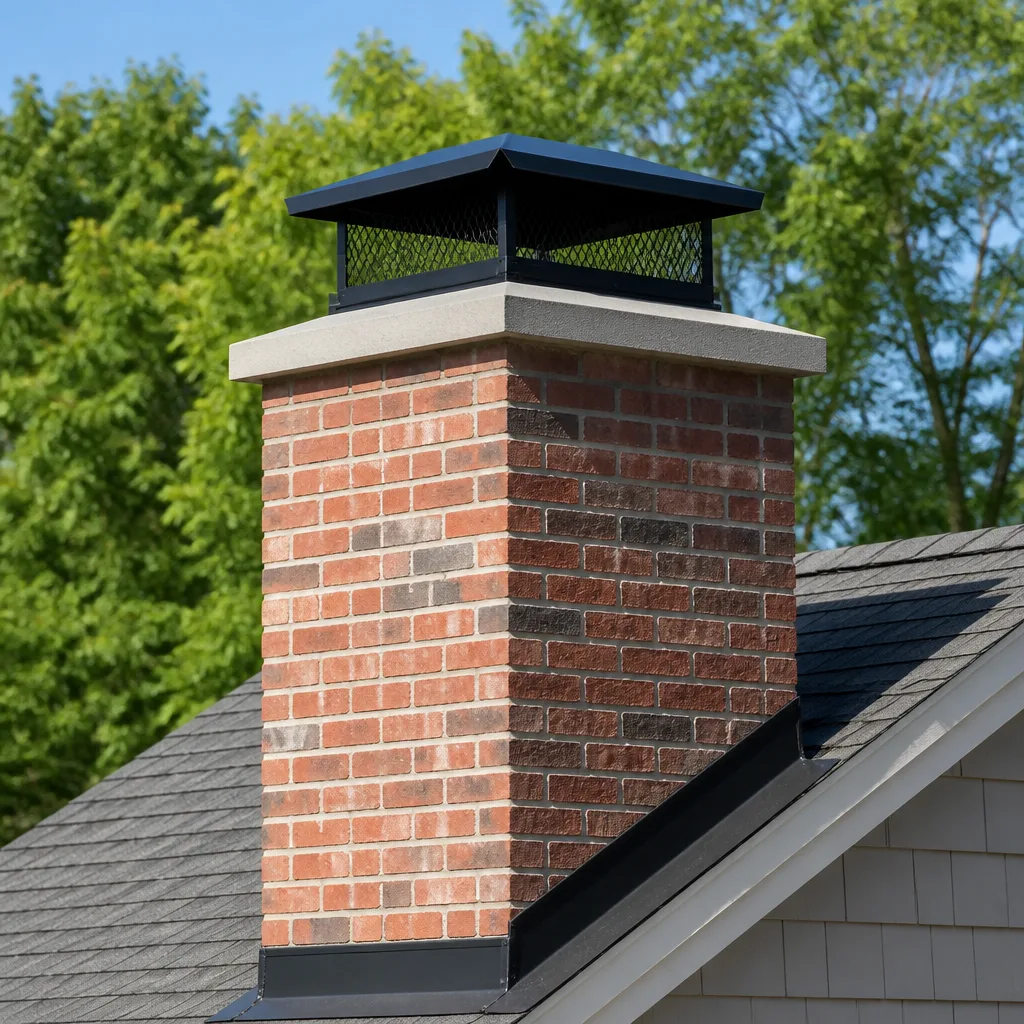
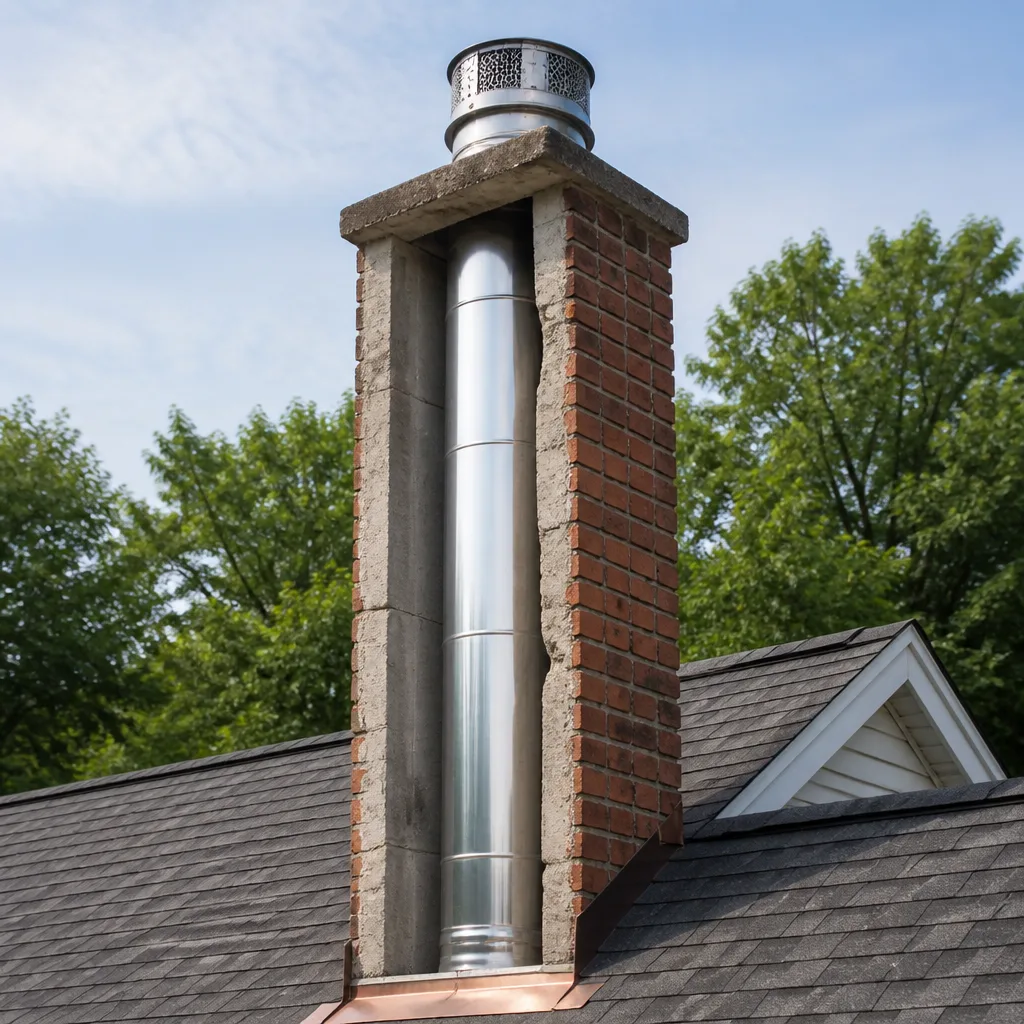
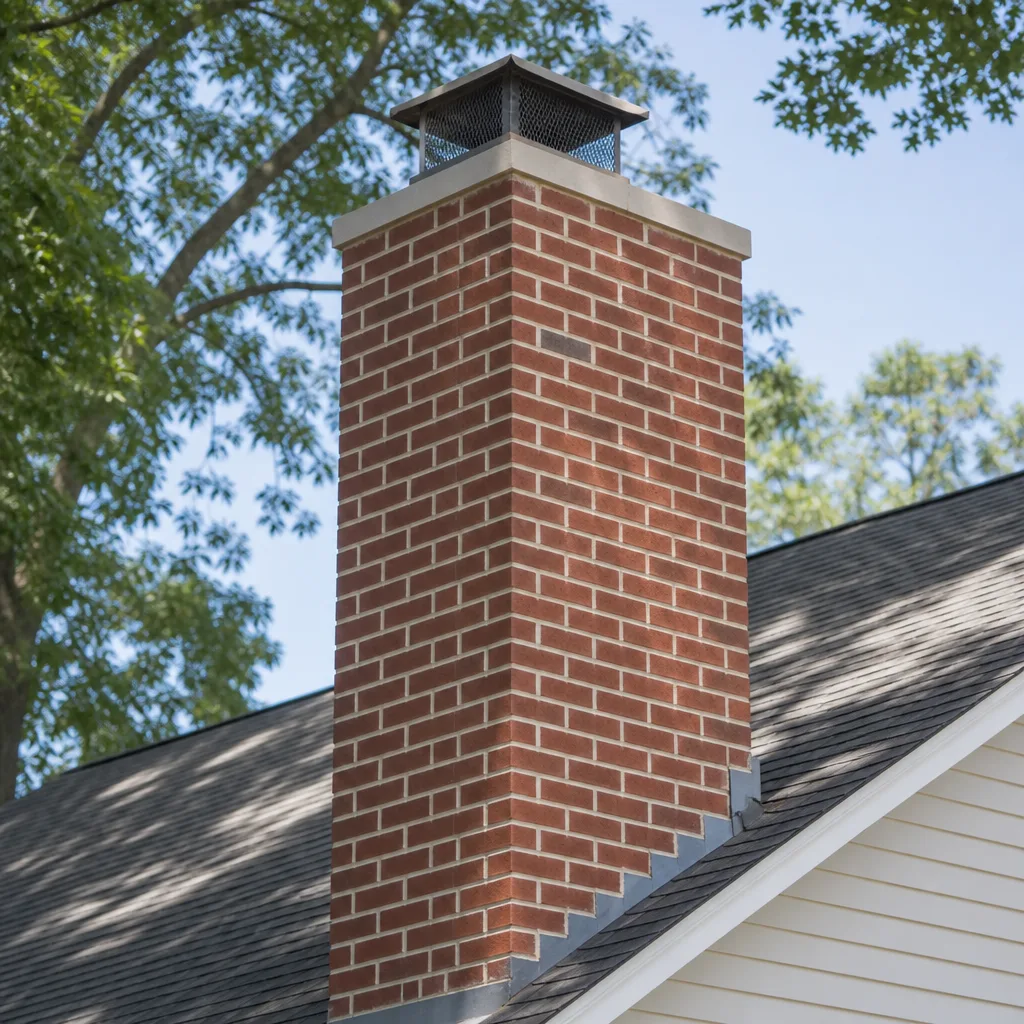
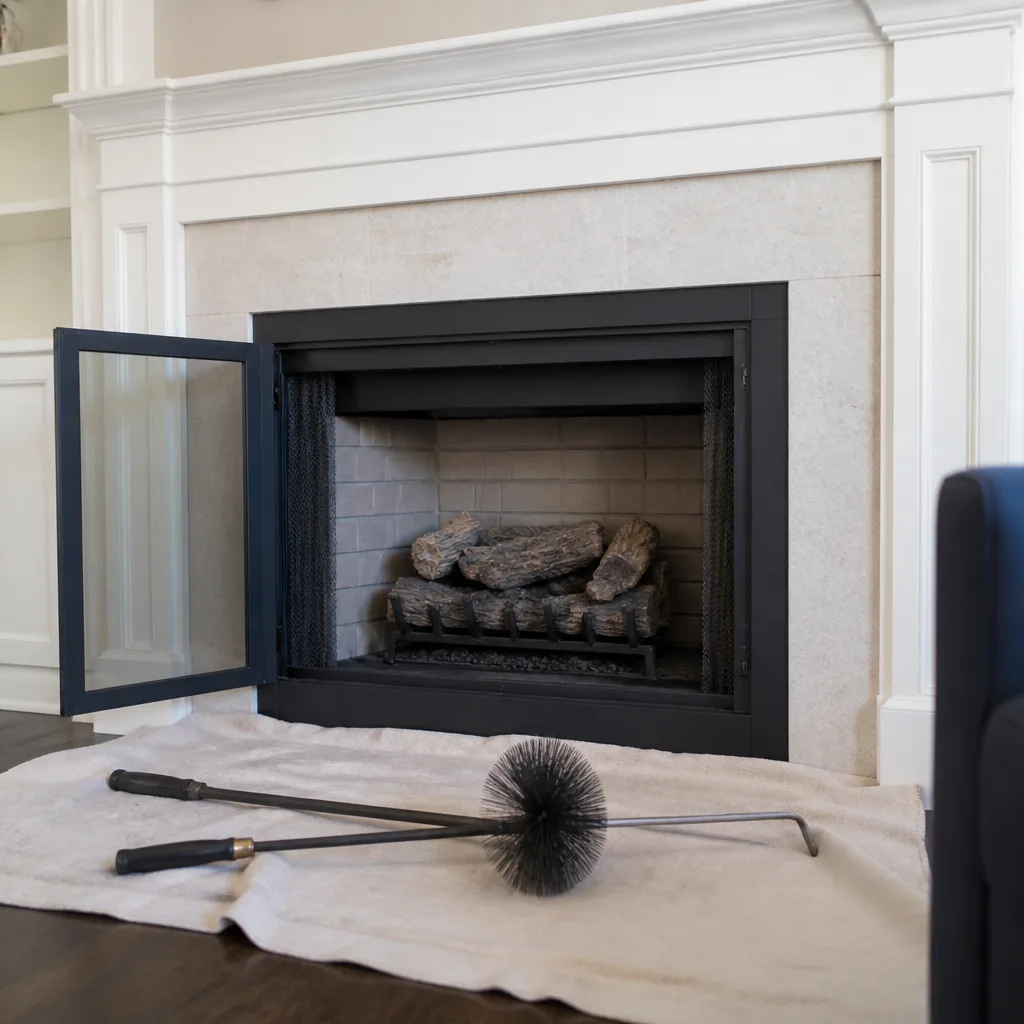
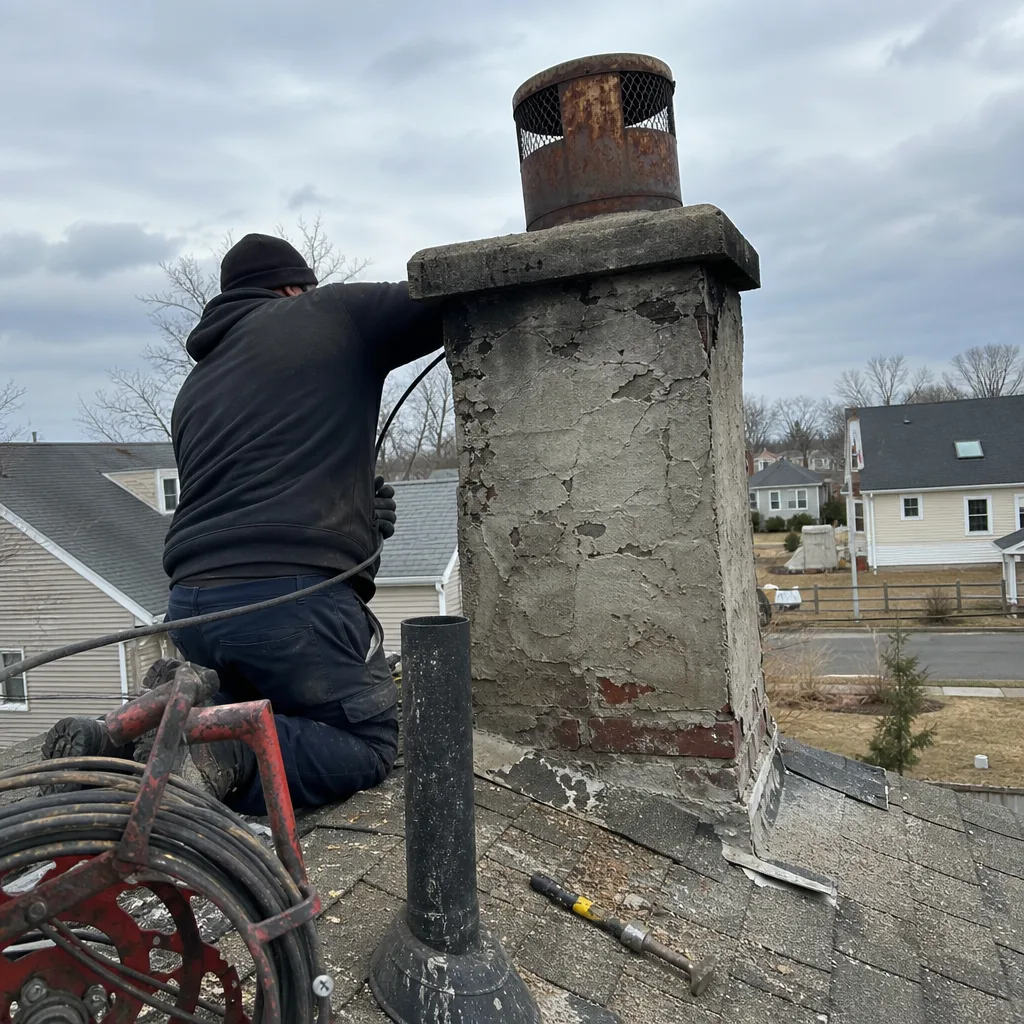 Before
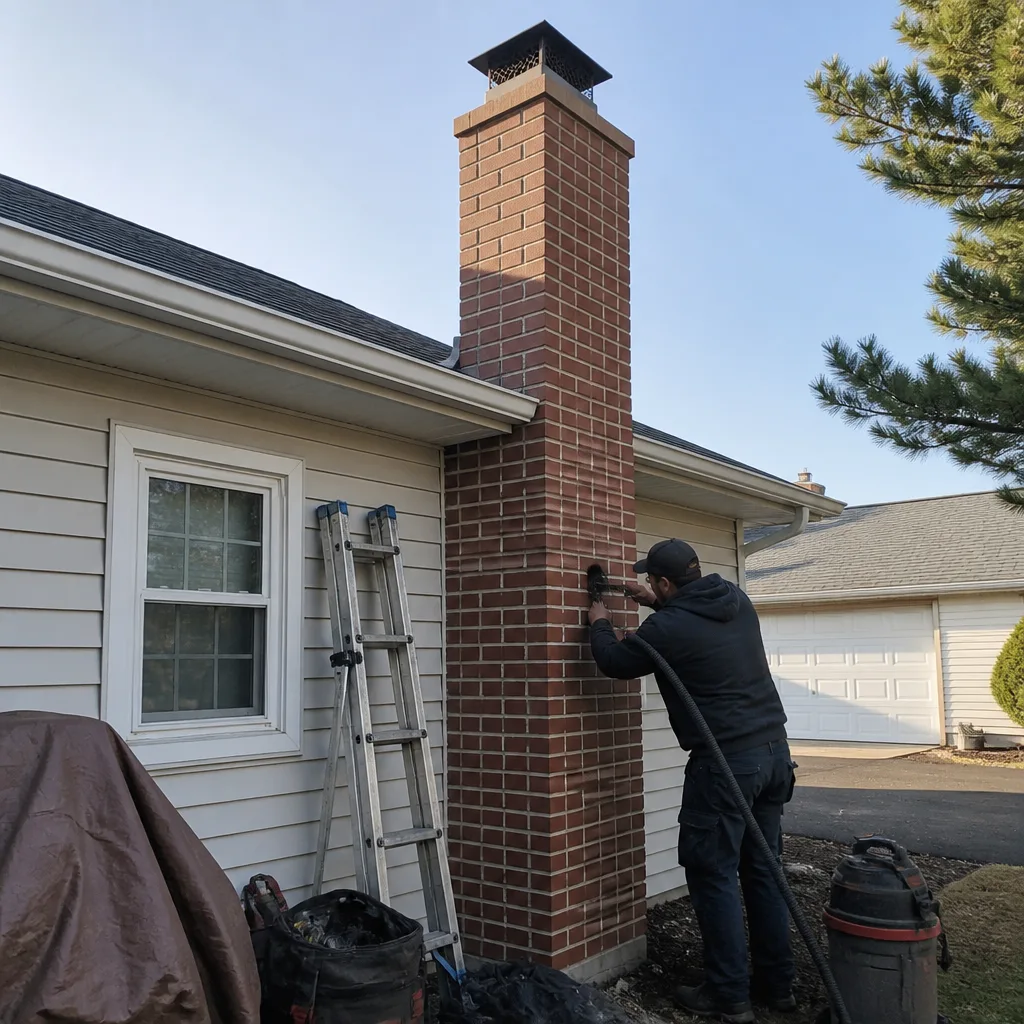 After
After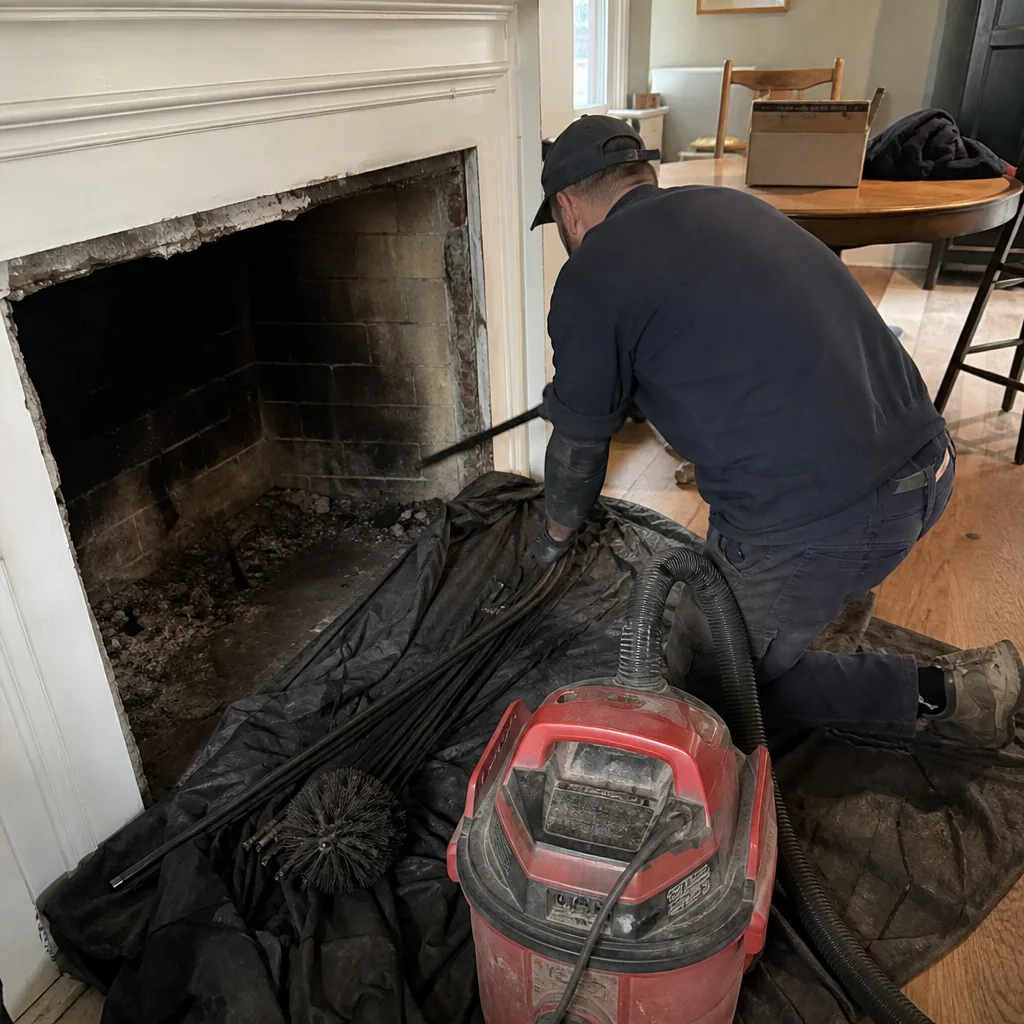 Before
 After
After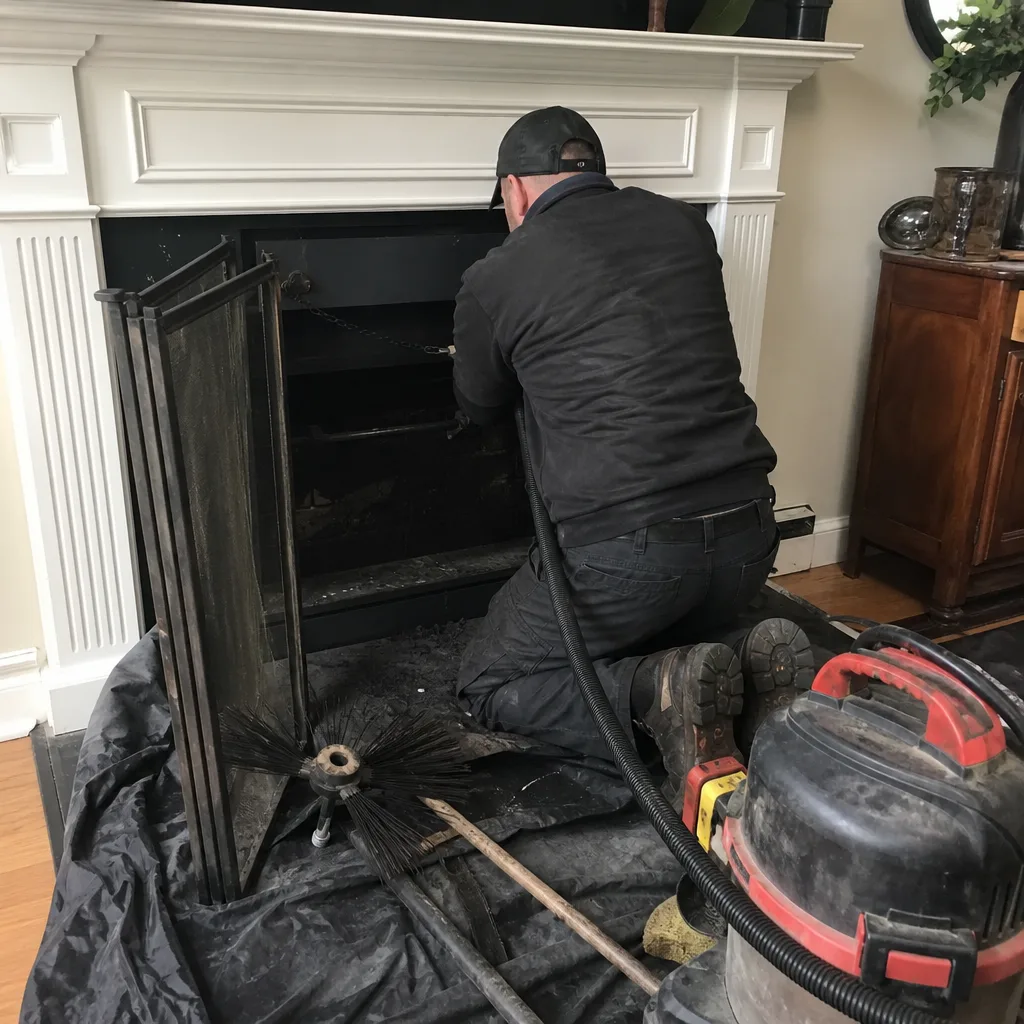 Before
 After
AfterChimney Cleaning Permits, Codes & Inspections in NY: What You Need to Know
A chimney liner replacement in New York is a building alteration that requires a permit in most municipalities. A significant number of them get done without one, and the homeowner only finds out when they file an insurance claim or try to sell the house. This guide explains where the line falls between a routine cleaning (no permit) and a structural repair (permit required), how Long Beach handles it, and what NFPA 211 actually means when a sweep says they follow it. For more context, see our Complete Guide to Chimney Cleaning in Long Beach. We’ll walk through the permit process, the inspection triggers, and the insurance mechanism most people never hear about until it’s too late.
Quick Answer
Chimney cleaning and visual inspection require no permit anywhere in New York State. Repairs that alter the structure, including liner replacement, crown rebuilding, or flue resizing, require a building permit in most NY municipalities including Long Beach, and work done without one can void your homeowner’s insurance coverage for any damage traced to that repair.
Table of Contents
- Cleaning vs. Repair: Where New York Draws the Line
- How Long Beach Issues Chimney Work Permits
- NFPA 211: The Standard Behind the Code
- How an Unpermitted Repair Affects Your Insurance Claim
- The One Scenario Where a Permit Protects You From the Contractor
- What Happens During a Chimney Inspection
- Typical Permit Fees and Timelines in Long Beach
- Common Mistakes to Avoid
- When to Call a Professional
- Frequently Asked Questions
- The Bottom Line
Cleaning vs. Repair: Where New York Draws the Line
Here’s the distinction in plain terms. A chimney cleaning removes creosote, soot, and debris from an existing flue using brushes, rods, and vacuums. Nothing structural changes. The chimney before the cleaning is the same chimney after the cleaning, just less likely to catch fire. No New York municipality requires a permit for this. An inspection is the same story. We look, we measure, we photograph, and we hand you a report. No permit.
A repair is different. If we pull out a damaged clay tile liner and drop a stainless steel one in, that’s an alteration to the building’s structure. If we tear down a cracked crown and pour a new one, that’s an alteration. If we rebuild a section of crumbling brickwork above the roofline, that’s an alteration. In most New York jurisdictions, including Long Beach, these jobs require a building permit before the first tool touches the chimney. The reasoning is simple: a chimney is part of the building envelope and part of the fire protection system. When it changes, the building department wants a record of it.
Some homeowners ask us, “Can’t you just do the repair and skip the permit? It’ll be faster.” We can, technically. We won’t. The permit exists for your protection, not the town’s revenue. We’ll get into exactly why in a few sections.
When you’re comparing quotes from sweeps in Long Beach, ask each one directly: “Does this job require a permit?” If the answer is a shrug or a quick “don’t worry about it,” that’s a red flag. A sweep who knows the local code will give you a straight answer because he’s pulled permits in the town’s system. Wendell Pike has been pulling permits for chimney work in Long Beach and the surrounding Nassau County communities since 1999. He knows the clerk at the building department by first name.
How Long Beach Issues Chimney Work Permits
The City of Long Beach building department handles chimney permits through its standard building permit process. You file an application, describe the scope of work, pay a fee based on the project’s valuation, and wait for approval. For a typical liner replacement or crown rebuild, approval usually takes a few working days to a couple of weeks depending on the department’s queue. Once the permit is issued, the work happens, and then the building inspector comes out to verify the job was done to code. That inspection is the final step before the permit is closed out.
What triggers an inspection in Long Beach? Any permitted structural repair. The inspector will want to see the work before it’s hidden. For a liner replacement, that means the inspector may come between the old liner removal and the new liner installation, or they may schedule a single visit after the liner is in place but before any cosmetic work covers access points. For a crown rebuild, the inspection typically happens after the forms are set and the rebar is placed but before the concrete is poured. These are standard triggers, and a contractor who pulls permits regularly knows the rhythm.
Long Beach has a specific quirk worth knowing. The city sits on a barrier island, and salt air is harder on masonry than anything else in New York. Cracked crowns and spalling brick are common here, and so are the repairs for them. The building department sees a steady stream of chimney repair permits, which means the inspectors genuinely know what they’re looking at. They’re going to check that the new crown overhangs the chimney chase properly, that the mortar mix is right for coastal conditions, and that the wash slope sheds water away from the flue. It’s not a rubber stamp. And that’s a good thing for you.
We’ve also worked in the villages and hamlets around Long Beach, Island Park, Oceanside, Baldwin, and Rockville Centre. Each has its own building department with its own timelines and quirks. The permit process is similar, but the details vary. Some are faster, some are slower, and some have stricter inspection triggers for chimney work. If you’re unsure whether your municipality requires a permit for a specific repair, call our office and ask. If we don’t know the answer off the top of our head, we’ll find out before we quote you.
NFPA 211: The Standard Behind the Code
NFPA 211 is the National Fire Protection Association’s standard for chimneys, fireplaces, vents, and solid fuel burning appliances. It’s not a law in itself. But most New York building codes incorporate NFPA 211 by reference, which means when a Long Beach inspector checks your chimney repair, they’re checking it against NFPA 211’s requirements. The standard is titled “Standard for Chimneys, Fireplaces, Vents, and Solid Fuel-Burning Appliances,” and it covers everything from clearance to combustibles to flue sizing to lining materials.
Why does this matter to a homeowner? Because the quality of your chimney sweep’s work is only as good as the standard they work to. A sweep who can’t tell you what NFPA 211 says about minimum clearance between a chimney and combustible framing is a sweep who’s guessing. A sweep who can cite the specific section is someone who’s done the reading. We follow NFPA 211 on every job, and we’re happy to explain what it requires and why. Chimney Repair in Long Beach should always reference this standard when structural work is involved.
Here’s how to ask a contractor about NFPA 211 without sounding like you’re quizzing them. Try this: “I was reading that chimney work should follow NFPA 211. Does this repair meet that standard?” Then just listen. A competent sweep will say yes and can tell you what it means in practice. A sweep who doesn’t know NFPA 211 will hem and haw, tell you not to worry about it, or worst case, they’ll agree with whatever you say. Walk away from that third one.
NFPA 211 is also the standard that building inspectors in Long Beach and most of New York use when they review chimney work. So if you want to know whether a repair will pass inspection, ask whether it meets NFPA 211. The answer is usually the same.
One more practical note. NFPA 211 says that chimneys, fireplaces, and vents should be inspected at least once a year. Not every other year. Not “when it starts smelling.” Once a year, burn or no burn. Chimneys break in the off-season too, and a small crack caught in May is a $400 repair. The same crack caught in November because smoke is backing up into the living room is a different conversation entirely.
How an Unpermitted Repair Affects Your Insurance Claim
Here’s the mechanism most homeowners never hear about. When you file a claim after a chimney fire or a water damage event that traces back to a chimney repair, your insurance company will ask for documentation. Specifically, they’ll ask for the permit that authorized the repair and the inspection report that closed it out. If the repair was done without a permit, you won’t have either document. And here’s the part people don’t understand: your insurance company doesn’t need to prove the unpermitted repair caused the fire. They need to establish that the repair altered the building illegally, which gives them grounds to deny coverage for the entire claim. It’s not a vague warning. It’s a standard claims adjustment practice.
We’ve seen this happen. A homeowner in Nassau County had a liner replaced by a contractor who said the permit wasn’t necessary. Two years later, a chimney fire started where the liner met the smoke chamber. The insurance adjuster asked for the permit. There wasn’t one. The claim was denied on the grounds that the unpermitted alteration voided the terms of the policy. The homeowner ended up paying for a full rebuild out of pocket. The contractor was long gone. Your flue doesn’t care how the fire looks. It cares how it breathes. And your insurer cares about paperwork.
The same principle applies when you sell the house. A buyer’s home inspector may flag a recently repaired chimney and ask for the permit. If you don’t have it, the deal can stall, die, or force a price concession. Unpermitted work is a known liability in real estate transactions, and local buyers in Long Beach are increasingly asking for documentation before closing.
Fireplace Services in Long Beach that involve structural changes should always include the permit in the quote. It’s not an upsell. It’s the difference between work that protects your house and work that quietly undermines it.
The One Scenario Where a Permit Protects You From the Contractor
Most people think of permits as the government watching over the contractor. It’s actually the opposite. The permit process creates a paper trail that protects you from the contractor. Here’s how.
When a contractor pulls a permit in Long Beach, the city now has a record of what work was supposed to be done. The contractor’s name is on the permit. The scope of work is on the permit. And the building inspector knows the job exists. If the contractor walks off the job halfway through, disappears after taking your deposit, or does work that’s visibly substandard, you have leverage. You can call the building department, give them the permit number, and they’ll follow up. The contractor’s licensing and ability to pull future permits in that jurisdiction is now on the line.
Without a permit, that leverage vanishes. The contractor took your money and left. There’s no record with the city. There’s no inspector expecting a callback. You’re left trying to find a vanishing LLC through the courts. Good luck. Ask anyone on your street who’s been through it. They’ll tell you.
This is also why we include the permit in the quote when a repair requires one. It’s not just compliance. It’s accountability. Wendell puts his name on the work and runs into you again on Saturday. The permit is the town’s copy of his name on the work.
What Happens During a Chimney Inspection
A proper chimney inspection follows a three-level system defined by NFPA 211, and the level depends on why you’re calling and what’s changed. Here’s the breakdown:
- Level 1: This is the annual inspection when nothing has changed. The chimney is visually examined from top to bottom, checking for creosote buildup, blockages, cracks in the flue liner, and crown condition. No special tools, no ladders, no demolition. This is what most Long Beach homeowners need once a year.
- Level 2: This is required when you’re buying or selling a home, after a chimney fire, or after a major weather event like the coastal storms we get on the barrier island. It includes everything from Level 1 plus a video camera scan of the flue interior. The camera footage shows hairline cracks, voids in the mortar joints, and any place where the flue gases could leak into the house.
- Level 3: This is the invasive inspection, used when a Level 2 finds something that needs a closer look. It may require removing portions of the chimney structure to access hidden areas. This is rare, and no reputable sweep will recommend it without a clear reason.
Here’s the part that matters: the camera footage and a plain-English verdict, every time, no exceptions. You should never be told your chimney needs thousands of dollars of work without seeing the footage yourself. We hand you the video, show you the cracks, and explain what you’re looking at. Then we tell you whether the work needs to happen now, whether it can safely wait a season, or whether it’s something to watch. This is the standard we’ve held since 1999, and it’s why the Top Hat Chimney home page is full of reviews that mention the camera. People appreciate being shown, not sold.
Typical Permit Fees and Timelines in Long Beach
Permit fees for chimney work in Long Beach and most Nassau County municipalities are based on the project’s valuation. Here’s a realistic picture of what you’re looking at:
- Liner replacement (stainless steel): Permit fees typically range from $150 to $400 depending on the project’s stated value. Timelines run 3 to 14 days for approval.
- Crown rebuild: Permit fees usually land between $100 and $300. Approval is faster, often 2 to 7 days, because the scope is straightforward.
- Full chimney rebuild: This is a bigger project, with permit fees that can run $400 to $1,500. The review takes longer because structural drawings may be required. Expect 2 to 4 weeks.
- Repointing and masonry patch work: Minor repointing is sometimes classified as maintenance and may not require a permit at all. But if the work involves removing and replacing bricks, the city may treat it as a repair that requires one. Check with the building department before assuming.
These are ballpark ranges based on our experience pulling permits across Long Beach and the South Shore. The exact number depends on your project’s valuation and the current fee schedule at the City of Long Beach building department. When we quote a job, the permit fee is included in the quote, and the number you hear on the phone is the number on the invoice. No surprises, no add-ons. That’s how we’ve done it for over 29 years.
And remember: the permit fee is small compared to what it protects. A denied insurance claim after a fire can cost $20,000 or more. A permit that costs $200 starts looking like the cheapest insurance you’ll ever buy.
Common Mistakes to Avoid
- Skipping the annual inspection because the fireplace “worked fine last year.” Creosote builds up gradually, and first-degree creosote is a brush job while third-degree is a glaze. Catch it early. Long Beach’s coastal humidity accelerates creosote condensation in masonry chimneys even when the fireplace isn’t used much.
- Letting a contractor talk you out of a permit. The contractor saves time; you lose your insurance leverage. It’s never a good trade. Insist on a permit for any structural repair.
- Paying for a liner replacement you couldn’t visually verify. A camera inspection should show you the damage before the work is done. No camera footage, no liner decision. We see cracked flues in Long Beach homes constantly because salt air attacks the exterior and freeze-thaw cycles attack the interior, but we never recommend a liner without footage.
- Assuming the home inspector caught everything. Home inspectors do a visual check; they’re not chimney sweeps. A Level 2 chimney inspection is specific to the chimney and uses a video camera. If you’re buying a home on the barrier island, get the Level 2 before you close.
- Choosing the cheapest quote without asking about permits, insurance, or NFPA 211. A lowball quote often means the permit fee was left out and the standard isn’t the standard. After the fire, the cheap quote costs more than the honest one ever would have.
- Waiting until October to book a cleaning and inspection. Every chimney sweep in Long Beach is booked solid from September through December. Call in spring or summer and you’ll get the date you want, not the date you’re stuck with. Once a year, burn or no burn.
- Burning unseasoned wood to save money. Wet wood produces more smoke, more creosote, and more frequent cleanings. You save nothing. Burn dry, seasoned hardwoods and your flue stays cleaner longer, especially in a coastal climate where moisture is always working against you.
When to Call a Professional
Call a professional if you see smoke backing up into the room, smell a strong creosote odor even when the fireplace is cold, notice cracks in the chimney crown or spalling brick, or if it’s simply been more than a year since anyone looked at the flue. Call immediately if you hear a chimney fire, a loud roaring sound like a freight train coming from the flue, and that’s a 911 call, not a scheduling call. For everything else, Top Hat Chimney offers free estimates in Long Beach and the surrounding South Shore communities. Call (631) 378-3317, and a live person answers, not a voicemail maze. It might be Wendell himself. We’ll give you an honest answer about whether the job needs doing, and if it does, we’ll pull the permit and do it right. That’s the Chimney Cleaning & Sweep in Long Beach service we’ve provided since 1999.
Frequently Asked Questions
No. Chimney cleaning and visual inspection require no permit anywhere in New York State, including Long Beach. The work is classified as maintenance, not alteration. You can schedule a cleaning any time without going through the building department. Call (631) 378-3317 for a cleaning estimate, and we’ll tell you if the inspection during the cleaning uncovers anything that might need permitted work.
A chimney cleaning and Level 1 inspection in Long Beach typically runs $225 to $375 depending on chimney height, condition, and whether a Level 2 camera inspection is added. Homes on the barrier island with salt-exposed masonry sometimes go slightly higher if extra creosote removal is needed. The camera footage and a plain-English verdict come with every inspection, no extra charge. Call (631) 378-3317 for an exact quote. Estimates are free, and the number you hear is the number you pay.
Only if the existing liner is cracked, gap-spaced, or missing sections. A camera inspection will show you the damage on video before we recommend anything. In Long Beach, freeze-thaw cycles and salt air work on chimneys year-round, and hairline cracks can develop in clay tile liners without any visible warning from the outside. But we never recommend a liner replacement without camera evidence. We’ll tell you if the work can safely wait a season or if it needs to happen now. Call (631) 378-3317 for a free estimate.
At least once a year, burn or no burn. NFPA 211 recommends annual inspection and cleaning as needed. Chimneys break in the off-season too, and coastal moisture accelerates the process. A yearly sweep catches creosote buildup while it’s still in the brushable stage, first-degree creosote, before it hardens into the glossy third-degree glaze that requires chemical treatments or more aggressive removal. Long Beach homeowners should book in spring or summer to avoid the fall rush. Call (631) 378-3317 to schedule.
Creosote builds up in the flue. It starts as a flaky residue and hardens into a dense glaze as heat cycles repeat. Eventually, a hot fire ignites it, and you have a chimney fire that can reach 2,000 degrees. Clay tile liners crack under that heat, the fire spreads to framing, and your house is in serious trouble. Even without a fire, a clogged flue sends carbon monoxide back into the living space. The risks are real, the fix is cheap, and the annual habit is the insurance. Call (631) 378-3317 to book a cleaning before burning season starts.
It depends on the scope. Minor repointing that replaces eroded mortar joints without removing bricks is usually classified as maintenance and may not require a permit. If the work involves removing and resetting bricks, repairing a crown, or any structural alteration, the City of Long Beach likely requires a permit. When we quote the job, we’ll tell you whether a permit is needed and include it in the price. Call (631) 378-3317 for a free assessment.
The Bottom Line
Chimney cleaning and inspection need no permit in New York. Structural repairs, liner replacement, crown rebuilds, and brickwork removal, usually do, including in Long Beach. The permit is not bureaucratic overhead. It’s the document that keeps your insurance claim alive after a fire and gives you leverage if a contractor walks off the job. Work to NFPA 211, get a camera inspection every year, and ask directly whether the repair requires a permit. If the contractor hedges, hire someone else. For more guides & resources, explore our blog. Top Hat Chimney has been pulling permits and following NFPA 211 in Long Beach since 1999. Wendell Pike puts his name on every job, answers the phone at (631) 378-3317, and stands behind the work with a 90-Day Done Right Promise in writing.
Written by Wendell Pike, Owner at Top Hat Chimney, serving Long Beach since 1999.