
Last updated September 10, 2026
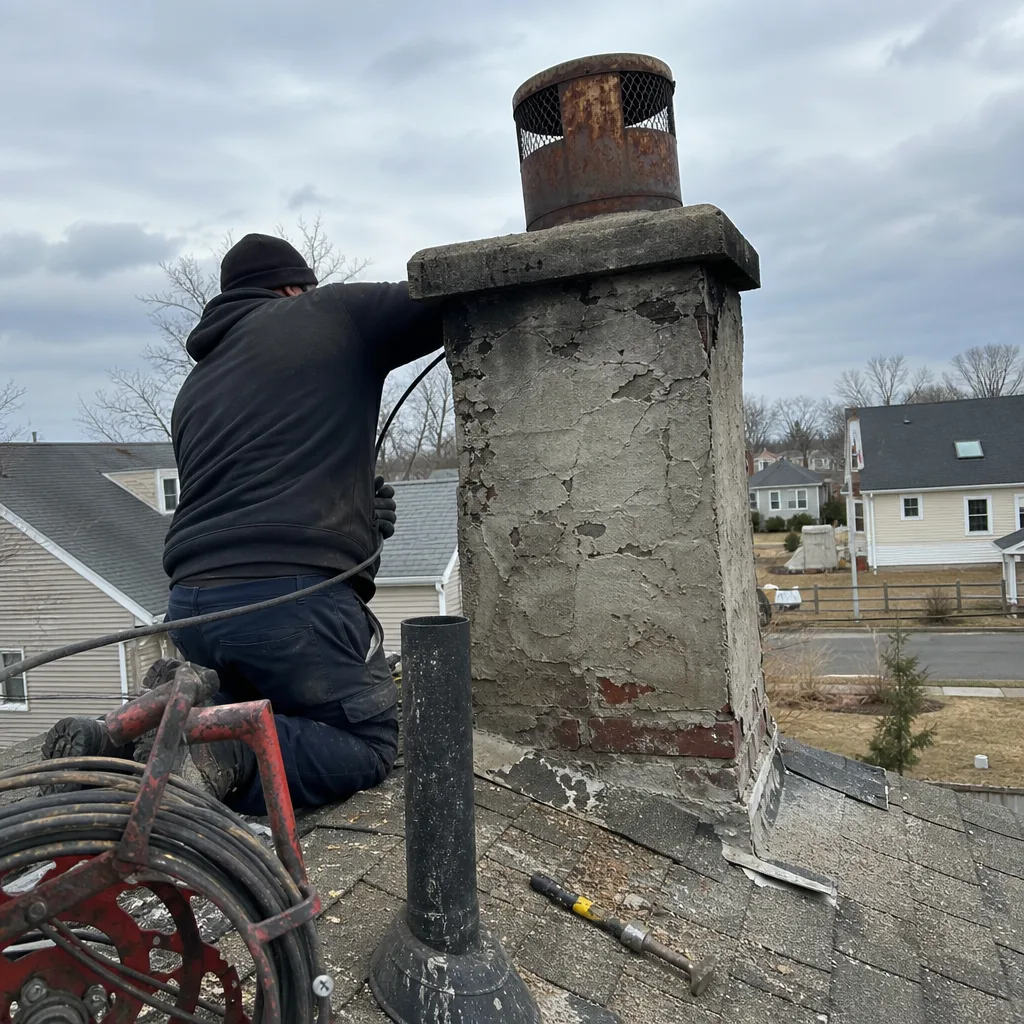
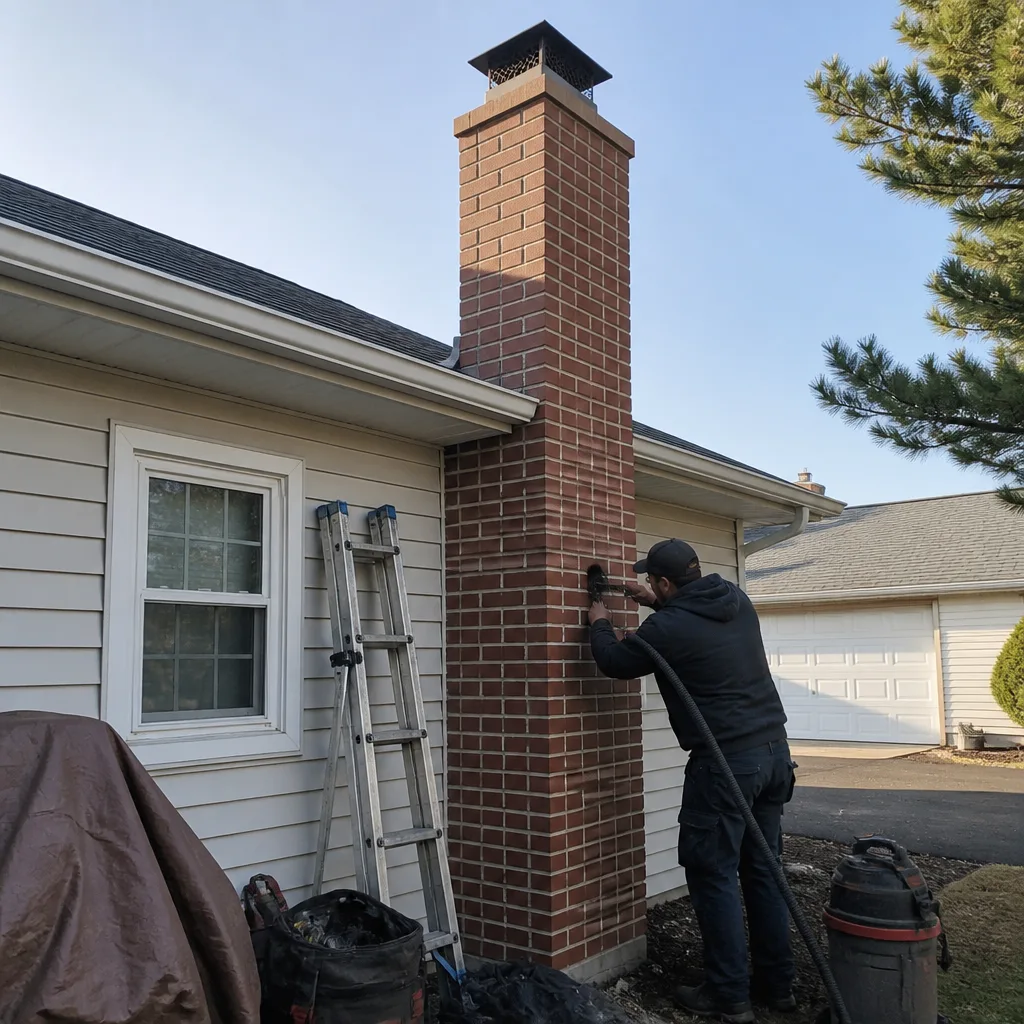
Level 1 sweep and inspection to the NFPA 211 annual standard - flue, crown, cap, and flashing checked and photographed
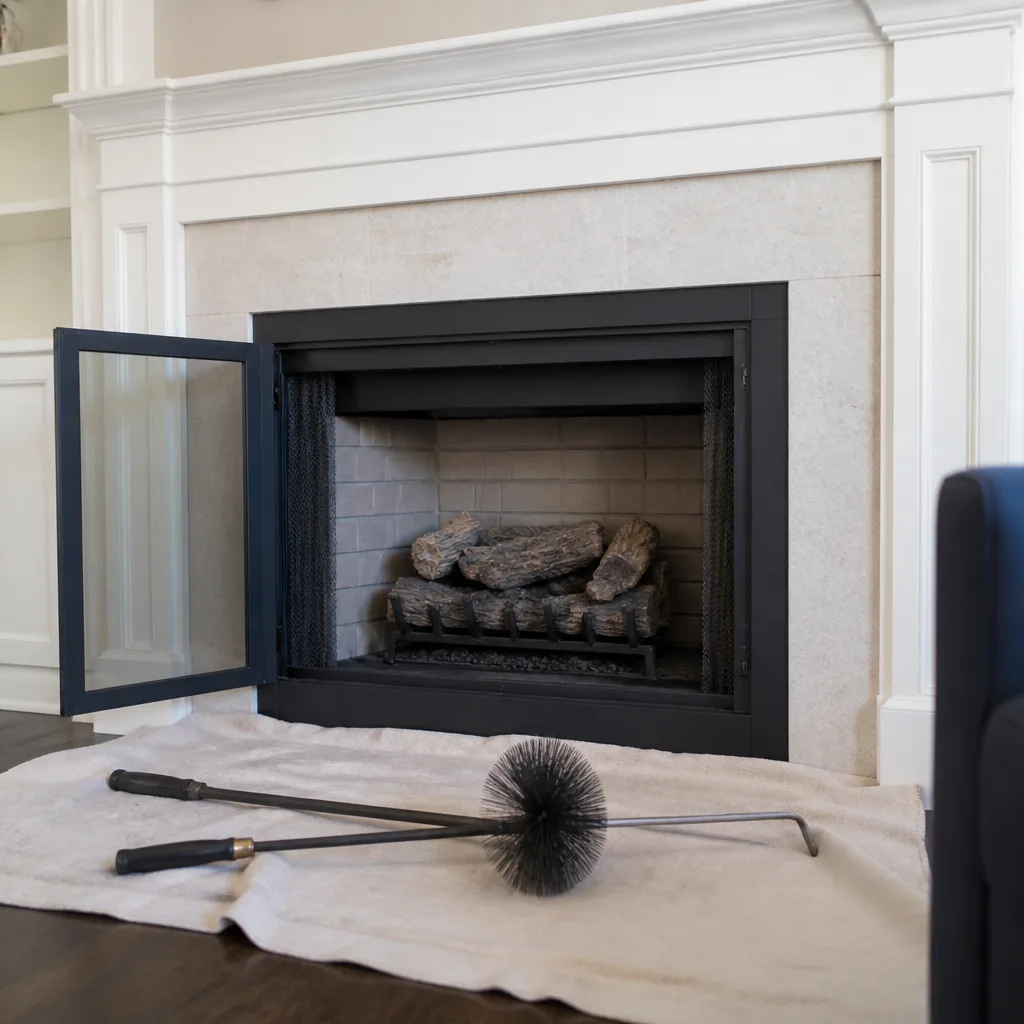
Chimney sweep logs do not sweep chimneys. They loosen some creosote - which then falls where a brush and vacuum still have to collect it.
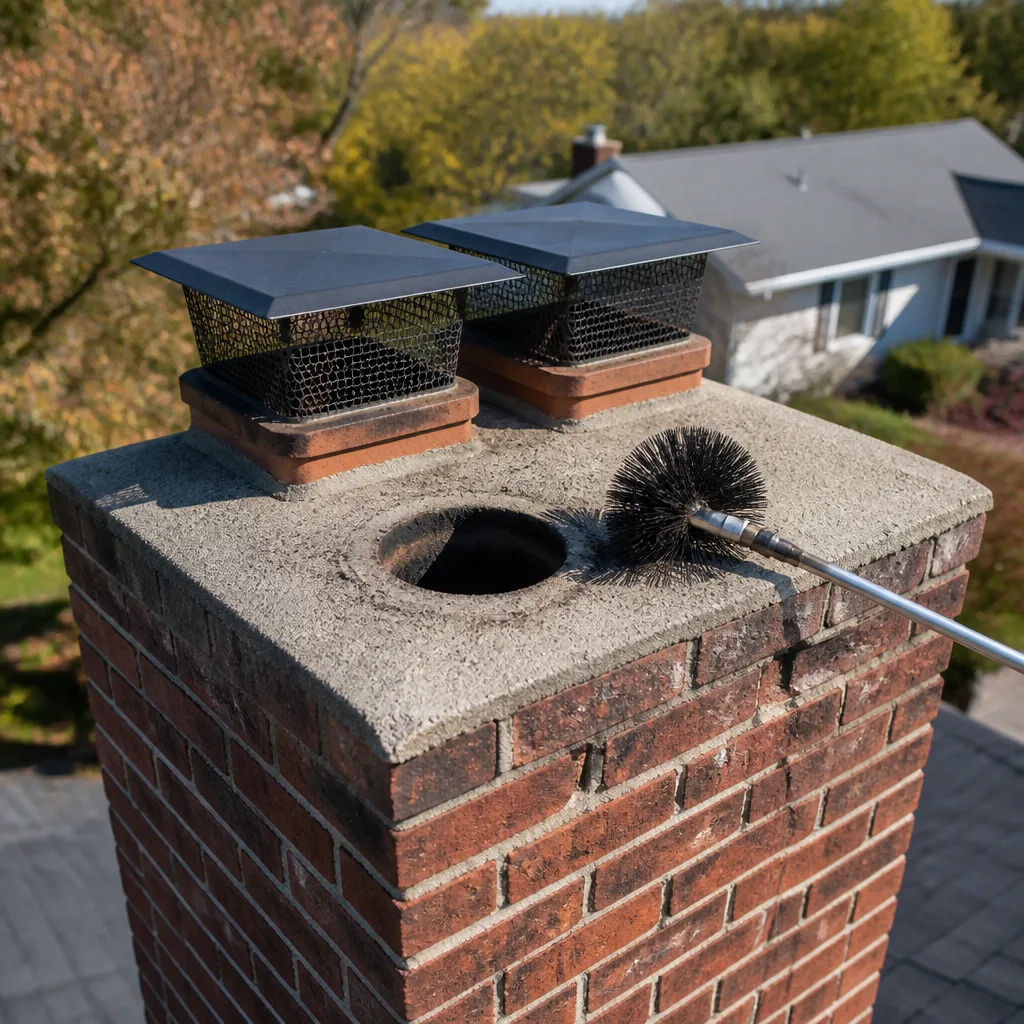
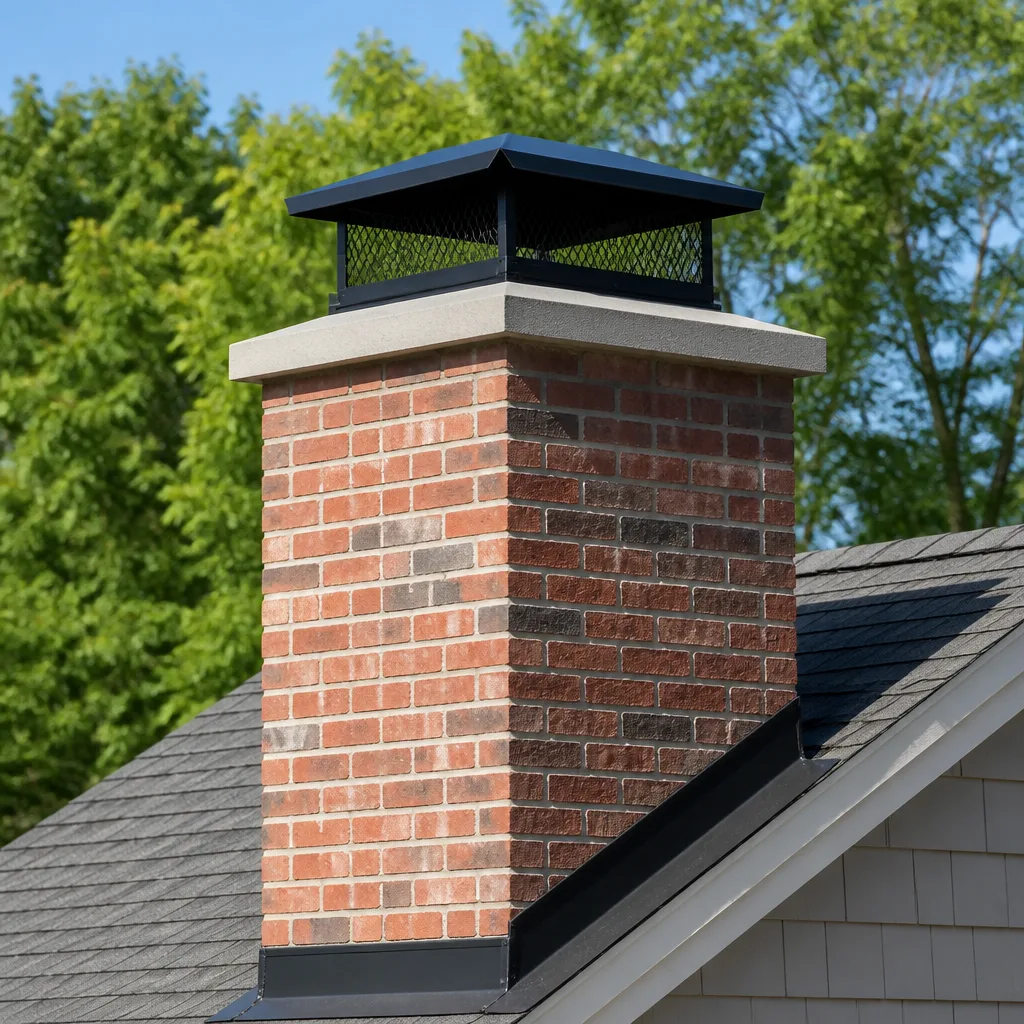
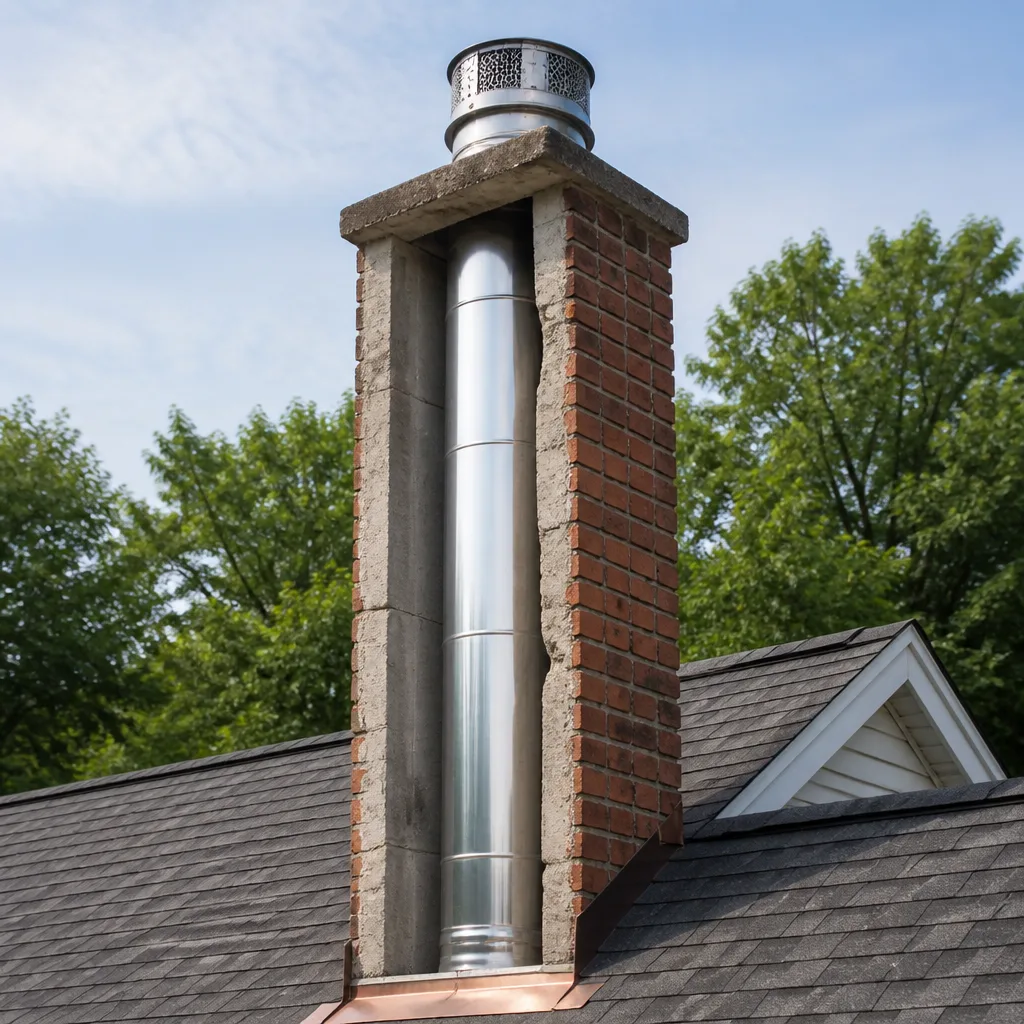
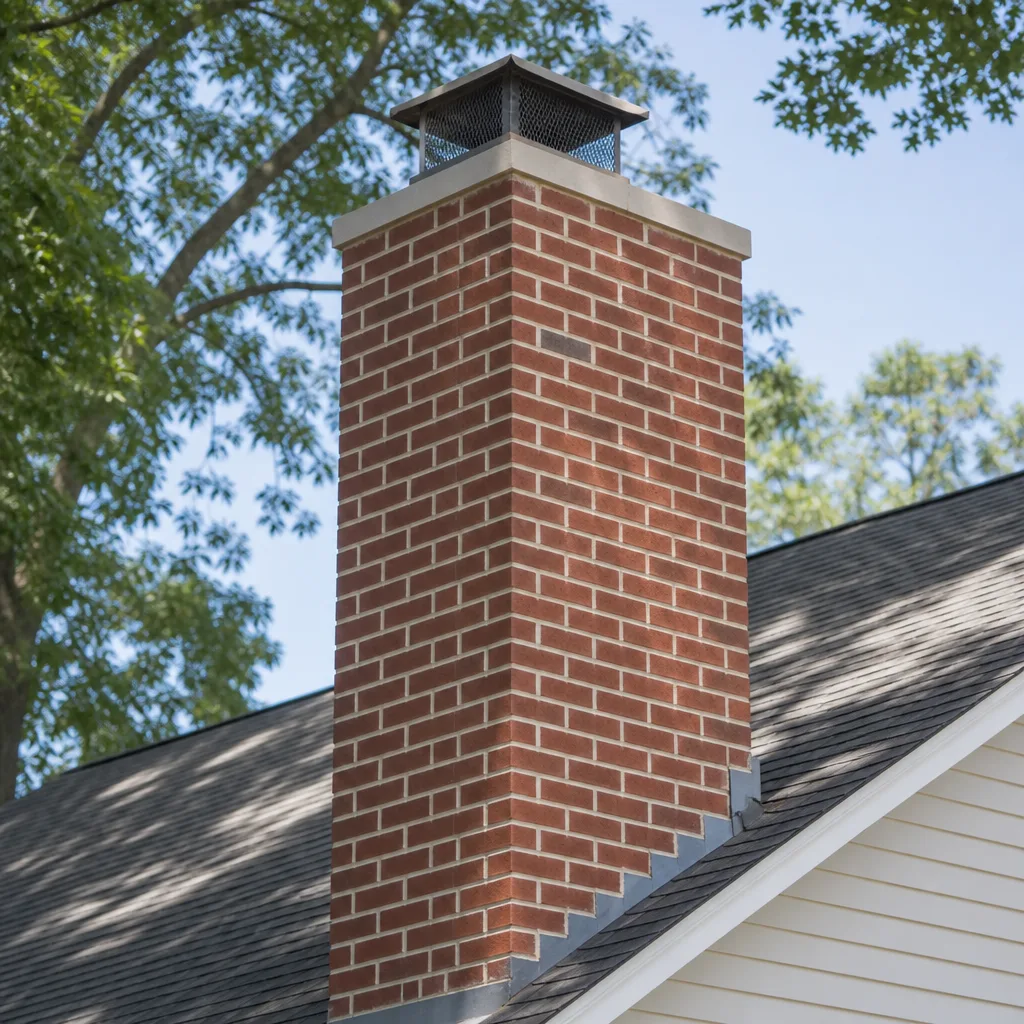
 Before
 After
After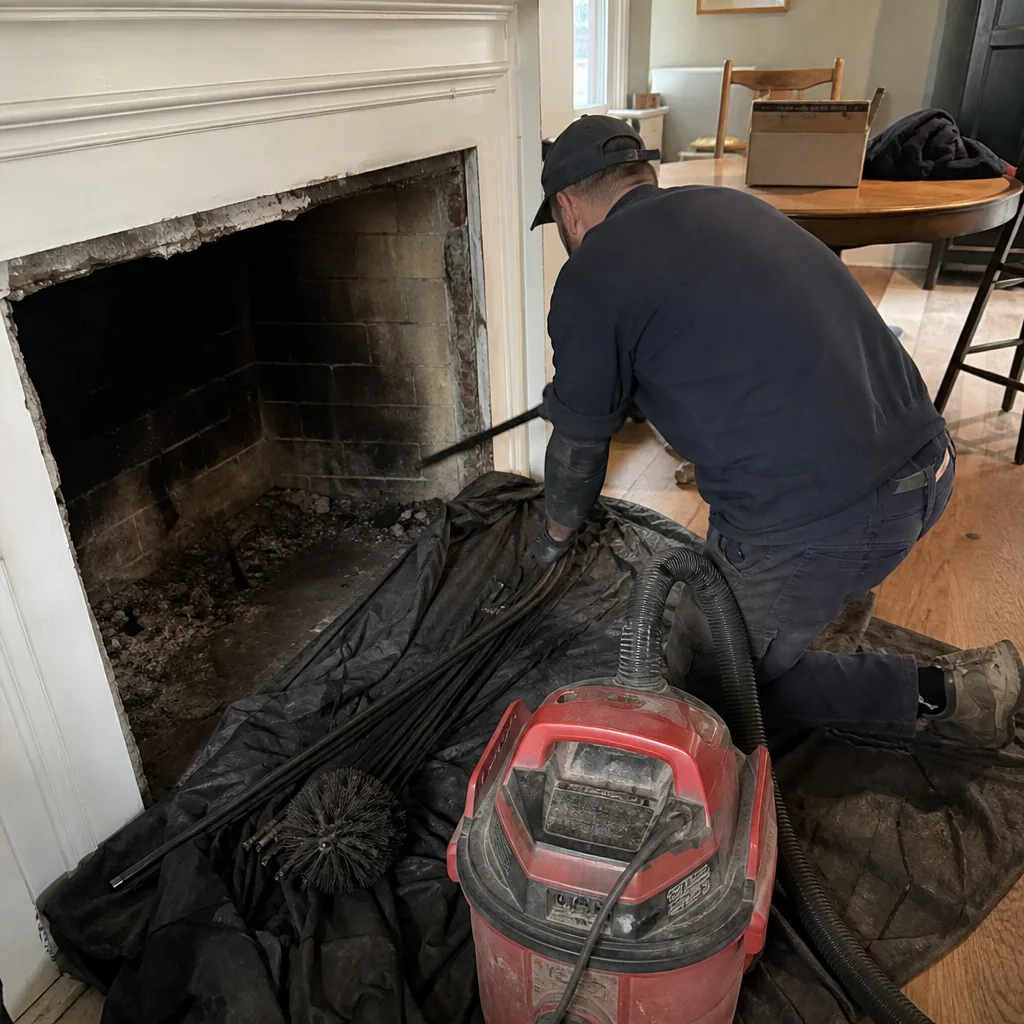 Before
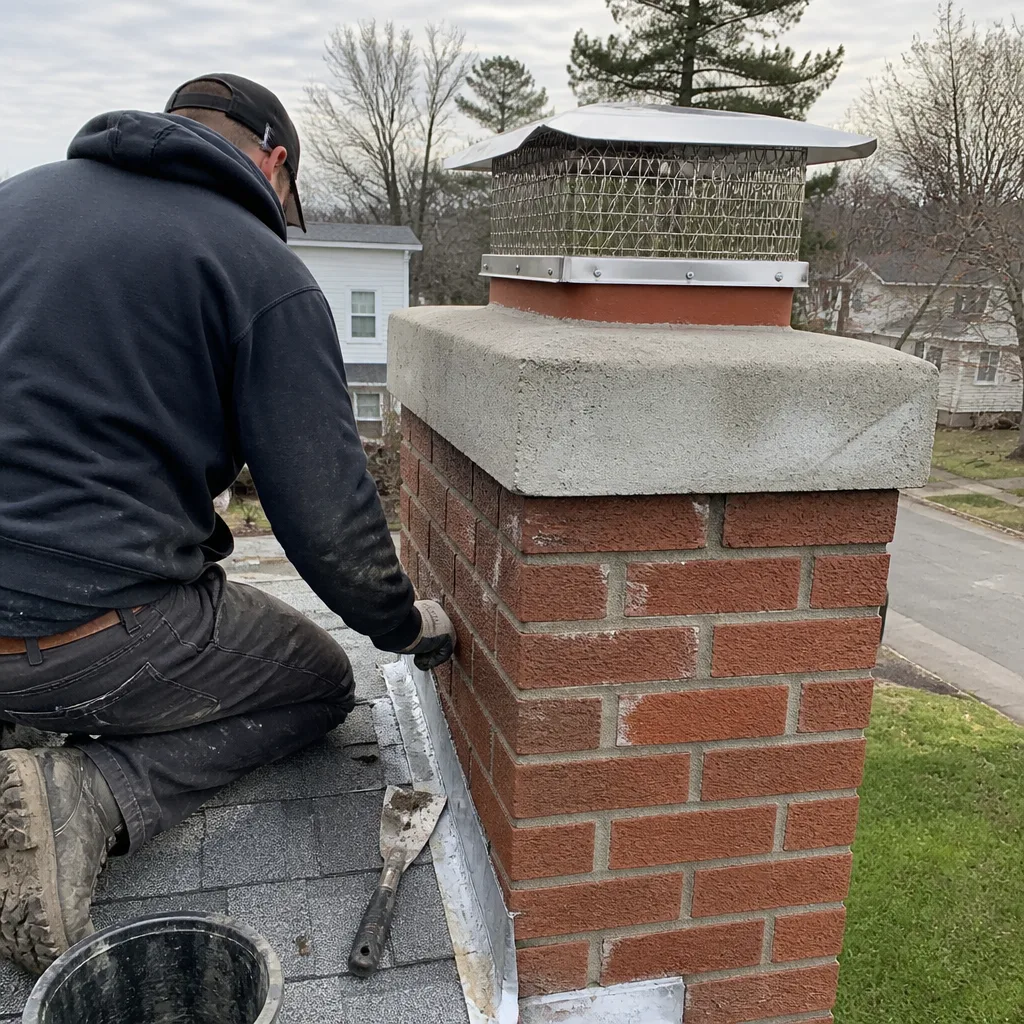 After
After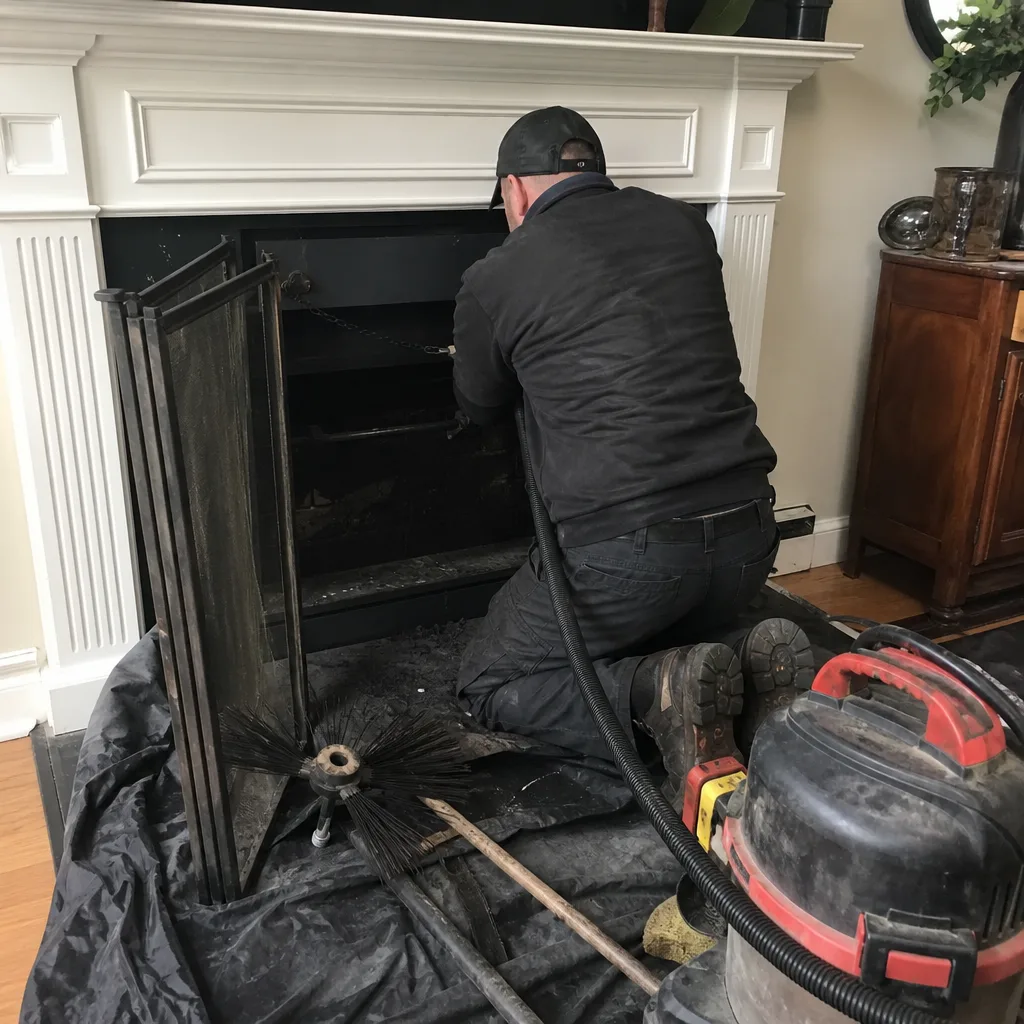 Before
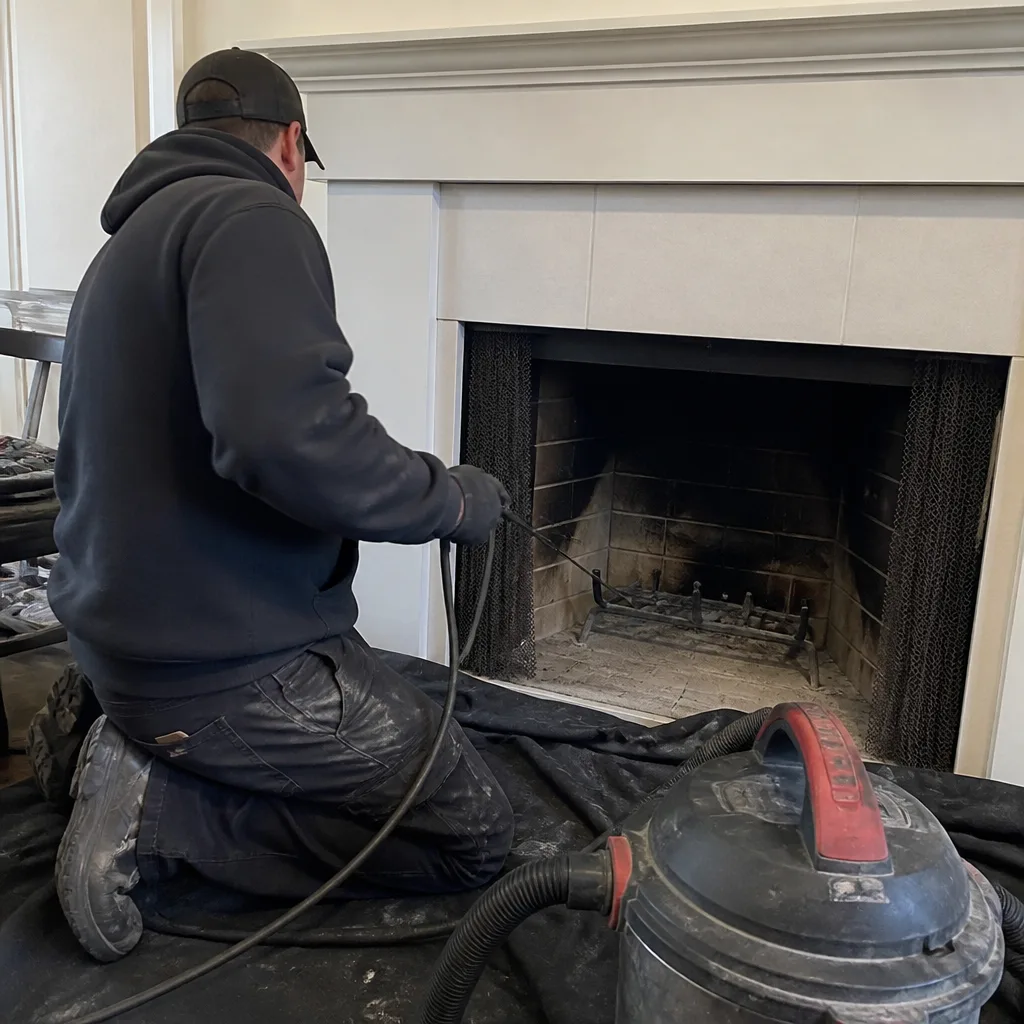 After
AfterSeasonal Chimney Cleaning Care for Long Beach: Year-Round Homeowner’s Guide
The worst time to discover your chimney cap rusted through is the first cold night in October. But in Long Beach, the cap failed back in August, during a summer thunderstorm, and by the time you light a fire the interior damage is already done. This guide walks you through what your chimney actually goes through each season here on the barrier island, why the standard “clean it in fall” advice doesn’t fit our coastal calendar, and when each maintenance task makes the most sense. You’ll learn how hurricane season, nor’easters, freeze-thaw cycles, and salt air each leave a different mark on your chimney, and what to do about it before it becomes a repair bill.
Quick Answer
Seasonal chimney care in Long Beach means working with the coastal calendar, not against it. The most important maintenance windows here are late spring (inspect after winter storms and let the flue dry out), late summer (check for hurricane-season damage before the fall rush), and early fall (sweep and prep for burn season). A proper annual sweep plus two seasonal visual inspections, one after winter nor’easters and one after summer storms, will catch most problems before they become structural repairs. Call (631) 378-3317 for a free estimate on any of the work described below.
Table of Contents
- Why the Standard “Clean in Fall” Advice Doesn’t Fit Long Beach
- The Month-by-Month Long Beach Chimney Calendar
- Why Summer Is the Right Time for a Long Beach Chimney Inspection
- What to Check After a Nor’easter vs. After a Summer Storm
- How Salt-Laden Air Attacks Caps and Crowns, and What Slows It Down
- The Spring Task Most Long Beach Homeowners Skip
- Creosote Seasons: When It Builds and When It Hardens
- Common Mistakes to Avoid
- When to Call a Professional
- Frequently Asked Questions
- The Bottom Line
Why the Standard “Clean in Fall” Advice Doesn’t Fit Long Beach
Most chimney advice written for the national market assumes an inland climate: four predictable seasons, light wind, and air that won’t eat metal. Long Beach, New York doesn’t work that way. We’re a barrier island between Reynolds Channel and the Atlantic. Your chimney spends twelve months a year getting hit with salt spray, high wind, heavy rain, and freeze-thaw cycles that inland homeowners never see.
Here’s the practical result. A chimney in, say, Garden City or Levittown deals with maybe one serious weather event per year. A chimney in Long Beach deals with three distinct stress seasons: hurricane season from August through October, nor’easter season from November through March, and the spring salt-air corrosion window from April through June. Each one damages a different part of the chimney, and each one requires a different kind of attention.
The “clean it in fall” advice isn’t wrong, exactly. A pre-burn-season sweep is still the single most important thing you can do for fire safety. But if that’s the only chimney work you do all year, you’ll miss the crown crack that opened up in January, the cap that rusted through in August, and the flue liner that’s been quietly spalling since the first freeze of December. Your flue doesn’t care how the fire looks. It cares how it breathes. And on a barrier island, it breathes salt air twelve months a year.
The Month-by-Month Long Beach Chimney Calendar
Here’s a working calendar based on what we actually see in Long Beach chimneys throughout the year. It’s not a rigid schedule, but it reflects the rhythm of the island.
- January - February: Freeze-thaw vigilance. This is when water trapped in masonry freezes and expands, cracking brick faces and crown mortar. After each hard freeze, glance at the chimney from the street or yard. Look for fresh cracks, spalling brick faces, or white efflorescence. If you see new damage, call for an inspection rather than waiting.
- March: Nor’easter aftermath check. Late-winter nor’easters pound the south-facing side of chimneys. Check the cap for dents or missing screens, and look at the flashing where the chimney meets the roof. High wind plus driving rain finds every weak point.
- April: Post-winter interior check. The heating season is winding down. Before you close the damper for the summer, look up into the flue with a flashlight. If you see flaking brick, white residue, or black crust, book a sweep now while appointments are easy to get.
- May: Open the damper and let it dry. This is the spring task most people skip, and it’s covered in detail below. The short version: trapped moisture all summer is what turns minor winter damage into major fall repairs.
- June: Schedule your summer inspection. Summer is the ideal time for a Long Beach chimney inspection because there’s no urgency, no heating-season rush, and moisture damage from the winter is fully visible. Early summer appointments are easiest to get.
- July: Salt-air cap and crown assessment. After the spring salt-laden winds, check the cap and crown for rust blooms, pitting, or exposed edges. If your cap is more than five years old and faces the ocean, it probably needs closer attention.
- August - September: Hurricane-season checks. Before each named storm, make sure the cap is secure and the damper closes fully. After the storm passes, look for water stains inside the firebox or on the ceiling near the chimney.
- October: Pre-burn sweep. This is your annual cleaning, timed before the first sustained fire. Book in early October to avoid the late-season rush. Once a year, burn or no burn. Chimneys break in the off-season too.
- November: First-burn watch. The first few fires of the season will tell you if the flue is drafting properly. If smoke spills into the room, the damper sticks, or you smell something odd, don’t push through it. Call us.
- December: Mid-season glance. After the first sustained month of burning, check for creosote buildup with a flashlight. If you burn weekly, you may need a mid-season sweep depending on wood quality and burn habits.
Why Summer Is the Right Time for a Long Beach Chimney Inspection
Most Long Beach homeowners think about their chimney in October, when the first cold night arrives and they want the fireplace going. That’s the worst time to discover a problem. Every sweep on the island is booked solid, and if you need a repair, you’re waiting weeks while the temperature drops.
Summer is different. Here’s why it’s the right time for a Long Beach chimney inspection.
First, summer reveals moisture damage clearly. By June, the chimney has been through an entire wet season: nor’easters, spring rain, and the damp coastal air. Any water that worked its way into the masonry over the winter has had months to show itself. Efflorescence, spalling, rust streaks, and stained ceiling drywall near the chimney are all telltale signs that are easiest to read in summer.
Second, there’s no time pressure. A summer inspection lets Wendell and his crew do a thorough job without racing against the first cold snap. If you need a repair, a liner inspection, or cap replacement, the work can happen at a measured pace with the right materials. DuraFlex liners and Copperfield caps can be ordered, delivered, and installed before burn season starts.
Third, summer inspections are easier to book. October and November are the busiest months in this trade. Call in June or July and you’ll get a reasonable appointment window, a live person on the phone, and no rush fee. Call on October 15th and you’ll wait.
And here’s the thing most people don’t consider: if a chimney has been damaged by winter moisture, leaving it all summer makes it worse. A cracked crown that could have been sealed in July with HeatShield crown repair becomes a full crown rebuild by October. The camera footage and a plain-English verdict, every time, no exceptions. Summer is when you get the cheap fix instead of the expensive one.
What to Check After a Nor’easter vs. After a Summer Storm
Both nor’easters and summer thunderstorms hit Long Beach chimneys hard, but they don’t hit the same way. The damage pattern is different, and so is what a sweep should check.
After a nor’easter, the main threats are wind-driven rain and sustained pressure. These storms sit over the island for hours, sometimes days, pushing rain sideways into every gap in the flashing, cap, and crown. What to check after a nor’easter:
- Flashing separation. High sustained wind works the metal flashing loose where it meets the roof. Look for lifted edges, missing sealant, or daylight between flashing and masonry.
- Cap dents and missing screens. Wind-borne debris, branches, and sometimes small roof shingles hit the cap at speed. Inspect for deformation and screen breaches.
- Interior water staining. After a long nor’easter, check the ceiling around the chimney and the firebox walls for fresh water marks. Rain driven under the flashing shows up here first.
- Loose crown mortar. Freezing wind and rain can erode the crown’s edge. Run a finger along the crown rim (from a safe position, or have a pro do it) to check for crumbling.
After a summer thunderstorm, the pattern changes. These storms are shorter but more violent. They bring sudden downbursts, hail in some years, and a lot of water in a very short window. What to check after a summer storm:
- Rust on cap and damper hardware. Summer storms dump warm, salty rain that accelerates oxidation. Look for fresh rust blooms on metal components.
- Pooling in the crown. If the crown has low spots, a sudden downpour leaves standing water that stays for days in summer heat. That water then seeps into the masonry.
- Debris in the flue. Summer storms knock leaves, twigs, and sometimes plastic debris into open flues. If your damper was left open, check for anything that fell in.
- Water stains from single-event leaks. A nor’easter leaves diffuse staining. A summer downpour leaves a clear, localized stain that tells you exactly where water entered.
The point is that the exterior damage pattern is different, and so is the risk. A nor’easter tests your flashing and cap over hours. A summer storm tests your crown and drainage in minutes. Checking the right things after each type of storm is what separates a small repair from a full rebuild.
How Salt-Laden Air Attacks Caps and Crowns, and What Slows It Down
Long Beach sits directly on the Atlantic, and the prevailing southerly winds carry salt spray across the island all year, but it’s most aggressive in spring. From April through June, strong onshore winds push a fine, invisible salt mist across everything that faces south. Your chimney cap and crown are the first line of defense, and they take the brunt of it.
Salt accelerates corrosion in two ways. First, it’s hygroscopic, meaning it pulls moisture out of the air and holds it against metal surfaces. A steel cap in normal conditions dries after rain. A steel cap in salt air stays damp for days. Second, salt is an electrolyte, which speeds the electrochemical reaction that turns steel into rust. The result: a standard galvanized cap that might last 15 years inland can show serious rust in 5 to 8 years on Long Beach.
Crowns suffer differently but just as badly. Salt crystals get into the pores of the mortar, and each cycle of wetting and drying, especially with salt involved, widens those pores. Small cracks become bigger cracks. Bigger cracks let water behind the brick faces.
Here’s what actually slows it down:
- Upgrade the cap material. Copperfield caps, which are heavy-gauge and designed for coastal exposure, outlast standard galvanized caps by years. They cost more up front, but they’re the right call on a barrier island.
- Seal the crown with the right product. A breathable crown sealer like HeatShield crown repair fills cracks and resists water without trapping moisture in the masonry. It’s a specific solution for coastal crowns.
- Rinse the cap in spring. In April and May, a gentle garden-hose rinse of the cap and crown washes off accumulated salt. It sounds too simple to matter, but it makes a measurable difference over a decade.
- Inspect the flashing annually. Salt attacks the metal flashing where it meets the roof, and that’s the number one leak point on Long Beach chimneys. Annual inspection catches the corrosion before it opens a gap.
Not all caps are equal on a barrier island. If a sweep offers you the cheapest option, ask how it handles salt. The answer will tell you whether they know Long Beach or just work here.
The Spring Task Most Long Beach Homeowners Skip
Every spring, thousands of Long Beach homeowners close their dampers and forget their chimneys until October. Here’s the task almost nobody does, and why it matters more here than anywhere else: at some point in May, open the damper fully and leave it open for a full dry period.
Here’s what’s happening inside your flue that you can’t see. All winter, the chimney has absorbed moisture from rain, snow, nor’easter spray, and condensation from burning. By April, the masonry is saturated. If you close the damper tight in May and leave it until fall, you’ve just sealed that moisture inside a dark, enclosed space for four to five months. And Long Beach summer air is humid. The flue never dries. It sits damp all summer.
That trapped moisture does three things:
- Softens mortar joints. Waterlogged mortar loses strength, and by the time burn season starts, the cycles of winter freezing and summer humidity have already done incremental damage that will show up as crumbling joints years later.
- Accelerates rust. Any metal components in the flue, dampers, smoke shelf, or liner sit in that humid environment and corrode faster than they would otherwise.
- Creates smells. Wood ash plus trapped moisture plus summer heat creates an odor that backs up into the house. If your living room smells like a wet campfire in August, that’s your flue telling you it’s still wet.
The fix is simple and free. After the last fire of the season, clear out the firebox: remove the ash, brush down the walls, dispose of the ash properly in a metal container. Then open the damper fully and leave it open for at least a full dry week, longer if the weather’s been wet. This lets the flue breathe and dry before summer’s humidity seals in whatever’s left. You can close the damper after that to keep debris out, but that window of drying does real work.
This is the kind of thing that never makes it into generic seasonal guides. But on a barrier island with Long Beach’s humidity, it’s one of the cheapest and most effective chimney maintenance steps you can take.
Creosote Seasons: When It Builds and When It Hardens
Creosote is the byproduct of incomplete wood combustion, and it builds up on flue walls during burn season. But its behavior changes through the year, and understanding those changes guides when to sweep and when to worry.
During the heating season, especially from November through February, creosote accumulates as a soft, sticky deposit. This is first-degree and second-degree creosote: dry soot and soft flakes. It’s relatively easy to remove with a proper sweeping, and a mid-season sweep from us will clear it out efficiently.
If that soft creosote is left alone through spring and summer, it changes. Long Beach’s humid air keeps the creosote damp, and once it dries and hardens, it becomes third-degree creosote: a hard, glazed, tar-like coating that’s difficult to remove and burns intensely hot. First-degree creosote is a brush job. Third-degree is a glaze, catch it early. Here’s the timeline:
- November - February (soft phase): Creosote builds fastest in this window if you burn regularly. Soft and removable with a sweep.
- March - May (transition phase): Spring humidity keeps creosote moist and sticky. Still removable, but it’s getting tacky. This is the second-best time to sweep, after fall.
- June - September (hardening phase): Summer heat and humidity cycles harden creosote into a glaze. By September, third-degree creosote may have formed. It’s harder to remove and represents a higher fire risk.
- October (removal window): Your annual pre-burn sweep removes whatever remains, which is why burning season should never start on a dirty flue.
The key takeaway: if you skip the annual sweep and then skip it again, the creosote that was once a simple brush job becomes a glaze that requires heavier removal. The longer you wait, the harder and more expensive it gets. Chimney cleaning in Long Beach isn’t just about removing what’s there, it’s about removing it before the coastal humidity changes its chemistry.
Common Mistakes to Avoid
- Following an inland cleaning schedule. The “clean it once in the fall” advice wasn’t written for a barrier island. Long Beach’s mix of salt air, hurricane season, and nor’easters means at least twice-yearly visual checks in addition to the annual sweep.
- Closing the damper in spring and forgetting it. Trapping moisture in the flue all summer is the single most common cause of avoidable masonry damage we see on the island. Open it for a dry week in May.
- Buying the cheapest cap available. A thin, standard galvanized cap fails fast in salt air. Coastal-grade caps cost more but last three times as long on Long Beach.
- Waiting until October to schedule a sweep. By October, every chimney company on the island is booked out for weeks. Summer appointments are easier to get and give you time for repairs before burn season.
- Ignoring water stains on the ceiling near the chimney. A small stain in March tells you exactly where water is entering. By September, that same leak has rotted sheathing and damaged drywall. Water stains never fix themselves.
- Burning unseasoned wood because it’s cheap. Wet wood produces more creosote, and in Long Beach’s humidity, that creosote hardens into glaze faster than you’d expect. Use properly seasoned firewood and store it dry.
- Assuming a new-looking chimney is a healthy chimney. The exterior can look fine while the flue liner is spalling inside. The only way to know is a camera inspection. Ask anyone on your street who’s had a surprise liner replacement.
When to Call a Professional
Some chimney tasks are safe to handle yourself: clearing the firebox, doing visual checks from the ground, and opening the damper in spring. But when the work goes beyond what you can see or safely reach, call someone who’s been doing it since 1999.
Call a professional when you see water stains around the chimney, when you notice cracked or crumbling masonry, when your cap is rusted or missing, when smoke spills into the room during a fire, when you haven’t had the chimney swept in more than a year, or when a storm has visibly damaged anything above the roofline. These aren’t cosmetic issues, and they don’t resolve on their own.
Wendell Pike runs Top Hat Chimney right here in Long Beach, and he’s been inside more island chimneys than he can count. Every job starts with a camera inspection so you can see exactly what’s wrong, and every quote is given before work begins. Top Hat Chimney offers free estimates in Long Beach. Call (631) 378-3317 to book yours.
Frequently Asked Questions
Once a year, burn or no burn, and that’s the floor, not the ceiling. If you burn weekly through the winter, you may need a mid-season sweep in January or February. The annual sweep should happen in early fall, before the first sustained fire. For full details on what a sweep involves, see our Chimney Cleaning & Sweep in Long Beach page. Call (631) 378-3317 for exact pricing based on your chimney’s condition.
A standard chimney sweep in Long Beach typically runs between $175 and $325, depending on the chimney’s height, accessibility, and creosote level-see our Chimney Cleaning Cost Breakdown: The Long Beach Homeowner’s Reference for 2026 for full details. A Level 2 inspection with camera documentation, which we include when a chimney has been water-damaged or involved in a chimney fire, adds $150 to $300. The exact number depends on what the camera shows, and we’ll never quote one price on the phone and another at the door. Call (631) 378-3317 for a precise estimate. Estimates are free.
Maybe, but only if the camera says so. A stainless liner from DuraFlex will last decades, and a failing liner is a genuine safety issue: it lets heat and gases reach combustible materials. But we never recommend a liner replacement without handing you the camera footage and a plain-English verdict. If the flue is intact and the gaps are small, a HeatShield resurfacing may be the right call instead, often at a lower cost. Get the footage first, then decide. Call (631) 378-3317 for an inspection.
One skipped year is usually recoverable. Two skipped years is where the damage compounds. Creosote hardens into glaze, which burns hotter and is harder to remove. Small cracks in the crown widen, letting water reach the interior masonry. Rust on the cap spreads to the damper. By the third year, the repair bill catches up with what you saved, and the safety risk is real. The annual sweep is the cheapest insurance you can buy on a chimney. Call (631) 378-3317 to get back on schedule.
You can, and some Long Beach homeowners do, but you’ll lose what a professional camera inspection gives you. A DIY brush job clears the soft creosote but leaves the glaze, misses hidden cracks, and can’t tell you whether the liner is safe. And working on a roof on a barrier island, in the wind, is riskier than it looks. If you want the job done right with photographic proof of what’s actually inside your flue, that’s what Chimney Repair in Long Beach service calls are for. Call (631) 378-3317.
It covers any work we complete, from a simple sweep to a full liner rebuild. If the job isn’t done right, one call brings Wendell back, at no additional cost, within reason. It’s in writing on every invoice we hand over, and that’s what separates our Fireplace Services in Long Beach from the national outfits that are hard to reach after the job is done. Call (631) 378-3317 with any question about the guarantee.
The Bottom Line
Long Beach chimneys live a tougher life than inland ones. Salt air eats the metal. Nor’easters test the flashing. Hurricane season threatens the cap. Freeze-thaw cycles crack the crown. And through it all, the flue keeps doing its job, until the day it doesn’t.
The seasonal rhythm of care here is simple once you know it: sweep every fall before burn season, check after every major storm, let the flue dry out each spring, and inspect in summer when the evidence of winter damage is clearest and the repair window is widest. None of this is complicated, and all of it is cheaper than what happens if you skip it.
Written by Wendell Pike, Owner at Top Hat Chimney, serving Long Beach since 1999.