
Last updated September 10, 2026
Level 1 sweep and inspection to the NFPA 211 annual standard - flue, crown, cap, and flashing checked and photographed
Chimney sweep logs do not sweep chimneys. They loosen some creosote - which then falls where a brush and vacuum still have to collect it.
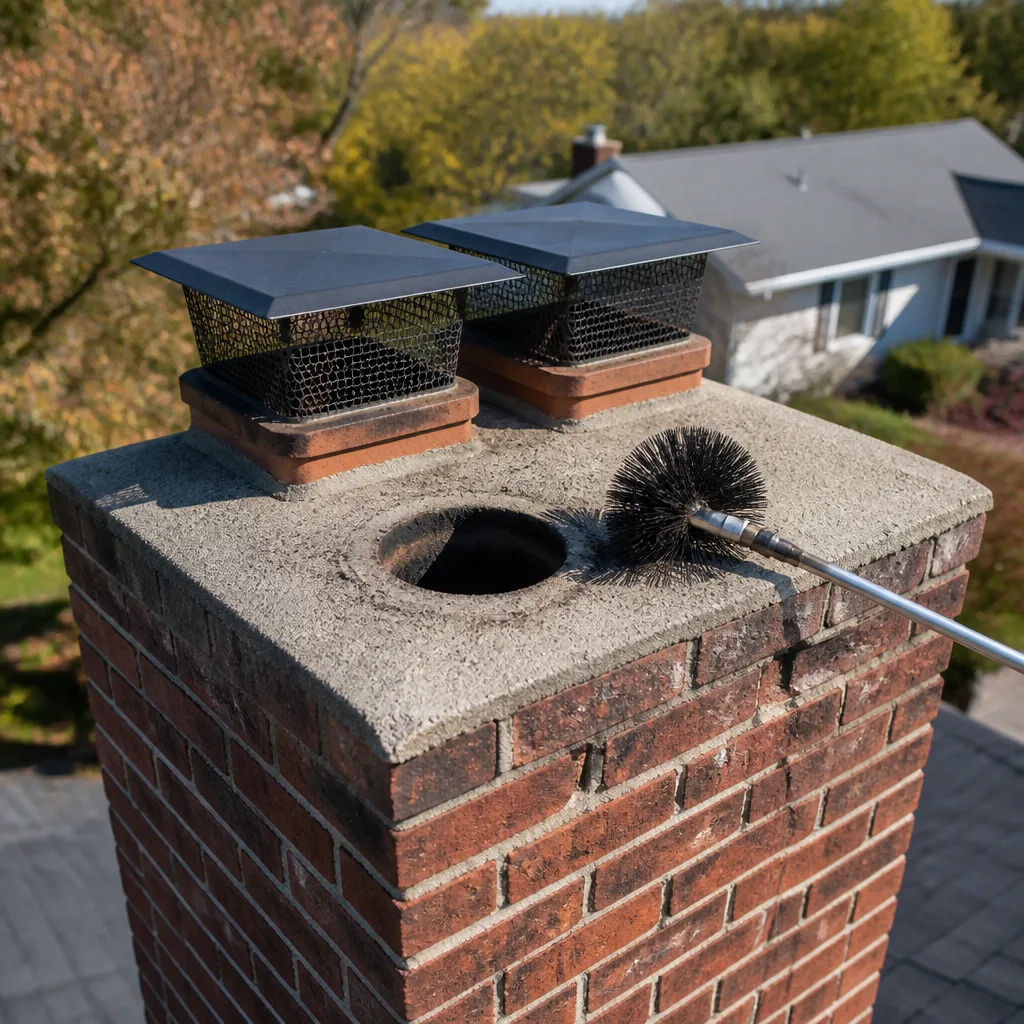
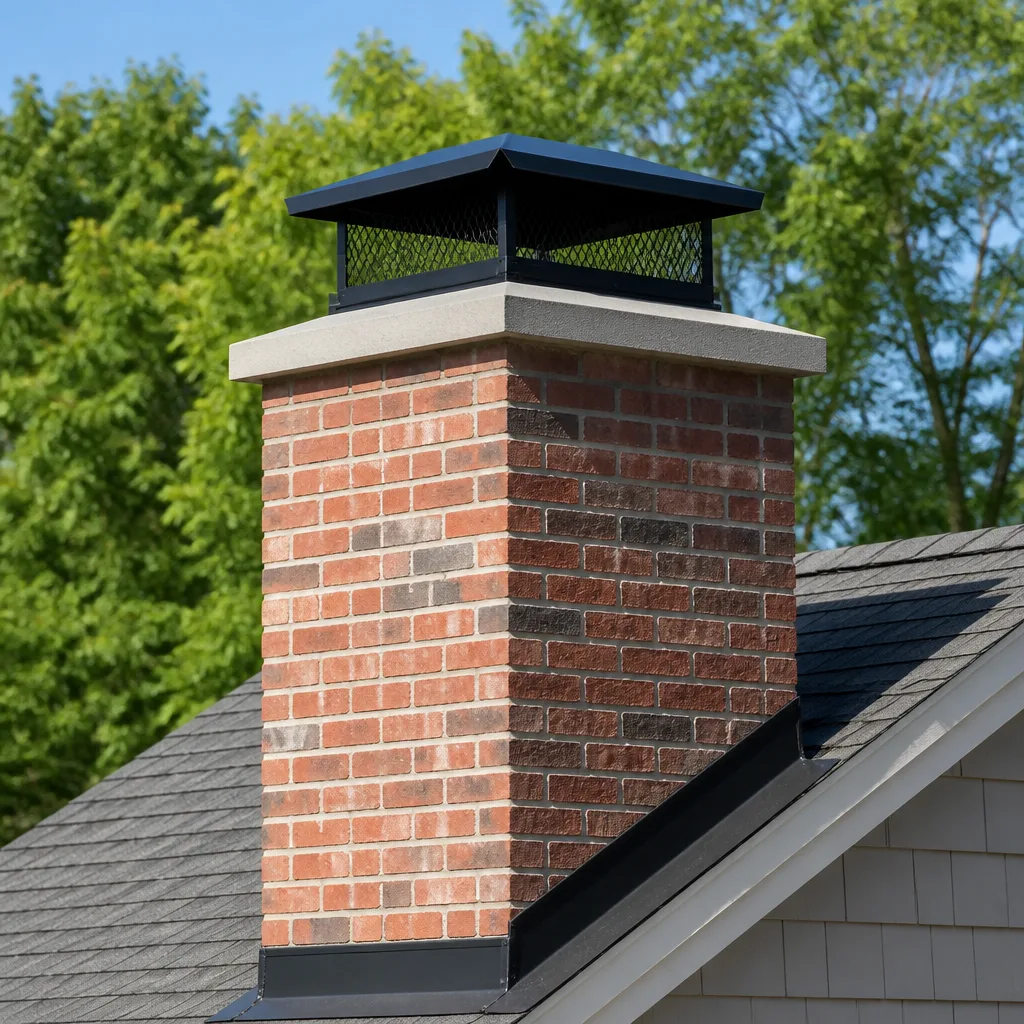
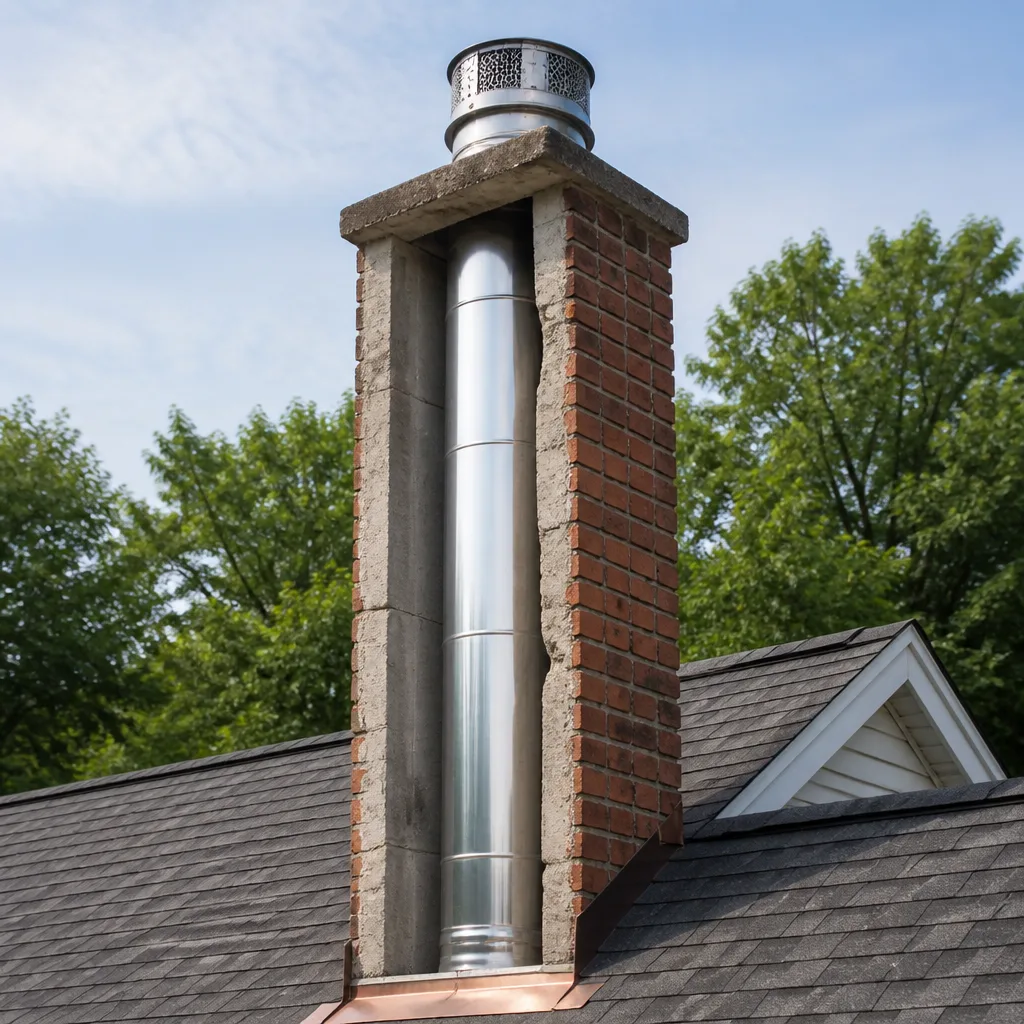
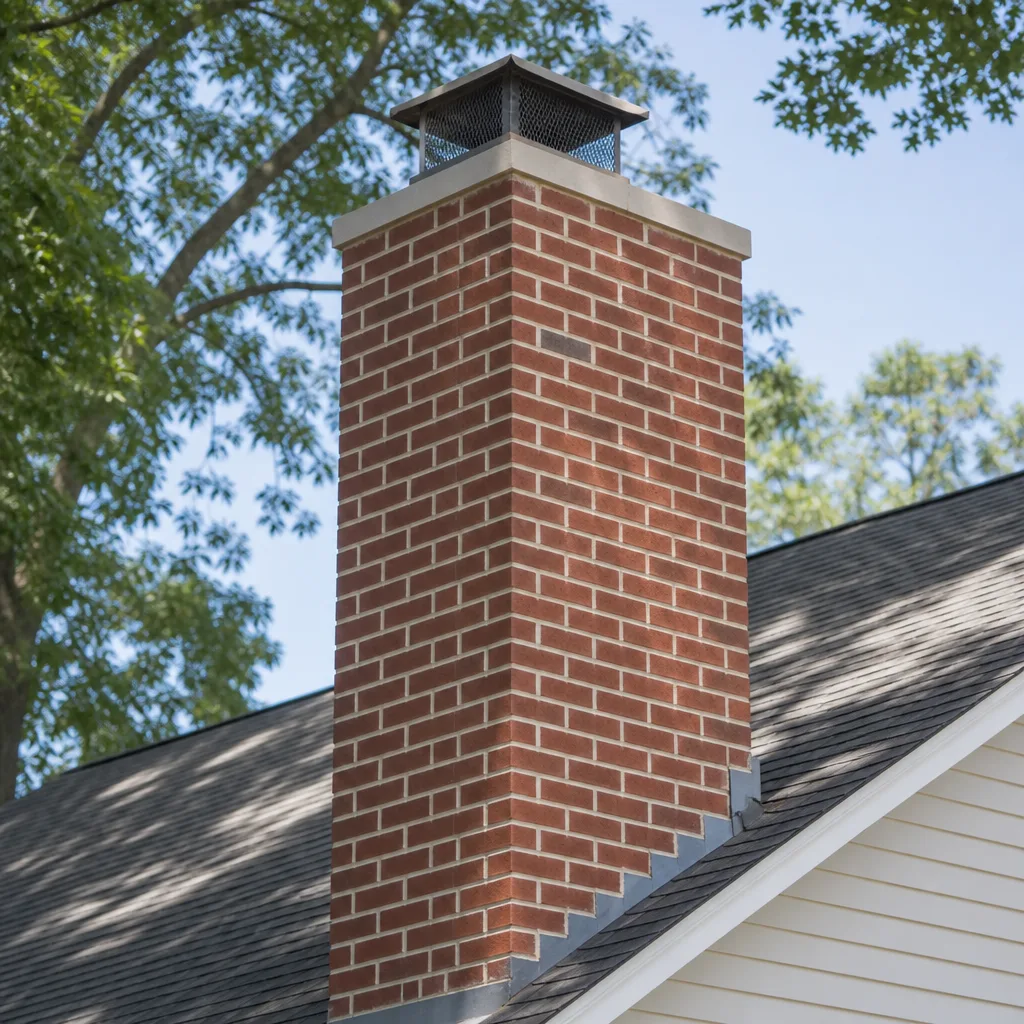
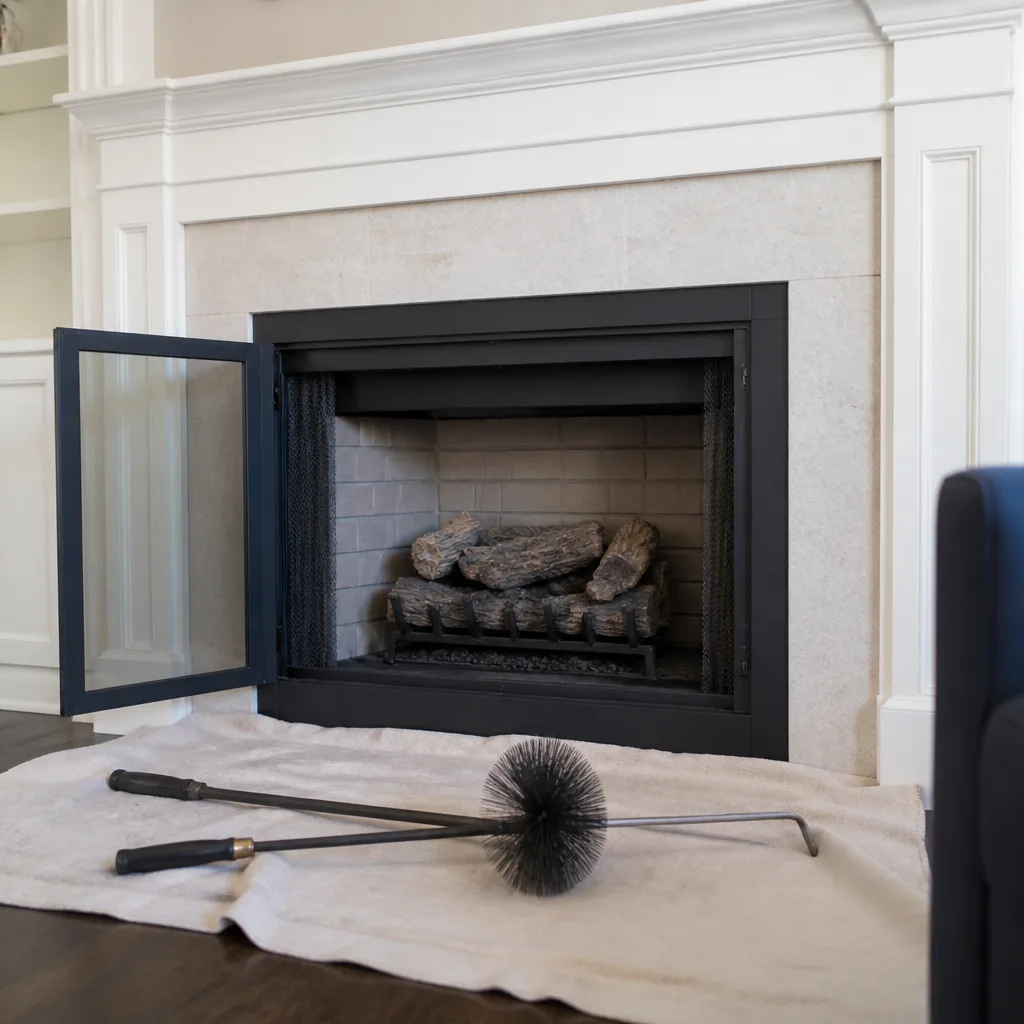
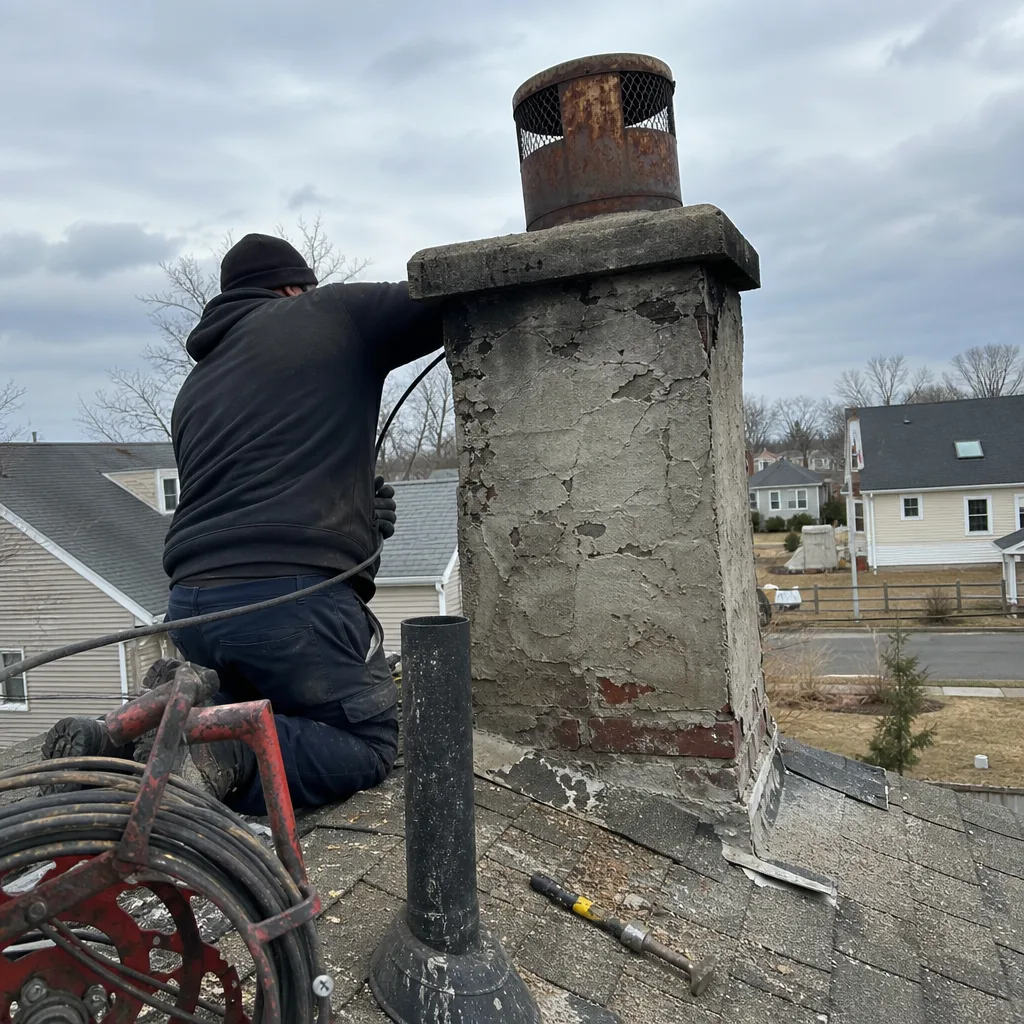 Before
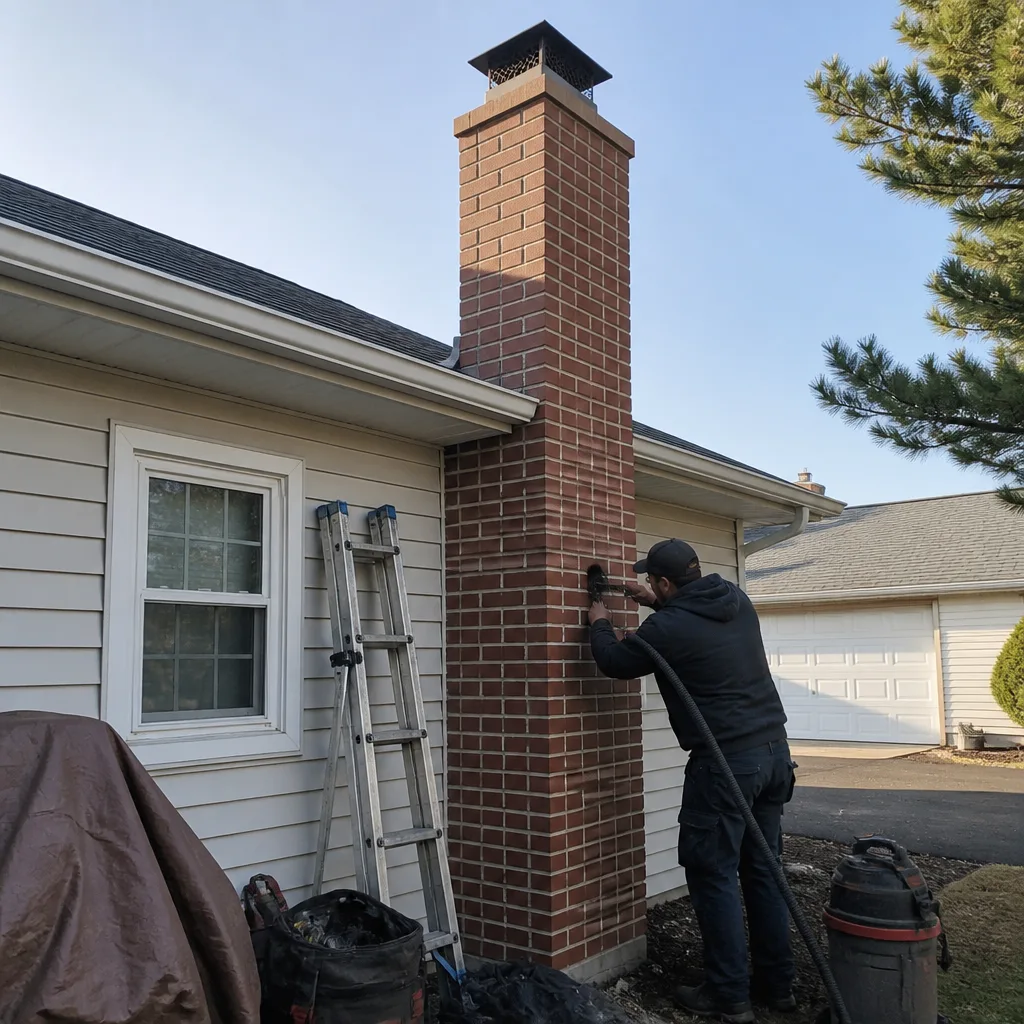 After
After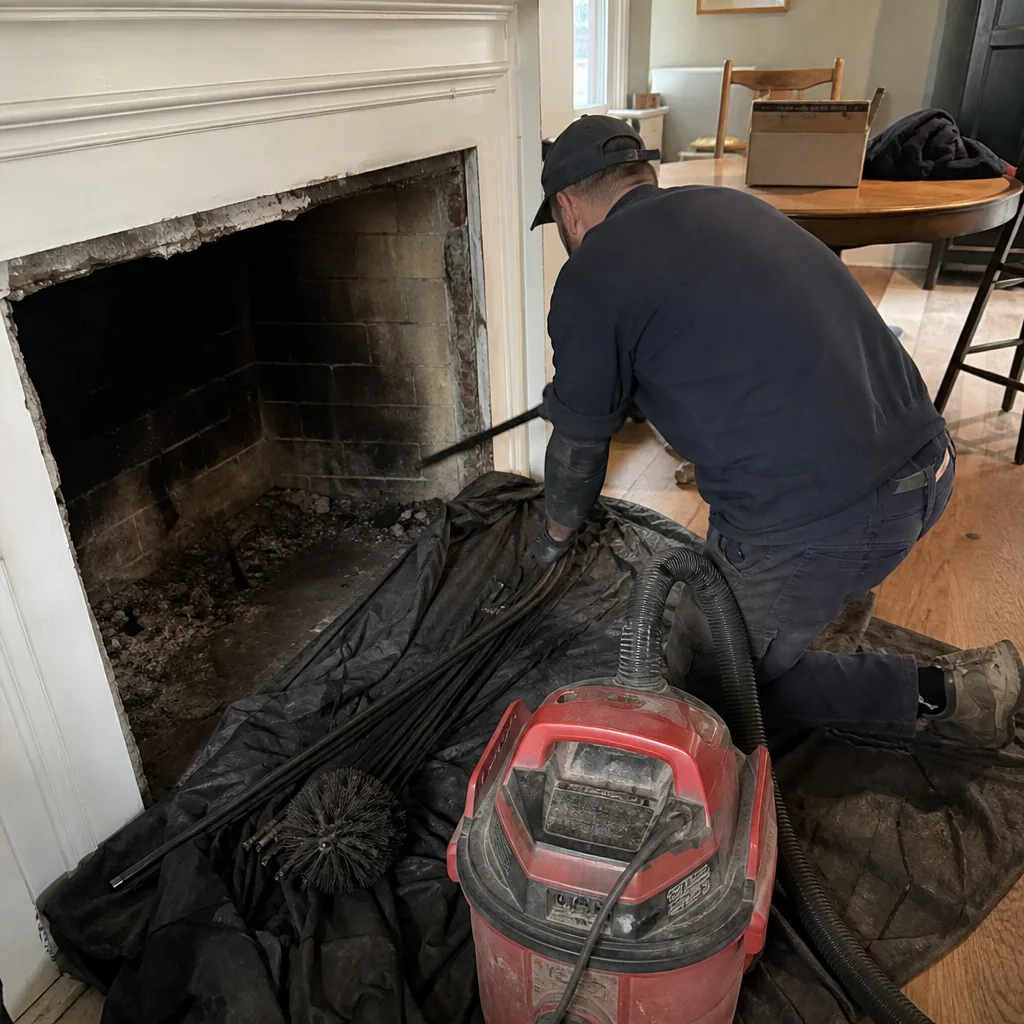 Before
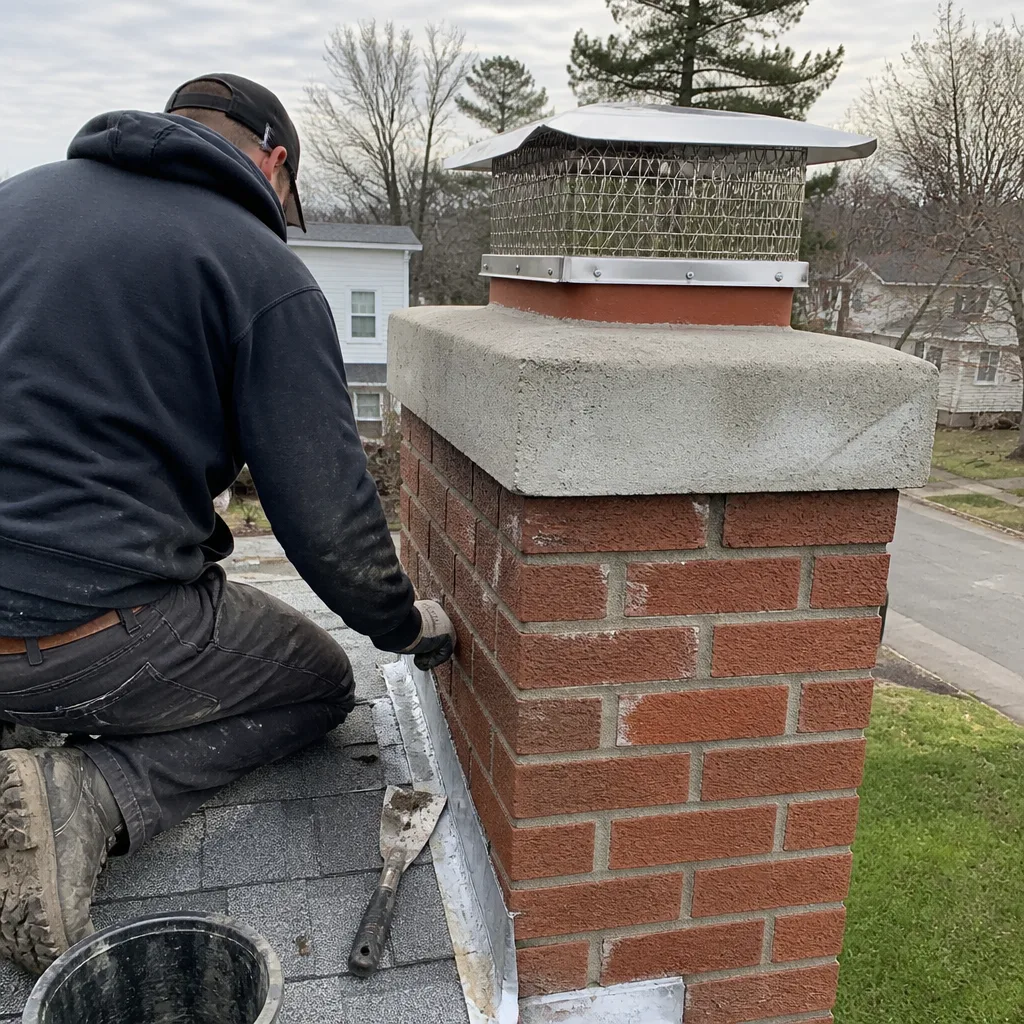 After
After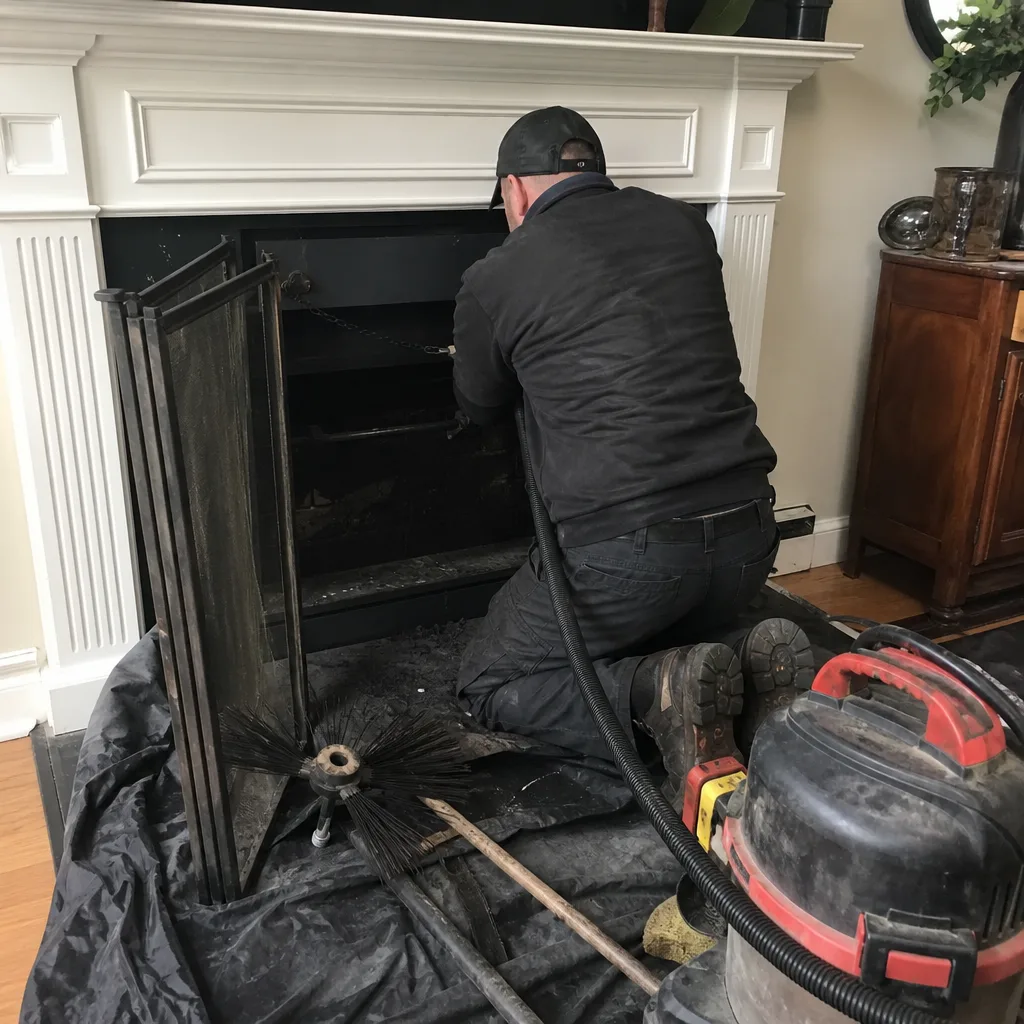 Before
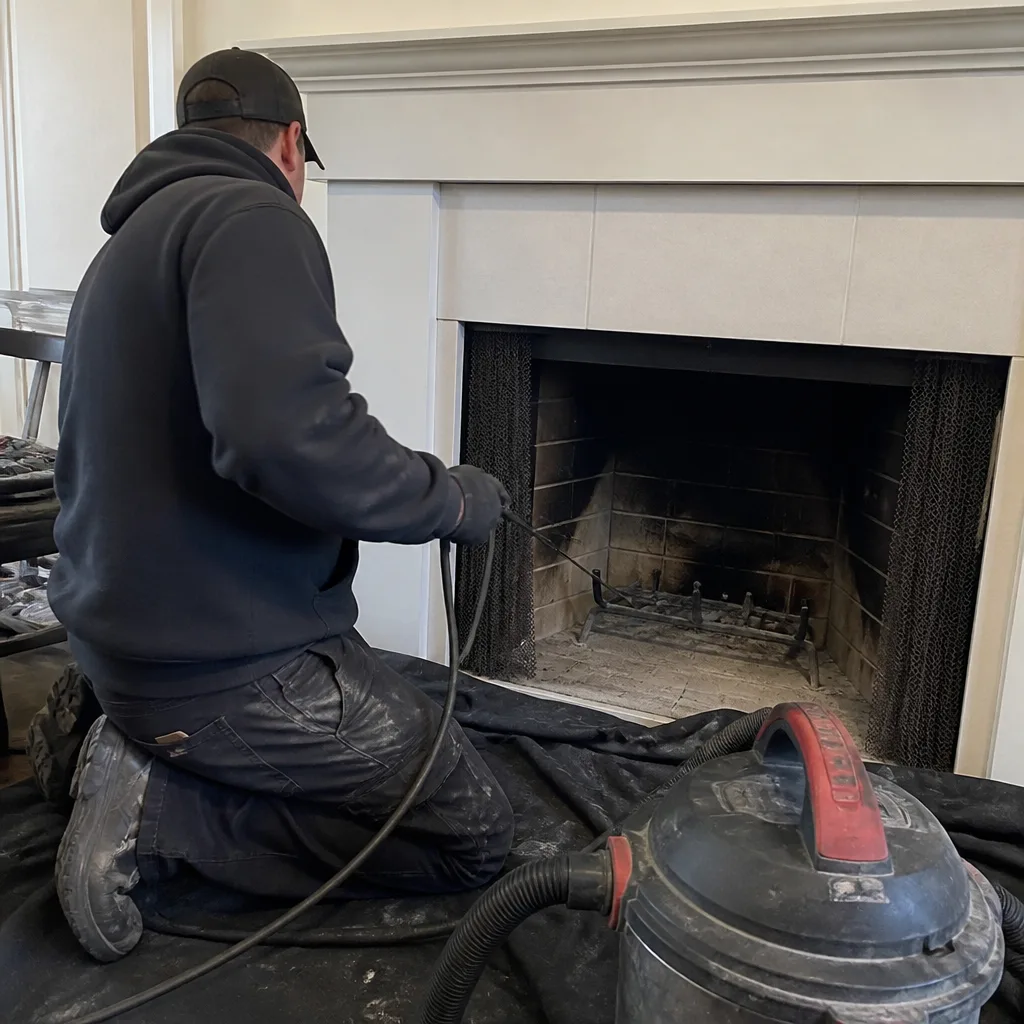 After
AfterHow to Hire a Chimney Cleaning Contractor in Long Beach: A Step-by-Step Guide
In New York State, you can legally call yourself a chimney sweep tomorrow morning with no license, no training, and no insurance. Wake up, print a business card, and by noon you’re on someone’s roof in Long Beach with a brush from a hardware store. That’s not a hypothetical. It’s the actual barrier to entry in this trade, and it’s exactly why the questions you ask before you hire matter more than the price on the quote. This guide walks you through the verification steps, phone questions, and red flags that separate a legitimate sweep from a guy who watched a YouTube video and hopes for the best. If you live in Long Beach, these are the details that protect your home, your family, and your wallet.
Quick Answer
To hire a chimney cleaning contractor in Long Beach, verify three credentials independently (CSIA certification, NYS Home Improvement Contractor license, and general liability with workers’ comp), call and ask for a written quote before the visit, and confirm what the price includes and what would change it. A legitimate sweep will happily provide all of this; a bait-and-switch outfit will stall, deflect, or insist on seeing the chimney first. Then check reviews for evidence of actual work quality, not just star ratings, and read the invoice carefully after the job.
Table of Contents
- The Three Credentials That Actually Mean Something
- How to Verify Each Credential Independently
- The Phone Questions That Separate Flat-Rate from Bait-and-Switch
- Why ‘Family Owned Since’ and ‘5-Star Reviews’ Are Not Credentials
- How to Read a Chimney Cleaning Invoice
- Red Flags Specific to Post-Storm Long Beach
- Common Mistakes to Avoid
- When to Call a Professional
- Frequently Asked Questions
The Three Credentials That Actually Mean Something
Most homeowners assume that anyone working on a chimney must have some kind of license or certification. That assumption is what gets people burned. In New York, there is no state-issued “chimney sweep license.” The Home Improvement Contractor license exists, but not every sweep bothers to get one, and not every homeowner knows to ask. So here’s what actually matters, and why.
CSIA Certified Chimney Sweep
The Chimney Safety Institute of America is the national body that actually tests sweeps on fire codes, clearances, draft mechanics, and creosote chemistry. A CSIA certification means the person on your roof has passed a proctored exam and continues to meet education requirements. It is not a lifetime badge you buy once. It requires renewal and continuing education. When you see “CSIA Certified” on a website, go to the CSIA website and search the name. If the name is not in the database, walk away. In Long Beach, where salt air accelerates masonry wear and winter fires burn in aging flues, this certification separates trained professionals from brush-and-go operators.
NYS Home Improvement Contractor License
The New York State Home Improvement Contractor license is a real legal requirement for any contractor doing work over $500, which includes most chimney repairs and many cleanings when combined with minor fixes like a cap replacement or crown seal. The license number must appear on all advertising, including websites and trucks. To verify it, visit the Nassau County or NYS Department of Consumer Affairs database and search the company name or license number. For homeowners in Long Beach, this license is also your first line of recourse if something goes wrong, because the licensing body has a complaint process that unlicensed operators simply don’t sit inside.
General Liability and Workers’ Comp Insurance
Here’s the one most people forget. If a worker falls off your roof in Long Beach and the company has no workers’ compensation insurance, the medical claim can fall on your homeowner’s insurance, or in some cases, on you directly. A legitimate sweep will provide a Certificate of Insurance, or COI, on request, and it will show both general liability and workers’ comp coverage with active dates. Ask for the COI to be emailed before the appointment. If the answer is “we’ll bring it with us,” that’s usually code for “we’re hoping you don’t ask again.” Verify the COI directly with the insurance carrier. A phone call to the carrier’s listed number takes three minutes and confirms the policy is active, not cancelled.
Wendell and his crew at Top Hat Chimney home carry all three, and anyone who calls can request copies. The point is not to promote one company. The point is that these three documents are checkable, and a sweep who has them will never hesitate to show them.
How to Verify Each Credential Independently
Taking a contractor’s word is not verification. In our experience serving Long Beach since 1999, we’ve seen too many door hangers claiming “fully insured” with nothing behind the claim. Here is the exact sequence to check each credential on your own, without calling the company back and asking for reassurance.
- CSIA certification: Go to csia.org, click “Find a Certified Sweep,” and search by the person’s name or the company name. The database shows current certification status and location. A lapsed certification should show as inactive or not appear at all.
- NYS Home Improvement Contractor license: Go to the NYS Department of Consumer Affairs license lookup, or the Nassau County Office of Consumer Affairs if the contractor is based there. Enter the license number from the website or truck. The result should show the same business name, the same address, and an active status. A mismatch is a red flag.
- Insurance certificate: Ask the sweep to email a Certificate of Insurance before the visit. Look at the insurance company name, not just the agency name. Call the insurance company’s direct verification line, give the policy number, and confirm active coverage for general liability and workers’ comp. This call is free and takes less time than reading this paragraph.
- Business standing: Search the company’s name in the New York Department of State Corporation database. A legitimate Long Beach chimney business should appear as a registered entity, or at minimum have a published physical address in Nassau County. A P.O. box with no street address is a yellow flag.
The sequence above takes about 15 minutes on a phone. It is the single most productive quarter hour you’ll spend in the entire hiring process, because every scam operation depends on you not doing it.
The Phone Questions That Separate Flat-Rate from Bait-and-Switch
The bait-and-switch works because the low number on the phone gets a technician through the door. Once he’s on your roof, the upsell begins: liner, cap, crown, waterproofing, masonry repair, all presented as urgent and all priced at triple what a straight shop would charge. In Long Beach, where many homes are older and flues show decades of neglect, the upsell vocabulary sounds plausible. That’s why the questions you ask on the phone are the highest-leverage 90 seconds of the entire hire.
Question One: “Can you send me a written quote before the visit?”
A flat-rate shop will say yes. A chimney cleaning in Long Beach is priced on the flue type, the height of the roof, and the accessible condition of the chimney, all of which a homeowner can usually describe over the phone. If the company insists on seeing the chimney before quoting, that’s not necessarily bad, but ask what scenarios would change the price. If they refuse to name those scenarios, you’re looking at a door price, not a real quote.
Question Two: “What exactly does the cleaning price include?”
The answer should be specific: the sweep itself, the flue inspection, the smoke chamber or firebox check, and cleanup of the work area. If “inspection” is listed as a separate add-on offered during the visit, you’re being set up for a second sale. A proper cleaning includes inspection; a sweep who can’t inspect while he cleans is sweeping blind. We won’t do a cleaning in Long Beach without running a camera through the flue and putting the footage in front of the homeowner. That’s not an extra. That’s the job.
Question Three: “What would change the price once you’re here?”
A straight answer sounds like: “If the flue has a third-degree creosote glaze that requires chemical treatment, the price goes up by X. If the chimney cap is damaged, we’ll quote that separately.” A vague answer sounds like: “Well, it depends on what we find.” Both answers describe the same reality, but one quantifies it. In our experience, the honest shops quantify. The bait-and-switch shops prefer “depends.”
Question Four: “Who answers the phone when I call?”
This sounds trivial. It isn’t. A live person answers our phones 24/7, including weekends. If you call (631) 378-3317 at 9 p.m., someone picks up. It might be Wendell himself. Compare that to a voice mailbox or a call center in another state, and you have a decent proxy for what happens when something goes wrong after the job. The same question applies to who shows up: a background-checked, uniformed employee with a real arrival window, or a subcontracted stranger who fits your house in between two other jobs.
Why “Family Owned Since” and “5-Star Reviews” Are Not Credentials
Every chimney website in Long Beach claims to be family owned, locally operated, and rated five stars. Those phrases cost nothing to print. A family can own a business and still do bad work. A five-star rating can be purchased, seeded, or solicited from friends. What you actually want is evidence of work quality, and that evidence lives in the details of specific reviews, not the star total.
Read the reviews like an inspector. A review that says “great job, highly recommend” tells you nothing. A review that says “they showed me the camera footage of the flue before the cleaning and after, and explained why the third-degree creosote near the smoke shelf needed a different treatment” tells you everything. That reviewer is describing a process, not a feeling. Look for reviewers in Long Beach or nearby towns like Lido Beach, Point Lookout, or Island Park who mention specifics: the sweep laid down drop cloths, explained the cap condition, showed before and after photos, or discussed the liner thickness in numbers. Those are the reviews that reflect a real job done by a real sweep.
Also watch for the review pattern that screams “paid reputation”: 40 reviews posted in two weeks, all five stars, all generic, all from accounts with one review each. That’s a reputation assembled in a weekend. Real reputations build in fits and starts over years, and they include the occasional three-star review with a specific complaint. A company with zero negative reviews over 10 years is not perfect. It’s edited.
How to Read a Chimney Cleaning Invoice
After the job, the invoice is not a receipt. It’s a record of scope, which matters for your homeowner’s insurance, your warranty claims, and any future dispute. A vague line item on a chimney cleaning invoice in Long Beach usually means the sweep did something he doesn’t want to describe. Here’s what a legitimate invoice should show, and what breaks down when the work was sloppy.
What Should Be Itemized
- The cleaning scope: flue swept, smoke chamber brushed, firebox cleaned, damper checked. Each of these should appear as its own line, or at least be described in the scope paragraph.
- The inspection result: the condition of the flue liner, the level of creosote found (first, second, or third degree), and any cracks, gaps, or spalling noted. If the invoice just says “cleaned,” there is no inspection record.
- Any replacement parts: cap, damper, crown sealant, chimney cover. Each part should state the brand where applicable, like a Copperfield cap or a HeatShield liner patch.
- Labor and materials separated: the total should break into labor hours and material costs, even for a flat-rate job. This is what your insurance company will ask for if you file a claim for storm damage, which is a real concern in Long Beach after nor’easters.
What a Vague Line Item Usually Means
“Chimney service” with no further description. “Repair as needed” with no explanation of what was repaired. “Premium cleaning package” with no breakdown. These are placeholders for work that either wasn’t done or wasn’t measured. In our 29 years of sweeping chimneys in Long Beach, we’ve seen invoices like this used to charge $800 for what should have been a $250 cleaning with a cap swap. The written scope protects you. Ask for it before the work starts and read it after. If the sweep won’t put the scope in writing, call someone else.
Red Flags Specific to Post-Storm Long Beach
Long Beach sits on a barrier island, and after every nor’easter or coastal blow, the same thing happens: door-knockers appear offering free chimney inspections because “the storm may have damaged your flue.” Here’s what’s actually happening. A storm can absolutely damage a crown, displace a cap, or send water down a chimney. But the door-knockers who appear within 48 hours of the storm are not local sweeps doing follow-up calls. They are out-of-area operators working the storm circuit, bouncing from Long Beach to the Jersey Shore to the Carolina coast, and their business model is the free inspection that always finds $4,000 of urgent work.
The tell is the origin: a truck with no local address, a website with no Nassau County presence, a phone number that routes to a call center. In Long Beach, ask which street the company is based on. Wendell Pike publishes his address and license number because he runs into his customers on Saturdays. The storm-chaser won’t know Long Beach well enough to name a single cross street. Another tell: pressure to sign a work authorization on the spot because “insurance requires immediate action.” No legitimate insurance claim works that way. Your adjuster sets the timeline, not the guy at the door.
If you suspect storm damage, call your insurance company first, then call a local sweep for a second opinion. And if a door-knocker offers a free inspection, you can accept the inspection and decline the work. Just don’t sign anything, don’t pay a deposit, and don’t let the urgency of a Long Beach winter rush you into a decision you’d never make in July.
Common Mistakes to Avoid
- Hiring on price alone. A $79 chimney cleaning in Long Beach is almost always a loss leader for an upsell that happens on the roof. The price that gets quoted inside the house is the price that matters, and the cheapest quote rarely holds.
- Skipping the insurance verification. A slip and fall on your property without workers’ comp coverage becomes your problem. This is the single most expensive mistake a homeowner can make, and it costs three minutes to prevent.
- Taking “certified” at face value. Any sweep can print “certified” on a flyer. Verify it against the CSIA database and the NYS license lookup. If the name doesn’t match what’s printed, the credential doesn’t exist.
- Ignoring the written quote. A verbal quote is a starting point for negotiation. A written quote is a commitment. Always get the number on paper before the first tool comes off the truck.
- Paying in full before the work is done. A deposit is reasonable for liner work or a rebuild, but a full payment before the flue is swept and inspected is a red flag. In Long Beach, the legitimate local sweeps invoice after the job, not before.
- Choosing a sweep based on a single ad or door hanger. The storm-chasers and scammers print the shiniest materials. Check the address, the license, the insurance, and the reviews before you even call back.
When to Call a Professional
Call a professional sweep when you see any of these: visible creosote buildup inside the firebox, a fireplace that smells like a campfire even when cold, smoke entering the room instead of drafting up, animals nesting in the flue, or water staining on the ceiling near the chimney. In Long Beach, many homes have fireplaces that go unused for years, and the first fire of the season exposes problems the summer couched in silence. If you’ve just bought a home in Long Beach and have no record of the last cleaning, schedule one before lighting anything. Top Hat Chimney offers free estimates in Long Beach, and Wendell backs every job with the 90-Day Done Right Promise in writing. For more guides & resources on keeping your chimney safe, explore our blog. Call (631) 378-3317 to talk to a live person and get a straight answer.
Frequently Asked Questions
A standard chimney cleaning in Long Beach typically ranges from $180 to $340, depending on roof height, flue type, and how badly the creosote has built up. For a detailed look at what drives these numbers, see our Chimney Cleaning Cost Breakdown: The Long Beach Homeowner’s Reference for 2026. The range accounts for single-story versus multi-story homes on the island, masonry versus prefab flues, and brick versus metal chimneys. A flat-rate shop will give you a hard number over the phone after asking a few questions; a bait-and-switch operation will insist on “seeing it first” and then deliver a number at the door. Get the written quote before the visit, and ask what would change it. Call (631) 378-3317 for an exact quote; estimates are free.
Once a year, burn or no burn. That’s the rule we follow for Long Beach homes, and it’s not just about the fires you lit last winter. Our Seasonal Chimney Cleaning Care for Long Beach: Year-Round Homeowner’s Guide explains why this timing matters for coastal homes. Salt air from the Atlantic accelerates masonry wear, and the off-season moisture can turn a small creosote patch into a glaze. We’ve seen flues in Long Beach that were only used twice in a season still carry enough creosote to be a legitimate fire risk. The annual rhythm catches conditions before they become problems, and it’s cheaper than a liner rebuild later.
Sometimes you do, and sometimes you don’t, and the difference is visible on camera. A liner replacement is a serious expense, and no one should be recommending it on a handshake. Ask for camera footage of the existing liner before agreeing to a replacement. If the flue shows cracks, gaps, or spalling large enough to allow heat and gases through to the masonry, the liner is doing no work and a replacement is justified. If the sweep refuses to show you footage, that’s an upsell on faith. We show every homeowner in Long Beach the camera feed before and after every job, and we’ll tell you plainly when a liner can safely wait. Call (631) 378-3317 for a free estimate and an honest read.
Creosote builds up in layers. First-degree creosote is a fluffy, brushable deposit. Second-degree is a harder, blacker layer that requires more work. Third-degree is a glaze, a hardened tar-like coating that burns like fuel and often requires chemical treatment. If you skip cleanings for enough years, the third-degree glaze can ignite in a chimney fire, and that fire can crack the flue liner or spread to the structure. A chimney fire is not a small event; it sounds like a freight train, and it often goes unnoticed until the fire department shows up. The annual sweep is your insurance against that freight train.
There is no “chimney sweep license” in New York State. The relevant requirement is the NYS Home Improvement Contractor license, which applies to most chimney work over $500, and it isn’t enforced for small cleanings, which is why some unlicensed people operate for years. For the full regulatory picture, see Chimney Cleaning Permits, Codes & Inspections in NY: What You Need to Know. Ask specifically for the Home Improvement Contractor license number and verify it in the state database. Also ask for CSIA certification, which is a voluntary but meaningful credential. A legitimate Long Beach sweep will have both.
Ask for the physical address and verify it in the New York Department of State Corporation database. A genuine Long Beach operation has a street address in Nassau County, a local phone number, and a history that shows up in local records or newspaper ads. Storm-chasers have P.O. boxes, out-of-state plates, and websites that list 14 cities but no address. Wendell Pike’s name, address, and license number are published on every page of the Top Hat Chimney site, and he answers the phone himself. Ask anyone on your street if you want a second opinion on who’s actually local.
The Bottom Line
Hiring a chimney cleaning contractor in Long Beach comes down to three steps: verify the credentials independently, ask the right questions on the phone, and read the invoice carefully after the job. A CSIA certification, an NYS Home Improvement Contractor license, and a current insurance certificate are the floor, not the ceiling. A written quote before the visit and a camera inspection during the job are non-negotiable. And a local address with a live person who answers the phone is the difference between a sweep who will face you in the supermarket and a storm-chaser who’s already left the island. Wendell Pike has been sweeping chimneys in Long Beach since 1999, and he’ll tell you straight when the job doesn’t need doing. Chimney cleaning and sweeping in Long Beach doesn’t have to be a gamble. For chimney repair in Long Beach or full fireplace services in Long Beach, call (631) 378-3317 and talk to a person who knows the island. Estimates are free, and the 90-Day Done Right Promise is in writing.
Written by Wendell Pike, Owner at Top Hat Chimney, serving Long Beach since 1999.