
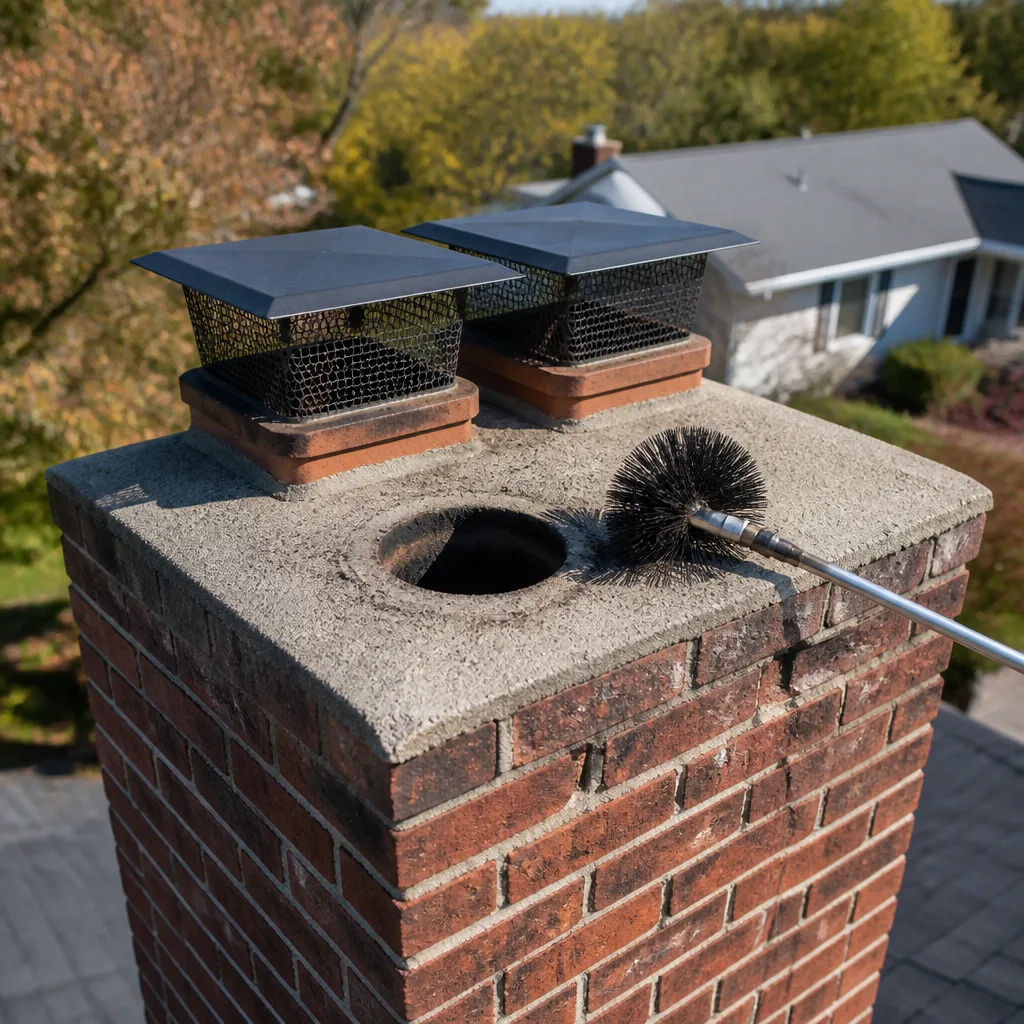
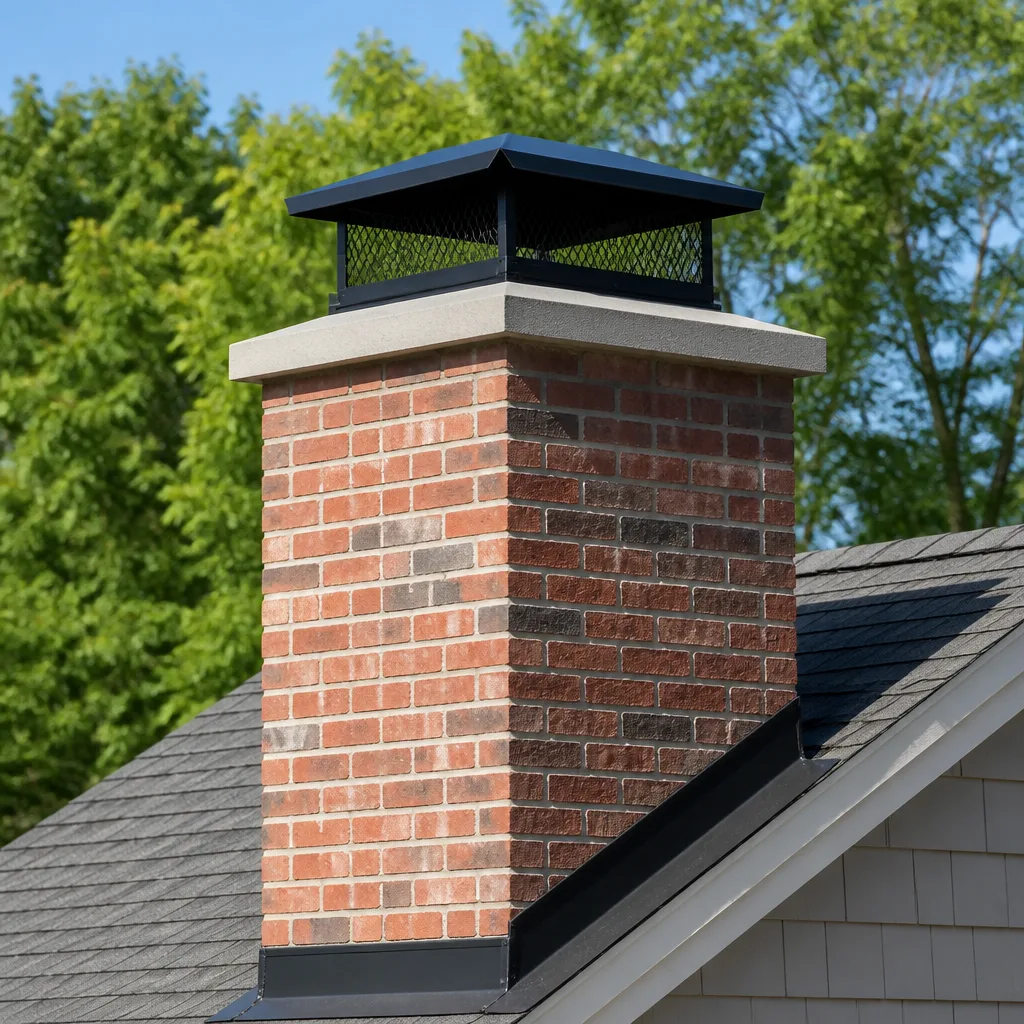
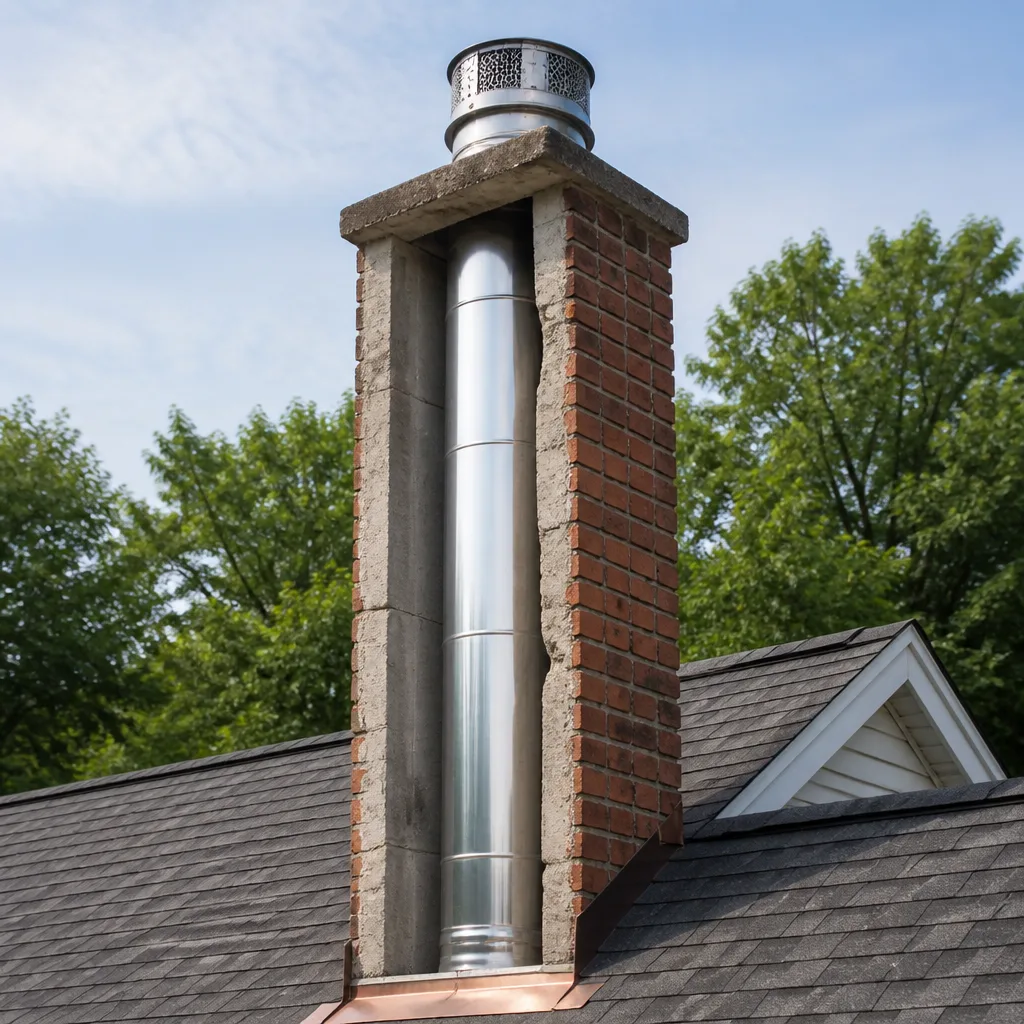
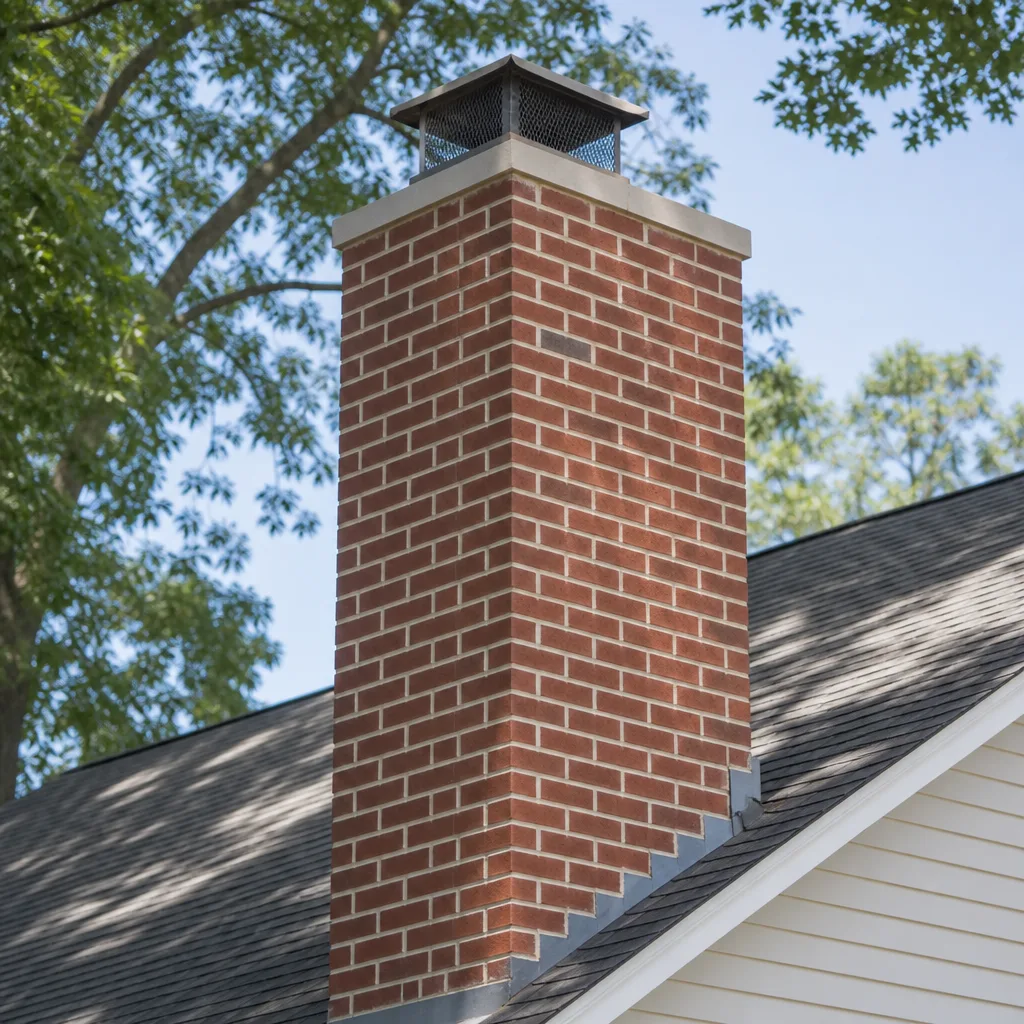
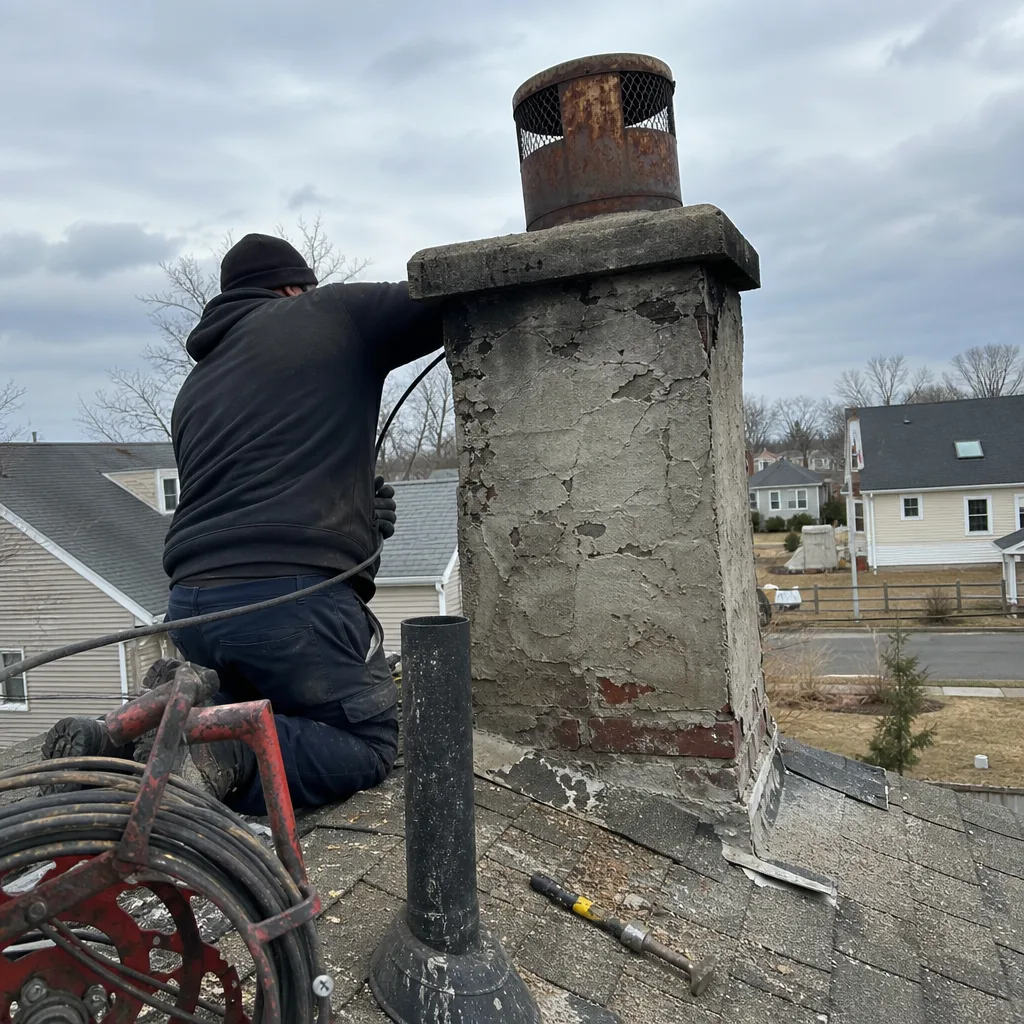
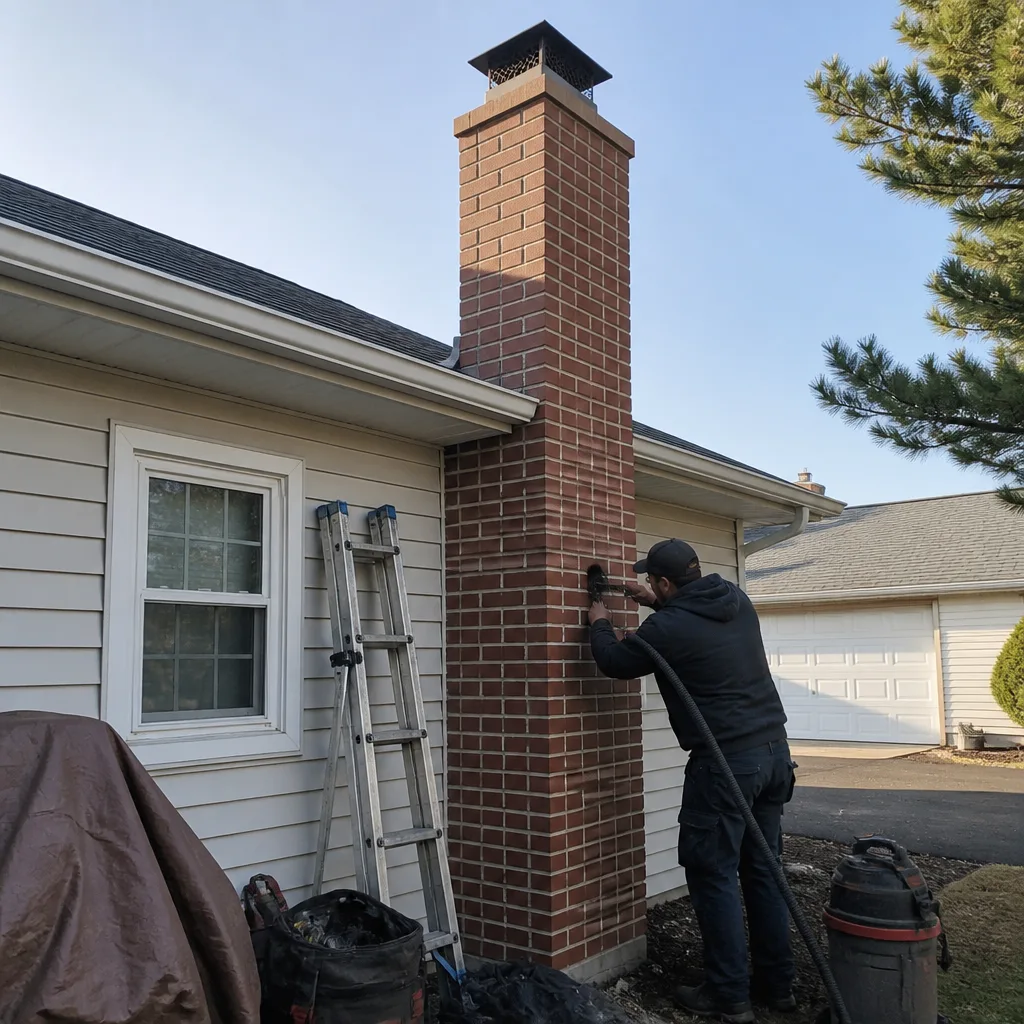
Level 1 sweep and inspection to the NFPA 211 annual standard - flue, crown, cap, and flashing checked and photographed
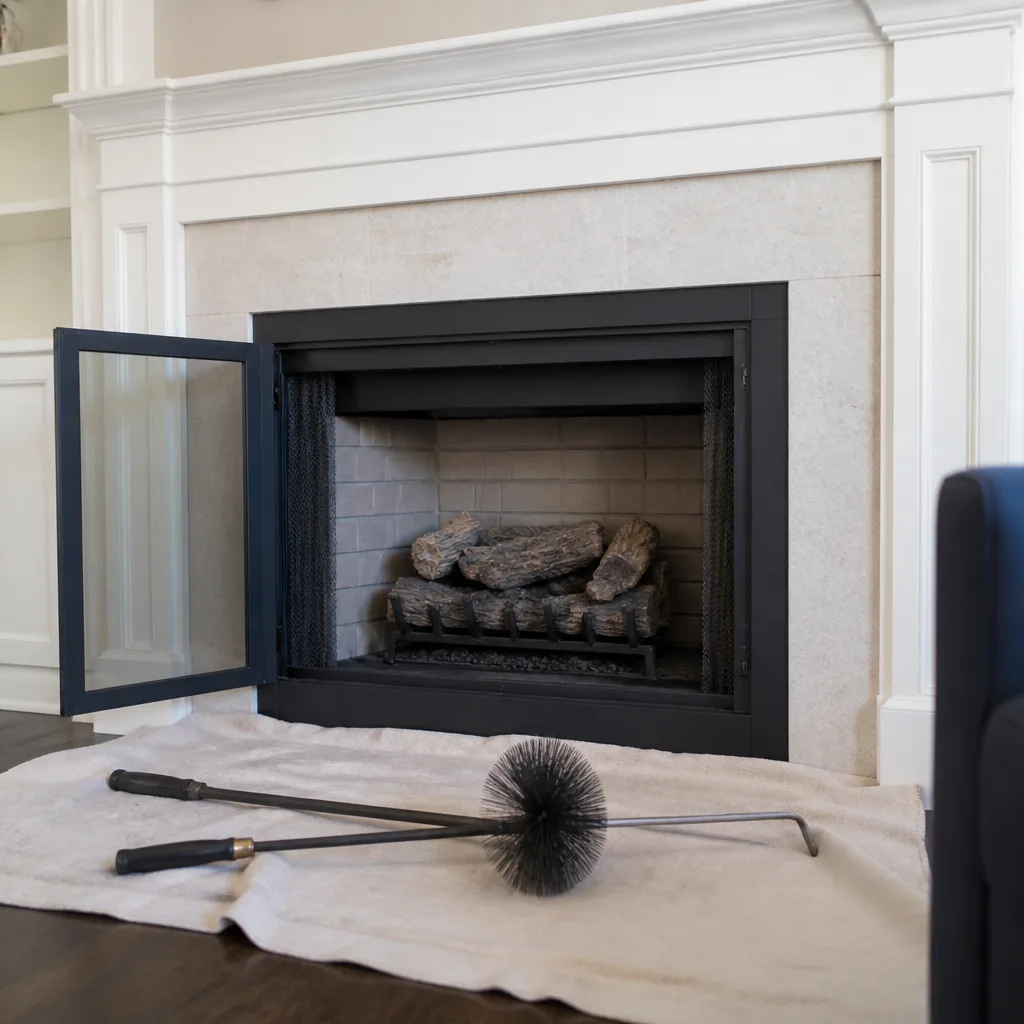
Chimney sweep logs do not sweep chimneys. They loosen some creosote - which then falls where a brush and vacuum still have to collect it.
 Before
 After
After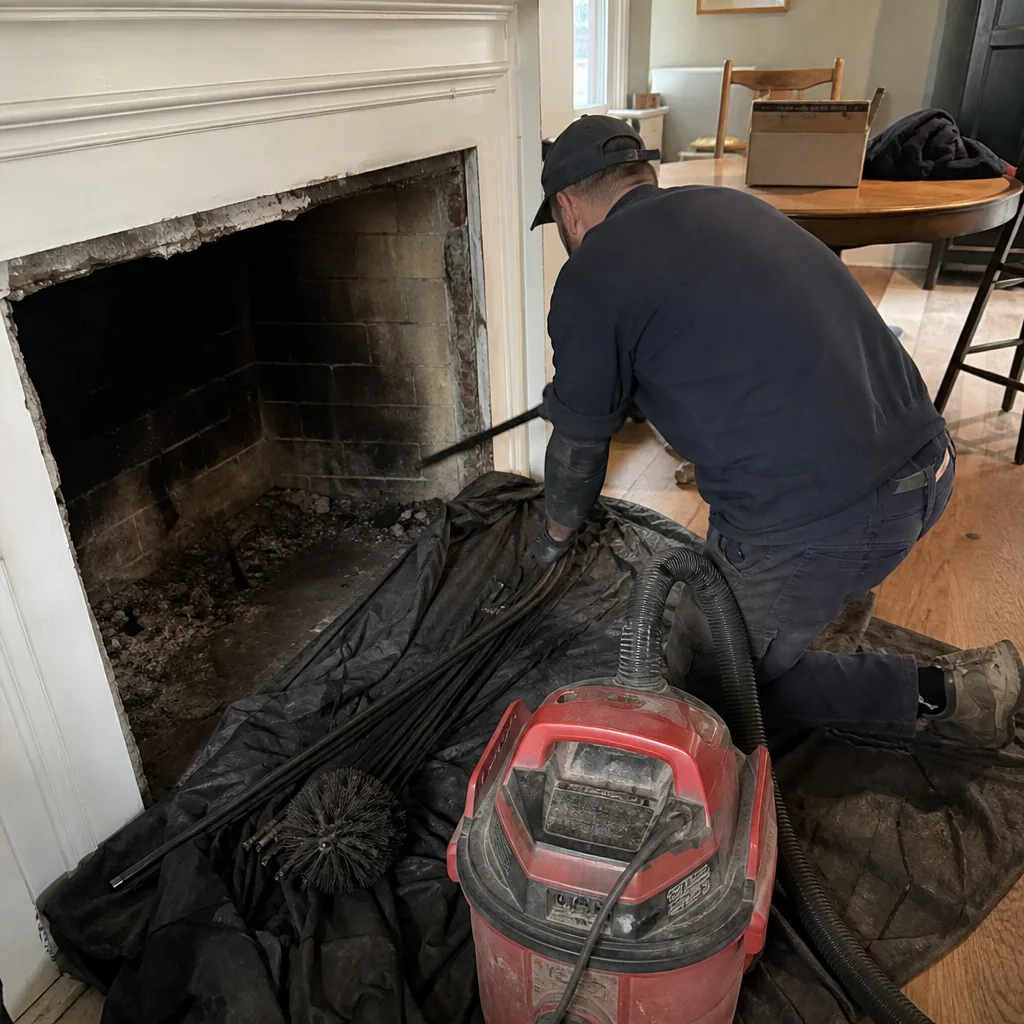 Before
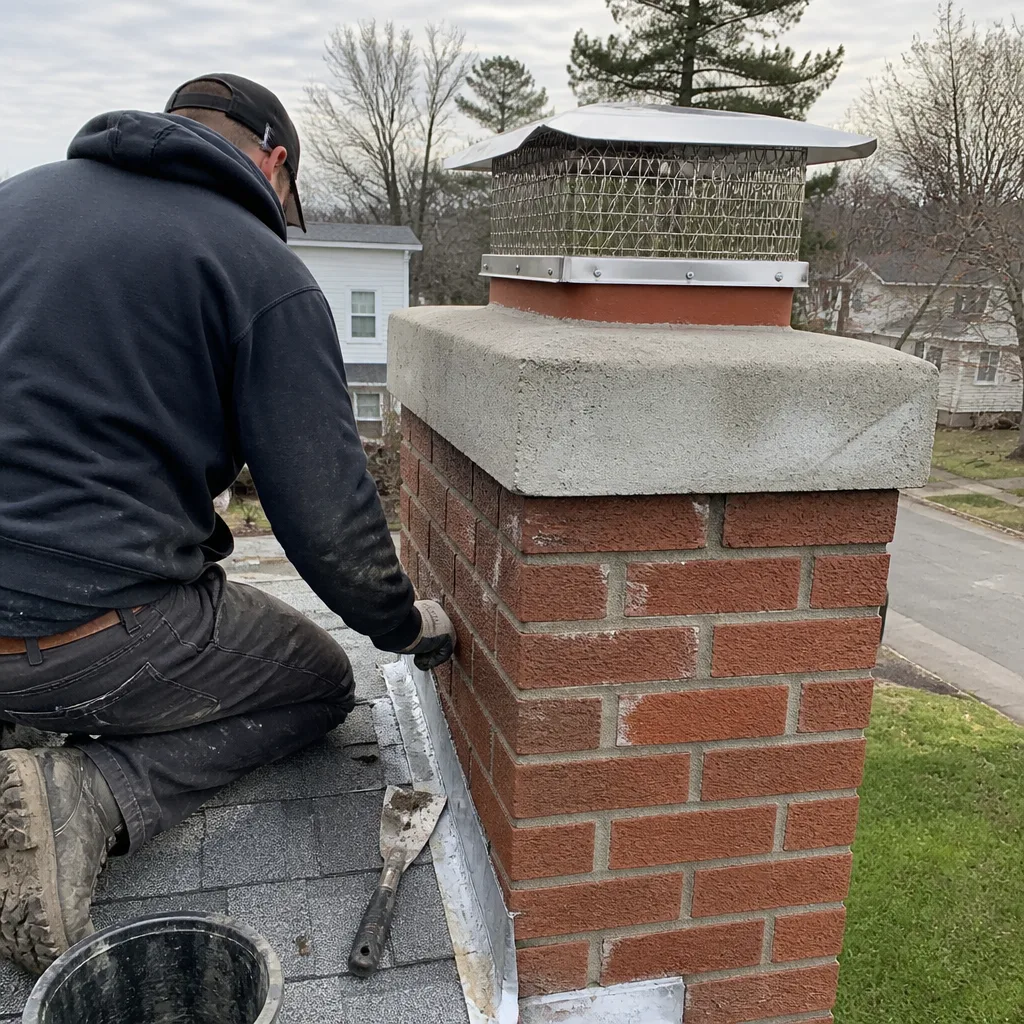 After
After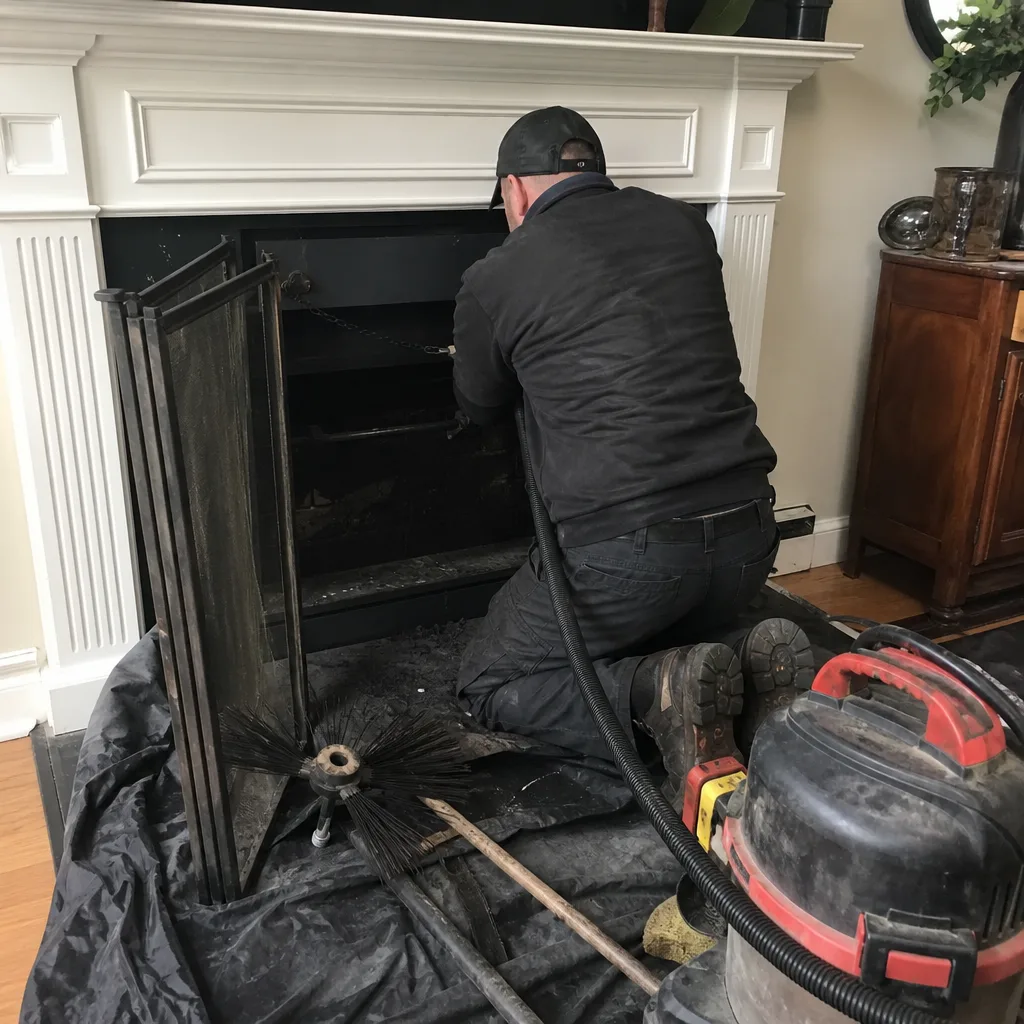 Before
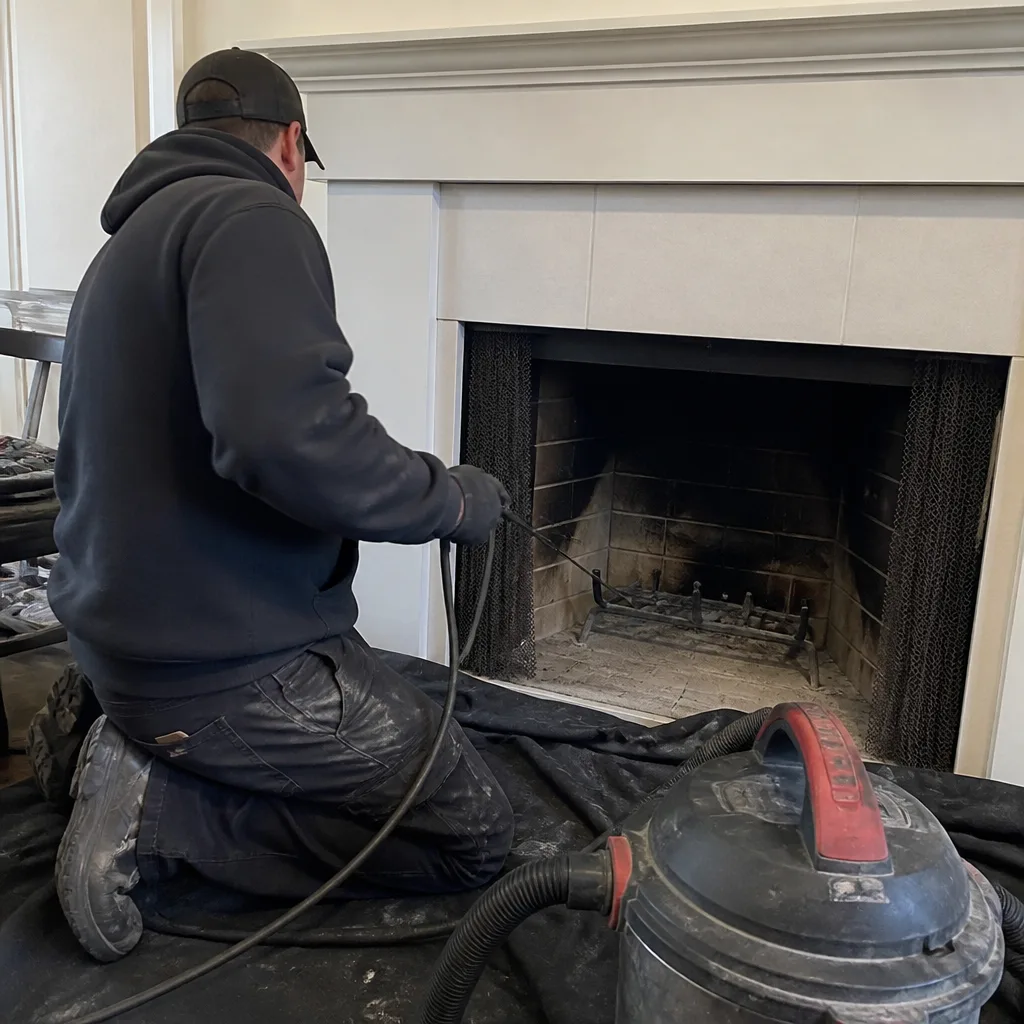 After
AfterHeatShield Chimney Cleaning & Sweep in Long Beach: What to Know First
HeatShield chimney cleaning and sweep in Long Beach runs $189-$349 for a standard annual cleaning and Level 1 or 2 inspection, with most jobs done in under two hours. We’re an independent HeatShield service provider - not a franchise and not affiliated with the manufacturer - and we’ve been working on these systems in Long Beach homes since before most national outfits had a Long Island phone number. If you own a HeatShield liner or coating system, the short version is this: clean it annually with a brush rated for stainless or cast-in-place liners, inspect the crown and chase cover every spring, and never let a creosote glaze sit unchecked, because HeatShield’s ceramic coating can crack once a firebox over-fires and the substrate shifts. Call (631) 378-3317 and you’ll get Wendell or one of his crew on the line, not a call center.
Key Takeaways:
- HeatShield liners and coatings are durable, but they fail at seams, crown joints, and flue-gap gaps - not randomly.
- Annual sweep plus camera inspection catches glaze and spalling before a liner replacement becomes the only option.
- We quote before we touch anything. The number you hear on the phone is the number on the invoice.
- Every HeatShield job here carries our 90-Day Done Right Promise in writing.
How HeatShield Products Fail - and How We Fix Them
HeatShield is a good system. We install it, we sweep it, and we’ve been inside enough of them in Long Beach to know where they give up. Most of what we see on the barrier islands and the older inland blocks follows the same five patterns.
- Ceramic coating spalling at the first flue tile gap. HeatShield’s ccFR (cast-in-place ceramic) coating is meant to bridge clay tile joints, but in Long Beach’s salt air and freeze-thaw winters, hairline cracks at the first or second gap show up before anything else. The symptom is a faint metallic smell when the fire burns hot. We find it with a camera, and we fix it with a localized recoat or by properly re-sleeving that section. You don’t need a full rebuild because of one gap.
- Stainless liner seam separation on HeatShield’s SS flexible liner. The SS liner line uses a corrugated profile that expands and contracts with temperature. After five to eight seasons in Long Beach, where nor’easters dump rain against the chimney top and the midday sun bakes the crown, the seam at the top connector can pull apart. You’ll see rust streaks or hear a rattle on windy days. We re-band and re-secure the liner, then sweep and camera to confirm the joint is seated.
- Creosote glaze locking onto the ceramic surface. HeatShield’s coating is smoother than raw clay tile, but it is not non-stick. Third-degree creosote still glaze-forms if you burn unseasoned wood or run the fire low and cool. In Long Beach, we see this most in homes near the water where firewood picks up dampness in garages. The fix is a glaze-buster treatment followed by a rotary sweep, not a wire brush that chews the ceramic.
- Chase cover corrosion on prefab HeatShield installations. If your HeatShield liner is inside a factory-built chimney, the chase cover is the first thing to rot. Long Beach salt spray kills galvanized chase tops in about six or seven years. Water gets in, the insulation saturates, and the liner starts to oxidize from the outside. We replace the chase cover with stainless and re-flash before sweeping, because sweeping a wet chase is just making mud.
- Improper prior patches with non-HeatShield mortar. The ceramic line (ccFR) wants a specific silicate-based compound. We’ve opened up Long Beach chimneys where somebody tuckpointed with standard Type N mortar, which cures too rigid and pops off the ceramic within a season. We remove the wrong material, clean to the original surface, and apply the correct HeatShield-compatible compound. Then we camera the whole run to make sure nothing else was missed.
Our HeatShield Chimney Cleaning & Sweep Process
Every HeatShield job in Long Beach follows the same sequence, so you know what’s happening from the first call to the final once-over.
- 1
The call. You give us the make and model from the plate on the firebox or the liner collar. We give you a firm price range before we schedule. No bait numbers.
- 2
Arrival and room prep. The sweep shows up in uniform with a real arrival window. Drop cloths go down before the vacuums come out. Your living room is not a construction site.
- 3
Camera-first inspection. We run a camera through the flue before any brush touches the wall. If the liner is intact, we sweep. If it’s not, we stop and show you the footage so you can see what we see.
- 4
The sweep itself. Soft-bristle rotary brushes for HeatShield ceramic and stainless. No wire wheels. Creosote and soot come out through a HEPA-filtered vacuum, not into the house.
- 5
Post-sweep camera and report. We run the camera again so you get before-and-after views. You get a plain-English verdict on what needs doing now, what can wait, and what doesn’t need doing at all.
- 6
Guarantee and invoice. The price we quoted is the price you pay. We hand you the 90-Day Done Right Promise in writing, and we’re gone in under two hours on most single-flue jobs.
What HeatShield Chimney Cleaning & Sweep Costs in Long Beach
Here’s what HeatShield owners on Long Beach’s barrier island and the north side of East Park Avenue should expect to pay as of 2025.
- Standard annual sweep (Level 1 inspection included): $189-$249. Most HeatShield ceramic and stainless liners fall here unless you’ve skipped multiple seasons.
- Sweep plus Level 2 camera inspection: $269-$349. We recommend this every other year, or any year a storm rolled through and shifted your crown.
- Glaze removal on a HeatShield ceramic liner: $329-$449. Third-degree creosote means a chemical treatment plus two or three rotary passes, not just one.
- Sweep with localized ceramic recoat at one or two flue gaps: $449-$699. The difference in price depends on access - roof pitch and chimney height run the number up in Long Beach’s older two-story colonials.
What moves the price: the height and pitch of the roof, how long since the last cleaning, whether the chase cover has to come off, and whether we’re dealing with a prefab or masonry chase. We quote before the first tool comes off the truck. If you’ve got a written estimate from someone else, bring it in - we’ll give you a free second opinion, no charge, no games. Call (631) 378-3317.
Why Long Beach Homeowners Call Top Hat Chimney for HeatShield Work
Wendell Pike started Top Hat Chimney in 1999, and he’s the guy you’ll talk to on Saturday morning, not an answering service. Long Beach is one of those places where you run into your sweep at the hardware store, and Wendell’s usually the one talking too long about flue liners with whoever made the mistake of asking. We service HeatShield, DuraFlex, and Gelco systems, which means we’re not married to one manufacturer’s upsell pipeline. If a HeatShield liner genuinely doesn’t need replacing, we’ll tell you. If it does, we’ll show you the camera footage before we quote a dollar. Every job gets our 90-Day Done Right Promise in writing, and if the work isn’t right, one call brings the crew back. No trip charge inside Nassau County. Ten percent off for seniors and veterans, always. Forty dollars off any repair over $200. And if it doesn’t need doing, Wendell will tell you that too.
FAQs
Once a year, burn or no burn. Even a HeatShield ceramic liner picks up soot and creosote during the burning season, and Long Beach’s damp fall weather accelerates glaze formation if you skip a year. Annual sweeping is also when we catch spalling and seam separation early, before a $300 sweep becomes a $2,800 liner job. Call (631) 378-3317 to get on the book.
Only if the wrong brush or chemical is used. HeatShield’s warranty language says the liner must be cleaned with brushes and methods appropriate for the liner type. We use soft-bristle rotary brushes and glaze treatments rated for ceramic and stainless. The sweep itself protects the warranty; neglect voids it faster than anything else.
In most cases we repair it. Localized recoat at one or two flue gaps is routine for us, and we’ve done it on HeatShield systems all over Long Beach, from West End Avenue bungalows to the newer builds near Lido Boulevard. Full replacement only makes sense when the spalling runs more than a third of the flue or the stainless has rusted through. We’ll show you the camera before we ever ask you to spend replacement money.
We do both. We’re an independent HeatShield service provider, not a manufacturer-authorized shop, which means we can tell you straight when a liner is worth repairing and when it’s ready for a proper replacement, without a brand quota hanging over our heads. We also work with DuraFlex and Gelco, so you get the right liner for your house, not the one we happen to stock.
Most annual sweeps are scheduled within a week, and we keep slots open in the fall for people who realize the burning season started without them. If you call (631) 378-3317, a live person answers, and we’ll give you a real window - not a four-hour “sometime between noon and whenever” window.
If you own a HeatShield system in Long Beach and haven’t had it looked at this year, don’t wait until the first cold snap. Call (631) 378-3317 for a free estimate, and we’ll get you on the schedule before the season fills up. Wendell will be the one picking up the phone.
Written by Wendell Pike, Owner, Top Hat Chimney at Top Hat Chimney, serving Long Beach and nearby areas.